
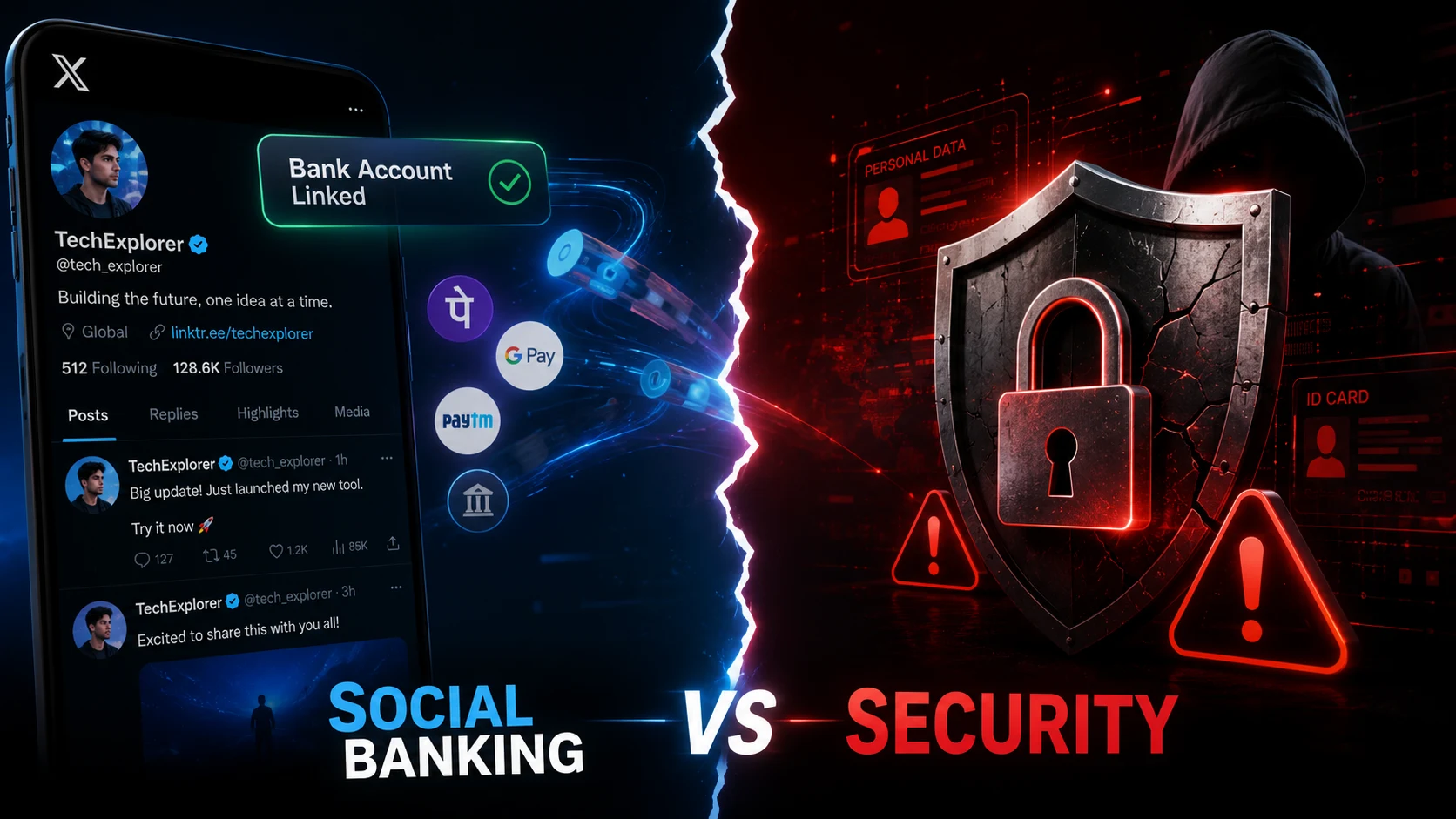
X is about to blur the line between social media and banking, and the real risk may not be payments—it may be identity exposure.
With account takeover attacks surging by 300% across social platforms, $10 billion lost annually to online social engineering scams, and over 600 million active handles suddenly acting as financial endpoints, can a platform built for virality really protect your savings?
What happens when routing numbers, direct deposits, and financial accounts sit right next to public-facing profiles? As X launches its X Money banking integration across the United States in partnership with Cross River Bank, collapsing identity and payments into a single feed could weaponize basic social data and expose users to unprecedented fraud.
Is convenience worth the risk when a single hijacked password could unlock both your public voice and your savings account?
What X Money Is Trying to Do
X Money isn’t just a simple peer-to-peer cash transfer button like Venmo or Zelle. It is designed as a full-suite embedded digital bank built directly inside the social platform.
- Peer-to-Peer Transfers: Instant, fee-free money transfers directly to other X users via public handles.
- Banking Infrastructure: FDIC-insured deposit accounts (via Cross River Bank) offering high-yield interest up to 6% APY.
- Physical & Virtual Cards: A custom Visa debit card tied to Apple Pay and Google Pay for offline spending.
- Payroll & Direct Deposit: Early salary deposits, wire transfers, and electronic bill pay.
What happens when a social account becomes a financial gateway? That’s where the security story turns.
Your money, on the world’s most powerful network
— X Money (@XMoney) July 27, 2026
𝕏 Money is rolling out to U.S. Premium and Premium+ subscribers starting today pic.twitter.com/2c1UMkB4Kn
Why the Security Issue Matters
Traditional banks keep financial data behind strict, air-gapped security walls and private portals. In contrast, social networks are designed to broadcast information, encourage public interactions, and maximize public discoverability.
When financial accounts are linked directly to public handles, bad actors gain immediate visibility into potential targets. Cybercriminals can use public posts, location tags, and follower networks to craft hyper-targeted phishing campaigns and spear-phishing attacks.
Could one takeover expose both your identity and your life savings?
The Account-Takeover Problem
The core danger stems from collapsing two fundamentally different digital layers into one single login.
| Risk Factor | Why It Matters for X Money |
|---|---|
| Credential Theft | Hijacking an X handle instantly yields access to linked bank balances. |
| Social Engineering | Public profile context helps scammers build believable impersonation traps. |
| Identity Linkage | Connecting bank routing data to public handles expands the overall attack surface. |
| Recovery Friction | Social platforms historically struggle with automated identity restoration during account breaches. |
Who Benefits vs. Who Gets Exposed
The shift toward an “everything app” creates stark trade-offs between business growth and user safety.
- Consumers: Gain frictionless peer-to-peer transfers, direct debit cards, and competitive interest rates.
- Platforms: Increase user retention, collect transaction fees, and create a sticky financial ecosystem.
- Security Teams: Face severe threats from coordinated SIM-swapping, automated botnet takeovers, and fraudulent brand impersonation.
“The biggest risk isn’t just transactional fraud — it’s collapsing public social identity and private payments into the exact same attack surface.”
What Safer Design Would Require
To prevent catastrophic financial losses, social-banking platforms must implement defensive architecture that goes far beyond standard passwords:
- Passkey Enforcement: Eliminating SMS-based two-factor authentication in favor of hardware-bound passkeys.
- Strict Identity Isolation: Keeping public handle lookups completely separate from internal account routing numbers.
- Transaction Friction: Mandatory hardware biometric checks for out-of-band transfers or withdrawal attempts.
- Dedicated Recovery Channels: Human-in-the-loop fraud support teams to restore compromised accounts immediately.
According to official coverage on Mashable and financial breakdowns from TradingView, X’s banking infrastructure relies heavily on Cross River Bank to handle regulatory compliance and FDIC pass-through insurance. However, cybersecurity reporting from Cross River Newsroom emphasizes that user-side authentication remains the most vulnerable entry point.
Would you link your primary bank account to a public social media profile? The answer could dictate the future of digital identity and personal finance.