
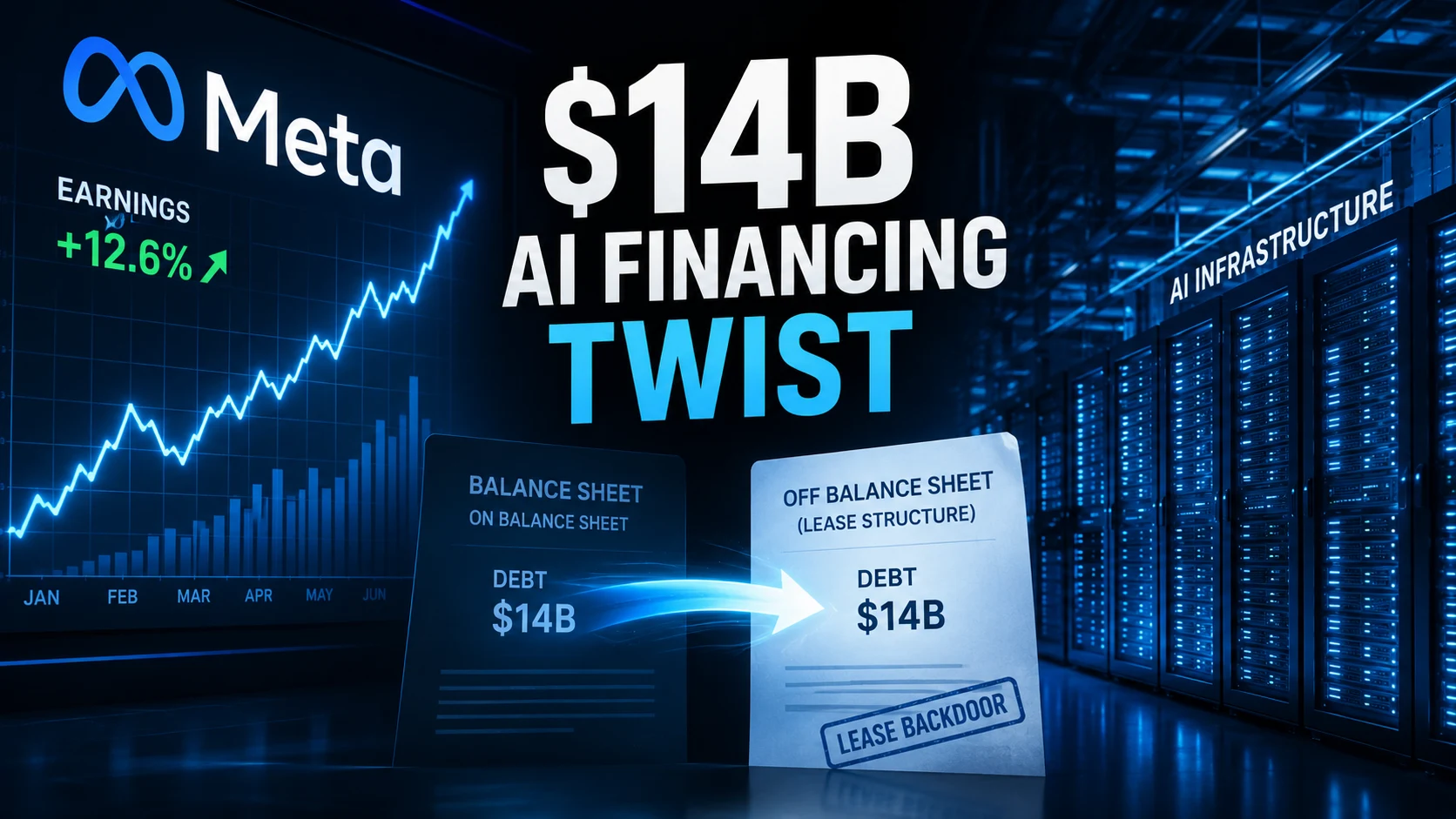
Meta just pulled off a financing move that could reshape how Big Tech funds AI expansion. Right before its second-quarter earnings call, the company established a $14 billion joint venture with BlackRock where 80% of the asset ownership is shifted away from Meta’s main balance sheet.
Will this off-balance-sheet model protect stock valuations while allowing tech giants to chase massive AI scale? As tech shares face downward pressure from skyrocketing capital expenditures, Meta’s strategy is triggering intense debate across Wall Street.
What Happened
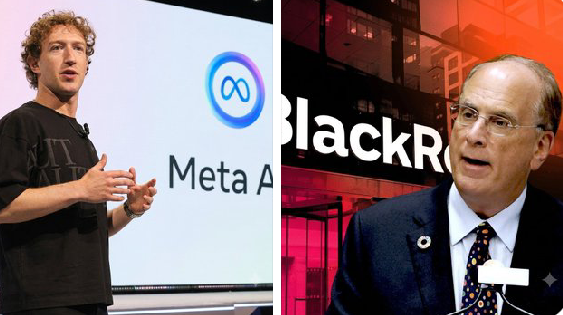
Meta announced a joint venture with asset manager BlackRock to build and operate a massive 1-gigawatt AI data center in El Paso, Texas.
Instead of funding the $14 billion project using cash from operations or issuing standard corporate bonds, Meta structured an off-balance-sheet arrangement:
- Ownership structure: BlackRock funds hold an 80% majority stake, while Meta retains a 20% minority stake.
- Capital contribution: Meta contributes $2.3 billion in land and construction assets, receiving a $1 billion distribution payout.
- Debt financing: BlackRock is funding the majority through $12.5 billion in debt and cash.
- The lease agreement: Meta will lease back the entire completed facility for 4 to 20 years.
So why does the timing matter? Meta announced the move right before Q2 earnings, directly addressing investor panic over escalating capital expenditures.
Why Wall Street Cares
Investors love AI innovation, but they deeply fear balance-sheet strain. When hyperscalers spend tens of billions on raw infrastructure, free cash flow plummets and stock prices often suffer.
| Feature | Direct Ownership | Structured Joint Venture |
|---|---|---|
| Capital Impact | Full CapEx hits balance sheet directly | Spread over long-term lease payments |
| Debt Liability | Added to parent corporate debt | Held within project-level JV |
| Investor Reaction | High anxiety over reduced margins | Softens immediate cash-flow shock |
The BlackRock Angle
Bringing in BlackRock transforms AI infrastructure into an institutional asset class. Private equity and asset managers are eager to deploy capital into long-dated, stable infrastructure backed by tech giants.
“The real story isn’t just the size of the spend. It’s how companies are restructuring risk so the market sees growth without the full balance-sheet shock.” — Wall Street Infrastructure Strategist
By handing 80% ownership to BlackRock, Meta successfully shifts the direct debt liabilities off its books while retaining 100% operational control of the computing power needed for its superintelligence push.
Meta and BlackRock today announced a new venture to develop and own a data center campus in El Paso, Texas. https://t.co/0VoiSGATrw
— Meta Newsroom (@MetaNewsroom) July 28, 2026
Why This Could Spread
Big Tech is projected to spend hundreds of billions on AI data centers over the next several years. Can traditional cash flow keep up?
- Industry fatigue: Total AI corporate debt issuance reached $270 billion this year, making investors wary of standard corporate bond sales.
- Valuation protection: Keeping massive debt off primary financial statements shields valuation multiples.
- Utility-style funding: AI data centers are transitioning from typical tech assets to heavy, long-term utilities.
What happens if every hyperscaler adopts this model? We may see private infrastructure funds replace standard corporate bond markets as the primary engine for AI development.
Risks and Pushback
Despite the short-term financial relief, this structured approach is not completely risk-free.
- Lease Liabilities: Under modern accounting standards (ASC 842), operating leases still appear on balance sheets as long-term liabilities.
- Higher Borrowing Costs: Private project debt carried by joint ventures often comes with higher interest rates than direct corporate debt.
- Regulatory Scrutiny: Financial regulators are closely monitoring off-balance-sheet debt mechanisms to prevent systemic accounting risks.
Reporting on the transaction details can be confirmed via StreetInsider and financial analysis on The Next Web.
The real question is not whether Meta found a clever loop — it’s whether regulators and analysts will let the rest of Big Tech follow suit.