
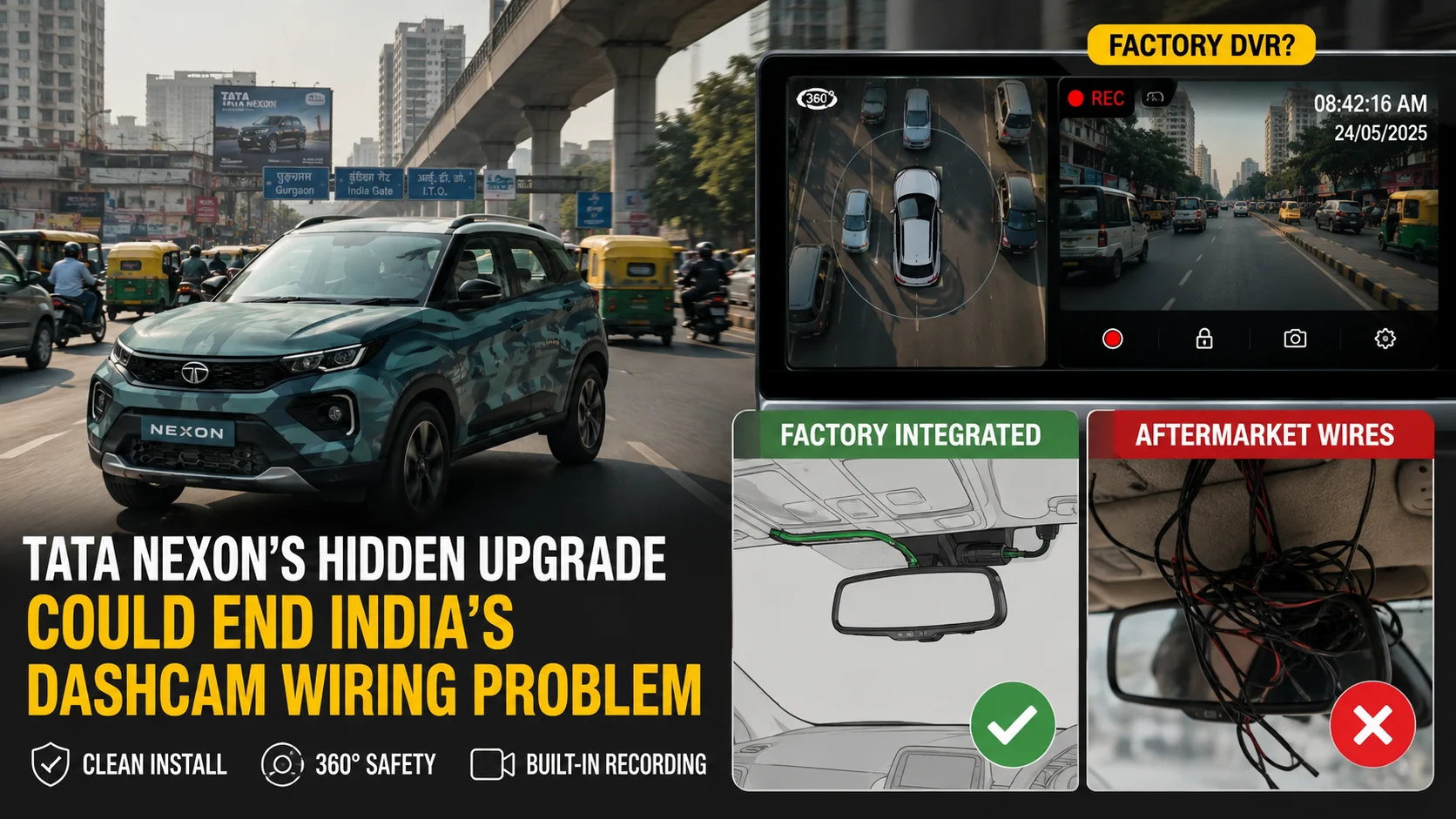
Tata may have aggressively attacked India’s messy aftermarket dashcam headache head-on. The Nexon Camo’s factory-integrated DVR, built directly into its 360-degree camera system, could eliminate the wiring risks associated with third-party installations while providing crucial evidence for insurance disputes.
India recorded over 460,000 road accidents in recent national transit reports, while more than 65% of motorists struggle with claim delays due to conflicting liability claims. But does the system actually record continuously, or is it strictly a parking aid?
With nearly 40% of new compact SUVs now adopting advanced camera-based safety features, Tata’s integrated approach could completely reshape what buyers expect from an affordable vehicle—if the footage is clear, accessible, and fully covered under manufacturer warranty.
1. The Overlooked Upgrade
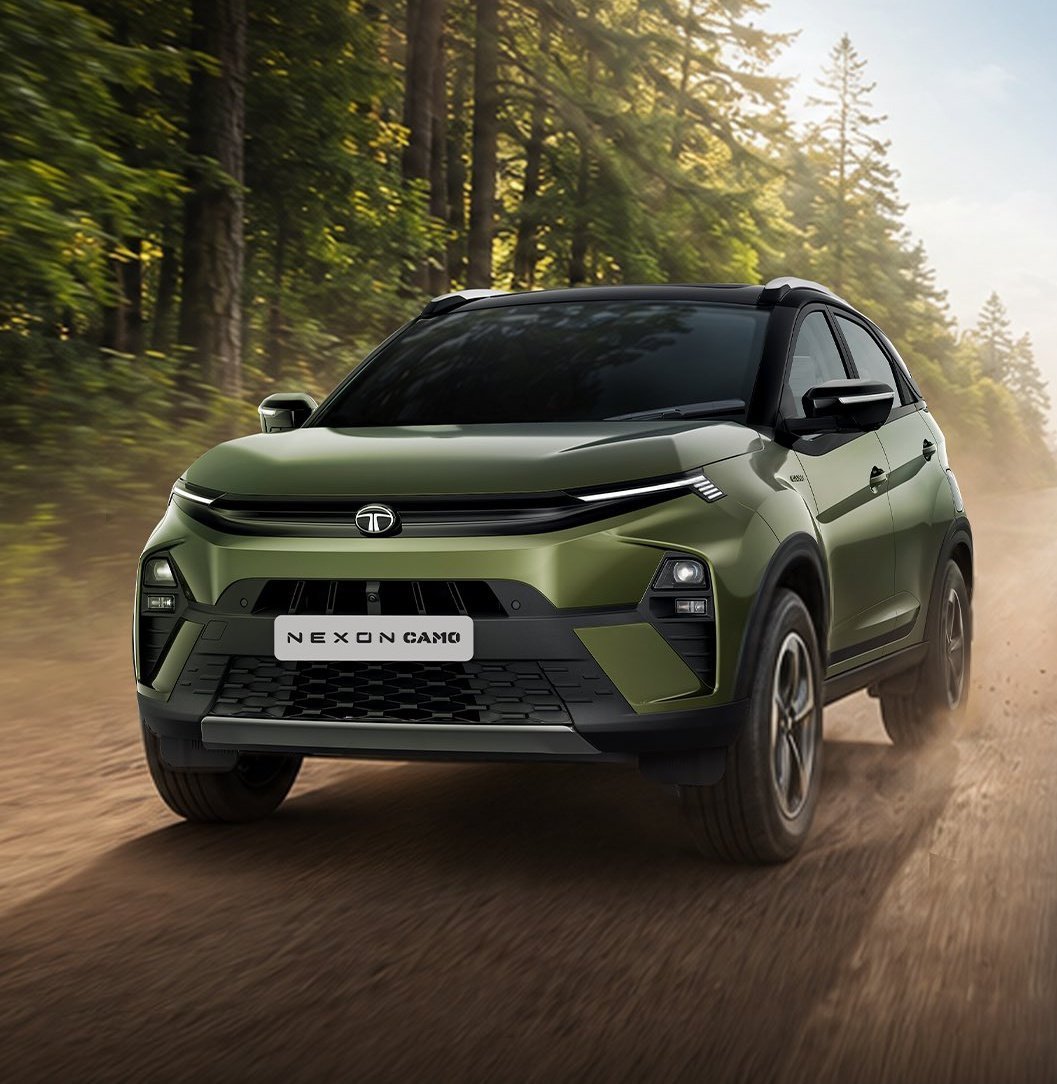
Tata has quietly addressed one of India’s most frustrating car-accessory problems: fitting a dashcam without worrying about messy wiring, poor fuse-tap installation, or disputes over electrical modifications.
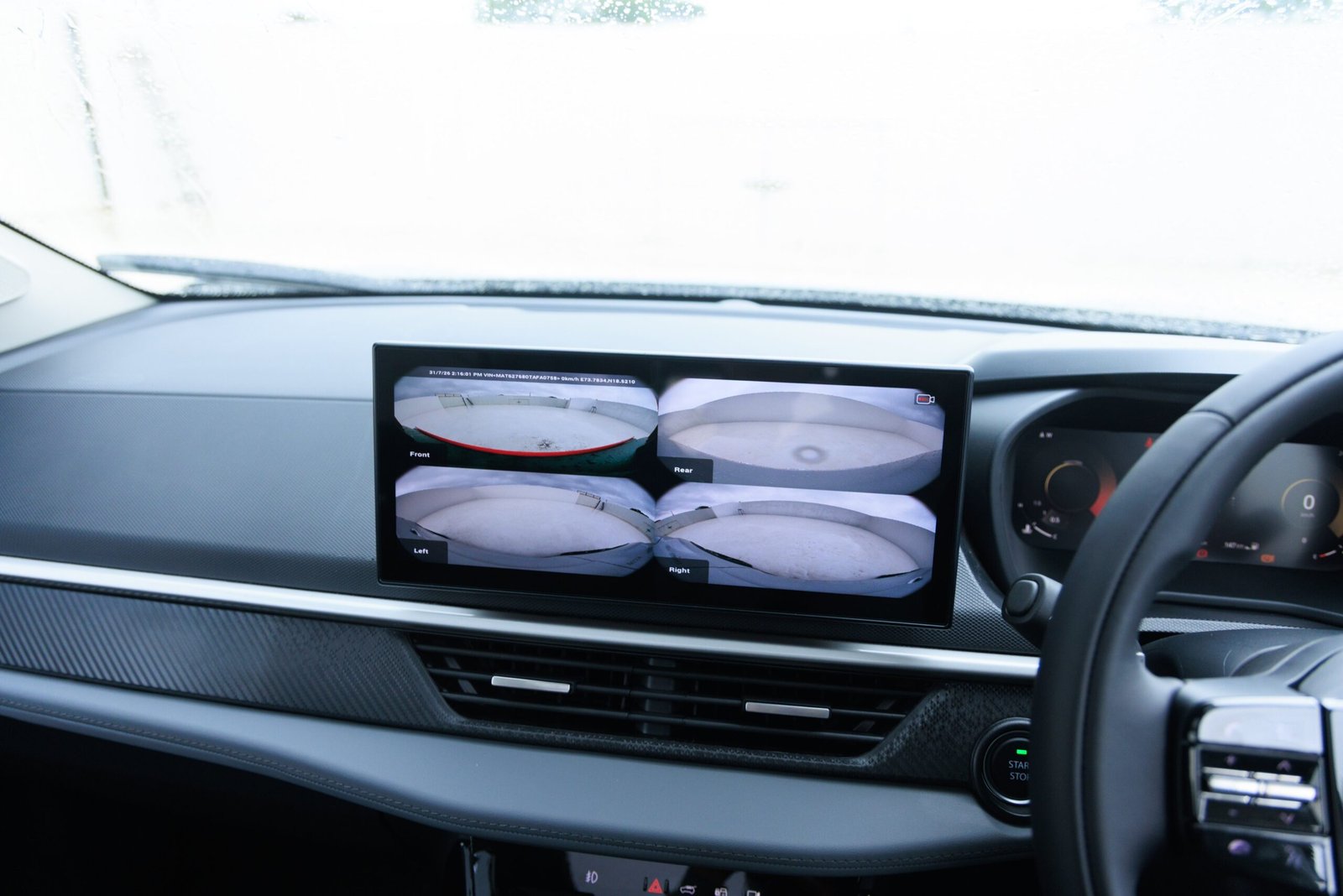
A factory-integrated DVR inside the Nexon Camo’s 360-degree setup turns the SUV’s camera hardware into more than just a parking aid. On India’s congested roads—where a minor fender-bender quickly becomes a tense blame battle—a timestamped video file is often far more valuable than another cosmetic paint job.
2. What Is the Nexon Camo’s Camera System?
To understand the shift, we must look at how factory-engineered hardware differs from traditional add-ons:
| Feature | What It Does | Why It Matters |
|---|---|---|
| 360-degree camera | Displays a surrounding bird’s-eye view | Helps navigate tight parking spots |
| Front/rear cameras | Captures views around the vehicle perimeter | Supports overall spatial awareness and incident capture |
| DVR function | Saves video footage directly to storage | Creates a reliable record after an incident |
| Factory integration | Uses vehicle-designed harnesses and electronics | Reduces third-party wiring risks |
Would you rather pay slightly more for a seamless factory camera integration or save money with an aftermarket wiring kit?
3. Why Aftermarket Dashcams Create Anxiety
Aftermarket dashcams are affordable and widely available, but installation quality varies wildly. Some owners plug them into a 12-volt socket, while others choose complex hardwiring kits for parking-mode monitoring.
The real worry is rarely the camera device itself. It is how the accessory is powered, where loose wiring is tucked, and whether an electrical fault can later be blamed on the modification.
Warranty clarification: Installing an aftermarket accessory does not automatically void an entire vehicle warranty. However, dealerships may deny coverage if a specific electrical failure is directly linked to faulty aftermarket wiring or hardwiring errors.
4. The Insurance-Claim Advantage
Video evidence can quickly establish the precise sequence of events after a collision. It helps verify traffic movement, sudden braking, lane discipline, or third-party negligence.
However, video footage alone does not guarantee instant claim approval. Insurers carefully evaluate policy wording, police FIR documentation, and unedited metadata.
Steps to Handle Incident Footage
- Preserve the original video file immediately after a collision.
- Stop loop recording or lock the clip so it doesn’t overwrite.
- Secure a backup copy on your phone, computer, or cloud storage.
- Note down the exact date, time, and location coordinates.
- Share unedited files exclusively with your insurer or legal authorities.
“Factory integration dramatically minimizes electrical modification risks, giving both insurers and owners cleaner, more reliable evidence when disputes arise,” notes automotive electrical technician Rajesh Sharma.
5. Factory DVR Versus Aftermarket Dashcam
| Factor | Factory-Integrated DVR | Aftermarket Dashcam |
|---|---|---|
| Installation | Built into the vehicle assembly or authorized network | Relies on third-party installers or DIY wiring |
| Wiring Risk | Minimally intrusive due to factory harness routing | Varies based on fuse taps and cable management |
| Video Quality | Fixed to manufacturer spec sheets | Broad spectrum from basic 1080p to 4K resolutions |
| Storage Medium | Uses internal memory or built-in secure partitions | Relies on removable MicroSD memory cards |
6. What Buyers Should Verify
Before finalizing a purchase, smart buyers should cross-check these functional details with their dealership:
- Does the system record continuously while driving on highways?
- Which camera angles (front, rear, or all four) are saved to storage?
- What is the maximum resolution and frame-rate of recorded files?
- How does the loop-recording and collision-lock feature operate?
- Can video files be exported easily to a smartphone via Wi-Fi or USB?
For broader industry context on connected vehicle safety tech, review insights from Autocar India’s Technology Desk and regulatory updates via the Society of Indian Automobile Manufacturers (SIAM).
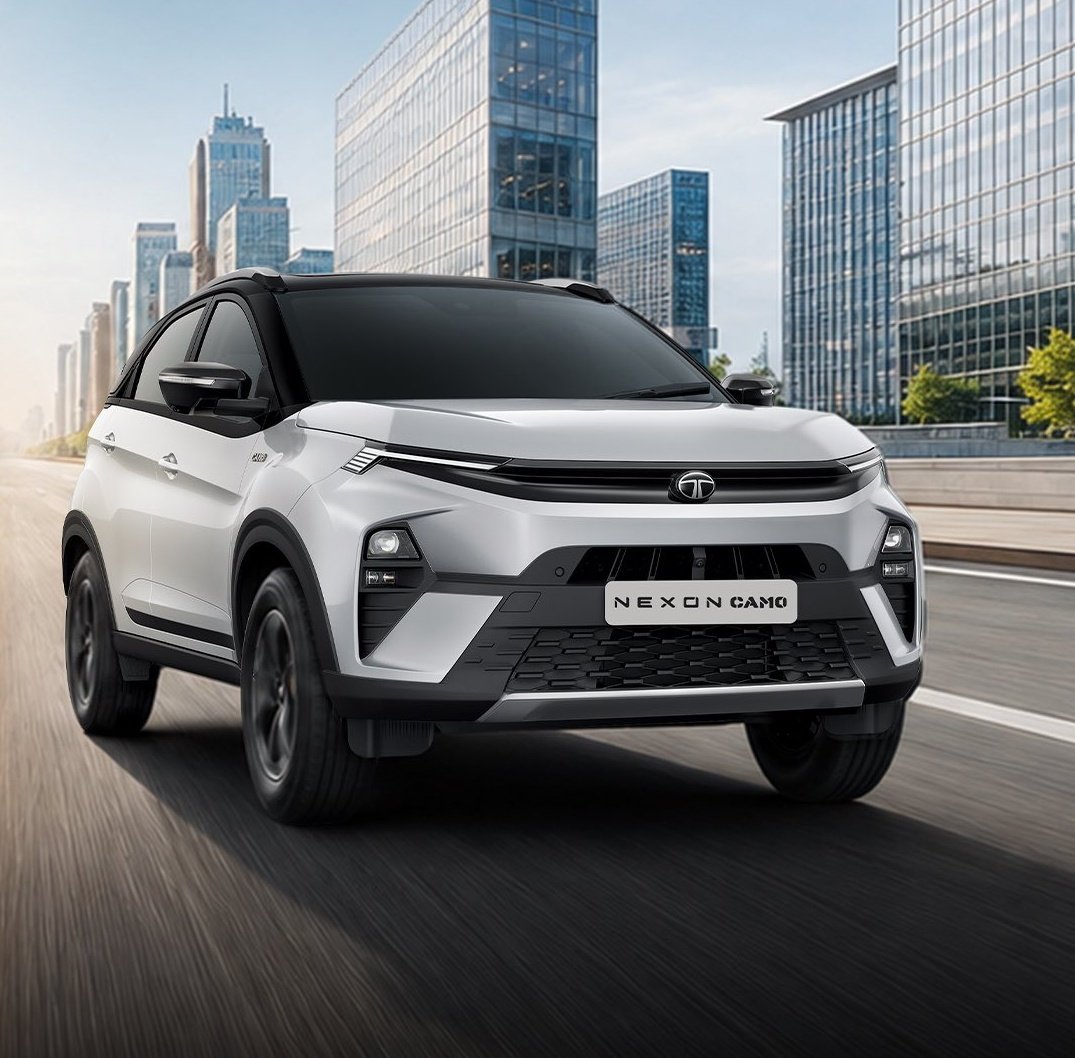
A feature you’d expect in a luxury car is now available in the Tata Nexon Camo. From a 360° Dash Cam that records every angle to dual screens and fresh styling, this SUV packs a lot for its price.
— JagranHiTech (@jagranhitech) August 6, 2026
Starting at ₹9.99 lakh. Would you consider buying it? #TataNexon #TataNexonCamo pic.twitter.com/9zRWUhYmyU
7. The Privacy Question
An always-on vehicle camera captures street scenes, neighboring vehicles, pedestrians, and passing conversations. This makes storage access, file retention, and privacy safeguards critically important.
Owners should always exercise caution before uploading unedited dashcam clips to social media channels.
Should factory-fitted car cameras automatically disable interior audio recording to protect public privacy?
Explore primary manufacturer announcements: