
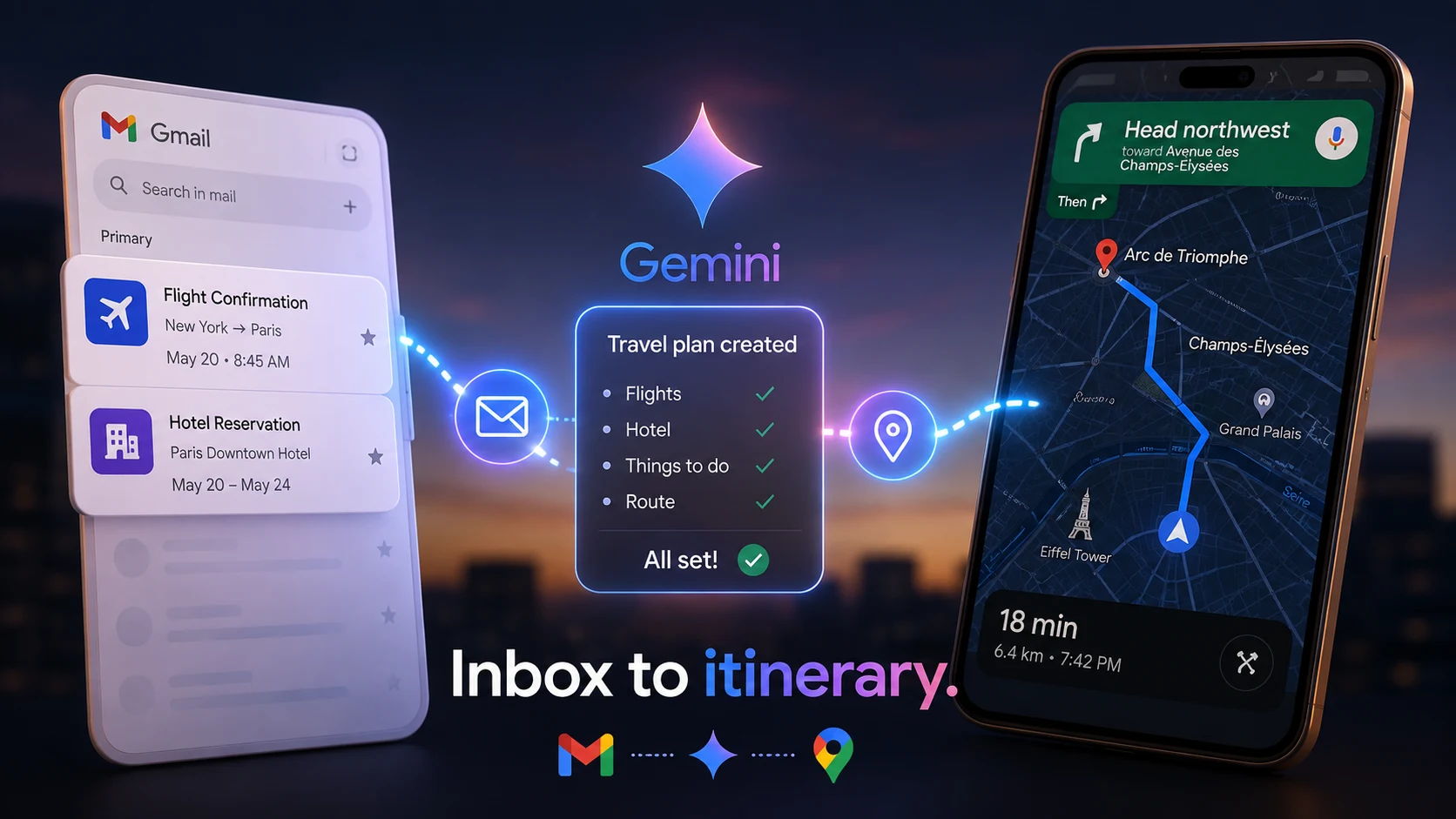
Google is tearing down one of the biggest barriers in trip planning: the endless search through confirmation emails. Over 70% of travelers struggle with fragmented bookings spread across multiple tabs and apps.
The market urgency is absolute: as modern consumers demand instant context, bridging the gap between personal inboxes and navigation tools is no longer optional—it defines the next era of travel.
The Inbox Is the New Itinerary
Travelers spend hours piecing together flights, hotels, restaurant bookings, and activities scattered across different apps. Now, by connecting Gemini with information in Gmail and Google Maps, Google is moving toward a travel assistant that can understand where users are going and what they need next.
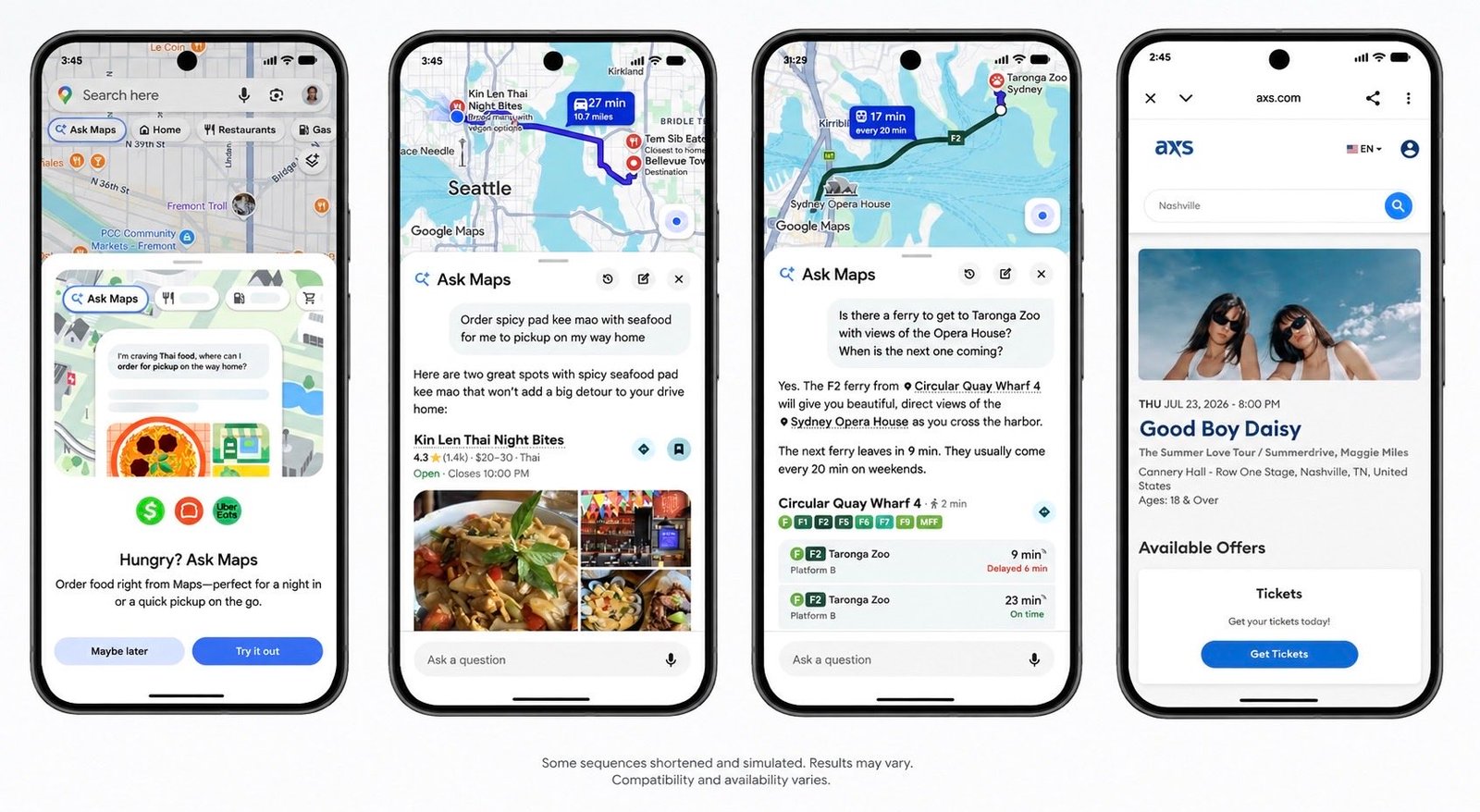 Could your inbox become the starting point for an entire travel itinerary? This shift matters because it replaces manual copying and searching with contextual assistance—potentially saving time before, during, and after a journey.
How many tabs and confirmation emails do you open before a trip even begins?
The Problem: Travel Details Are Scattered
Trip planning rarely happens in one place. A flight may be booked through one service, accommodation through another, and activities through separate websites.
| Travel Task | Traditional Process | Assistant-Led Process |
|---|---|---|
| Find hotel address | Search email or booking app | Surface relevant location context |
| Plan arrival route | Copy address into Maps | Use reservation details as context |
| Track timing | Check flight and hotel separately | Connect dates, times, and locations |
| Build itinerary | Use notes, spreadsheets, or apps | Generate a structured trip plan |
What if the trip-planning app did not need you to explain the trip from scratch?
From Map to Concierge
Traditional mapping tools are largely reactive. A user searches for a place, requests directions, checks traffic, or finds nearby businesses.
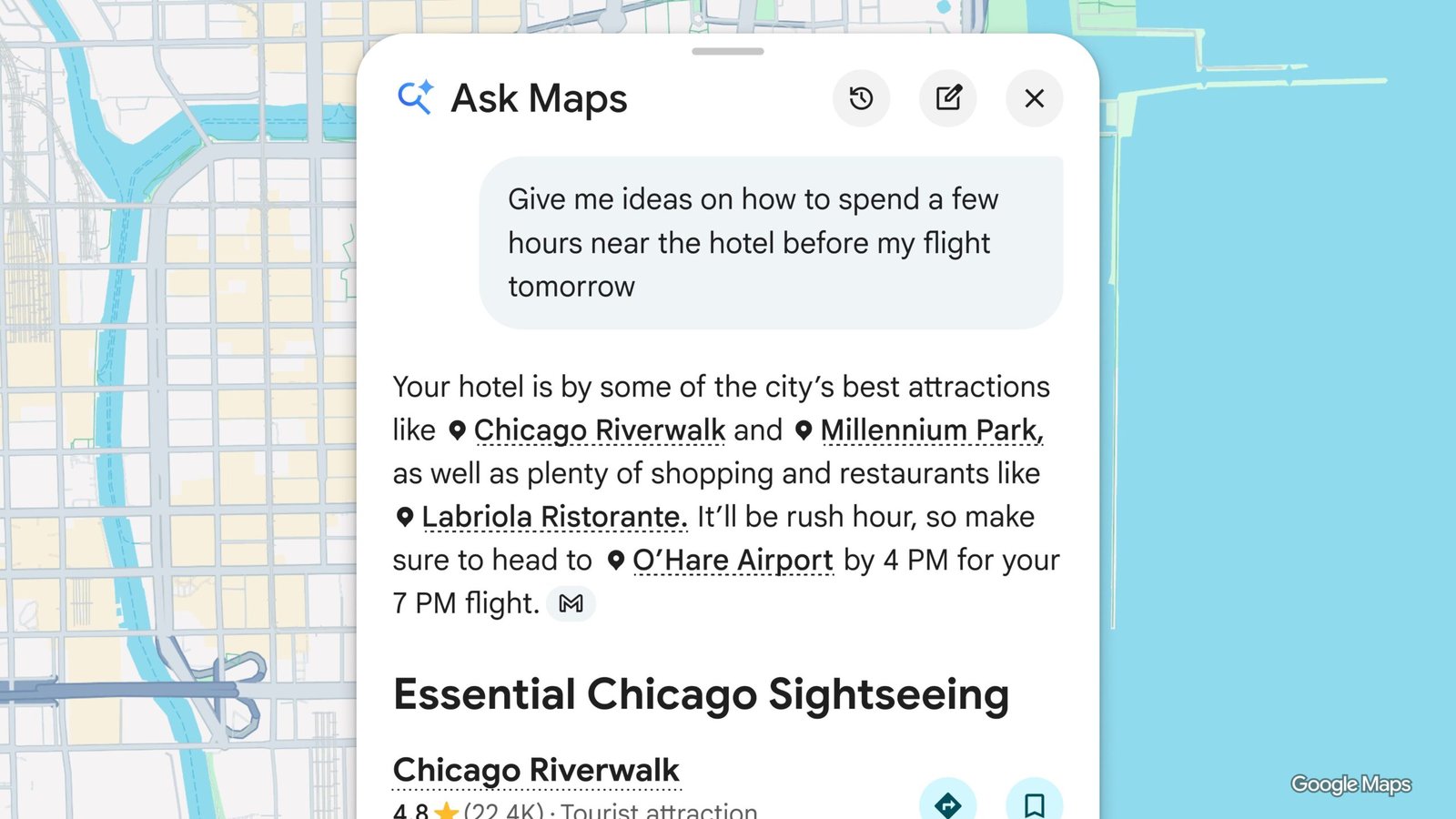
An AI travel assistant is more proactive. It transforms Maps from a static utility into a context-aware travel layer. The app is no longer only answering direction queries; it helps coordinate what happens next.
“The most important shift is not the AI interface itself, but the way it reduces the effort required to move information between services.” — Sarah Jenkins, Travel Technology Analyst
How Cross-App Context Works
AI assistants become more useful when they understand relationships between data points. A hotel address connected to a flight arrival time and a dinner reservation is far more actionable.
- Gmail supplies context: Identifies reservation details, dates, and locations.
- Gemini interprets the trip: Organizes isolated messages into a cohesive travel timeline.
- Maps turns context into action: Suggests routes, nearby places, and realistic arrival windows.
When your phone automatically maps out your unbooked afternoon around flight delays, the nature of travel changes forever.
The Privacy Trade-Off
This March, we introduced Ask Maps, the biggest @googlemaps update in a decade. Now, we’re making it even more helpful and bringing it to more people. 🌏 Expanded availability: Rolling out in Australia, Brazil, Canada, Indonesia, Japan and Mexico, along with over 150 countries… pic.twitter.com/5YGEUkpw3R
— Google (@Google) August 6, 2026
Convenience depends on access to sensitive personal information. Gmail contains confidential details about locations, dates, companions, and habits.
Users must ask whether access is opt-in, temporary, or retained for advertising. A useful travel assistant must be transparent, not merely convenient.
Review Google’s official privacy documentation, explore the Google Maps product announcement hub, and read independent reporting via TechCrunch’s AI integration coverage. How much access should an AI assistant have to your inbox if it can save significant planning time?