
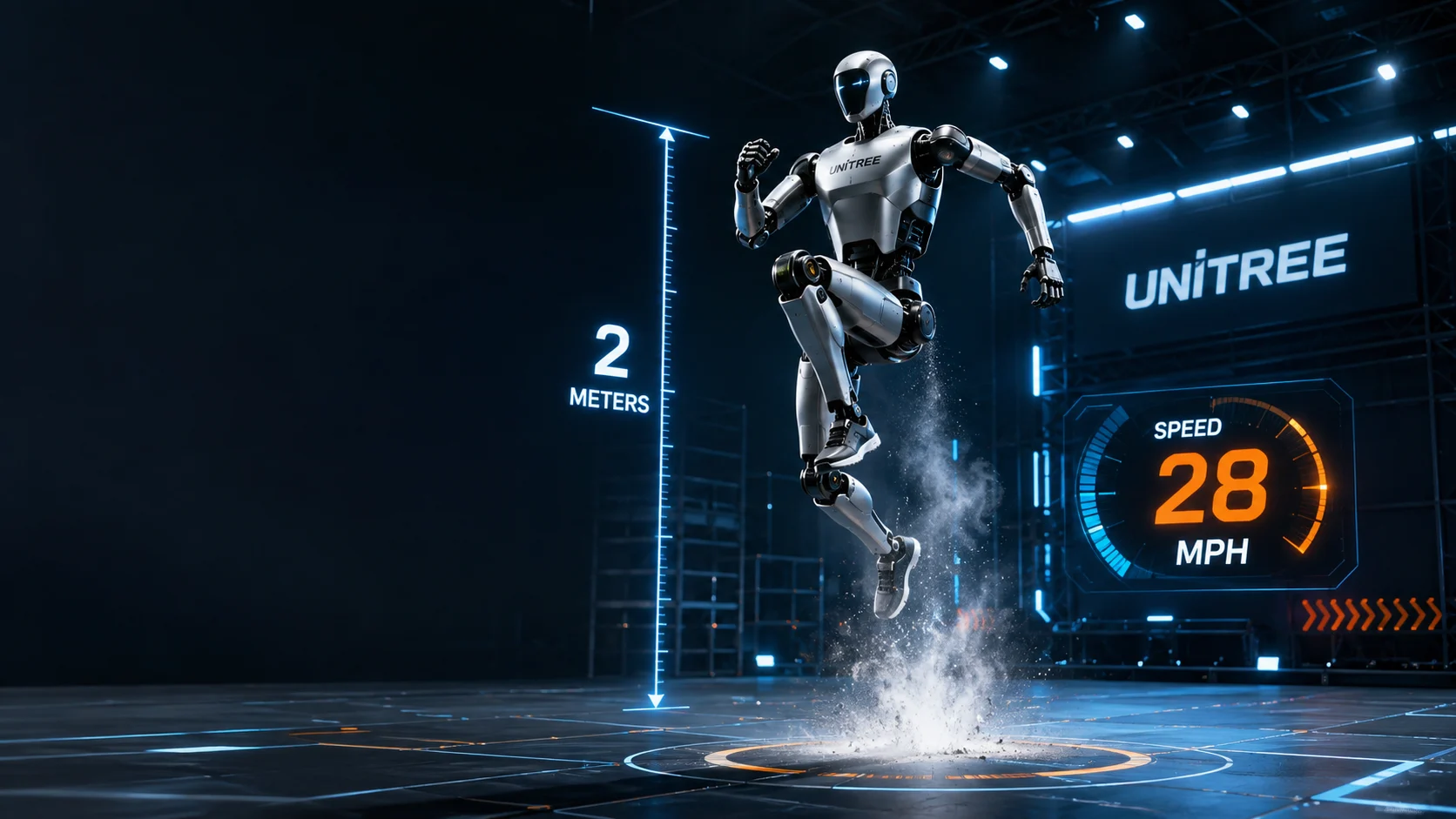
Have you ever wondered how close we are to seeing science-fiction levels of robotics in real life? The future just arrived a little faster than expected. Unitree Robotics has officially taken the tech world by storm with a brand-new humanoid robot—affectionately nicknamed “Superman”—that shatters physical expectations.
The Breaking Stats: Inside Unitree’s Record-Breaking Performance Specs
When it comes to advanced hardware, the numbers tell the real story. Unitree’s latest prototype proves that mechanical limbs can outperform human biological limits in specific dynamic tests.
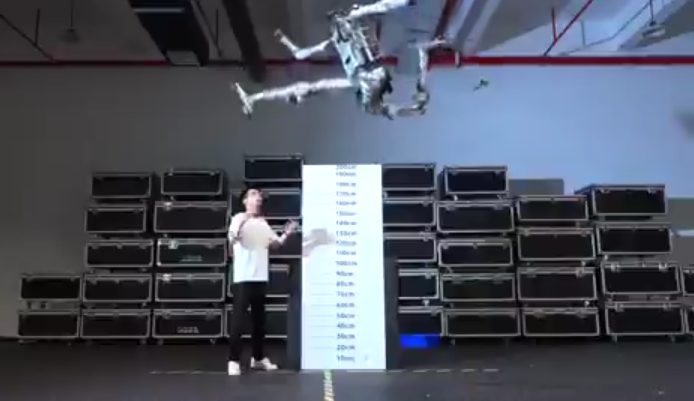
- Vertical Jump: The robot achieves an astonishing standing vertical jump of approximately 2 meters.
- Sprint Speed: It hits a blistering top velocity of 12.66 m/s (roughly 28 mph), outrunning standard human athletic benchmarks.
- Physical Proportions: Designed with 0.85-meter-long legs, the engineering team squeezed maximum torque and actuation power into a compact frame.
These specs highlight a massive leap in actuator efficiency, proving that future automation systems won’t just walk safely—they will move with explosive, athletic agility.
Engineering Marvel: How Short Legs Deliver High-Speed Agility
The secret lies in next-generation electric actuation, high torque-density joint modules, and real-time balance control algorithms. Designing a robot with a 0.85-meter leg length that can absorb the tremendous impact of a 2-meter landing requires instantaneous data processing. The onboard AI motion architecture calculates joint adjustments hundreds of times per second, preventing the machine from tipping over during high-velocity impacts.
Why This Engineering Leap Changes the Future of Commercial Robotics
Beyond the viral video appeal, developments like Unitree’s “Superman” robot carry massive implications for commercial automation and industrial ecosystems. As companies like Unitree Robotics continue to fast-track research and development, high-mobility robots are transitioning from fragile laboratory experiments into rugged, real-world utility assets.
Whether it involves rapid search-and-rescue missions in hazardous environments or complex outdoor logistics, agile mobility unlocks use cases that traditional wheeled or slow-walking robots could never handle. For a deeper look into the history of these mechanical systems, you can check out the Unitree Robotics Wikipedia Overview.
Unitree New Robot Preview: “Superman” Breaking the Limits of Humanity🥳
Standing high jump 2 m, top speed 12.66 m/s (0.85 m leg length)
Surpassing the standing high jump and running speed records of all humans around the world
This new machine has only been in development for a… pic.twitter.com/12i80ITU6p— Unitree (@UnitreeRobotics) August 17, 2026
Frequently Asked Questions
How does Unitree’s robot compare to human athletic records?
Unitree’s latest creation outperforms elite human athletes in specific core movement metrics, clearing a 2-meter vertical jump and sprinting past top human running benchmarks.
What are the primary commercial applications for high-mobility robots?
These agile systems are built for hazardous environment navigation, outdoor logistics, emergency response operations, and heavy-duty industrial site automation.