
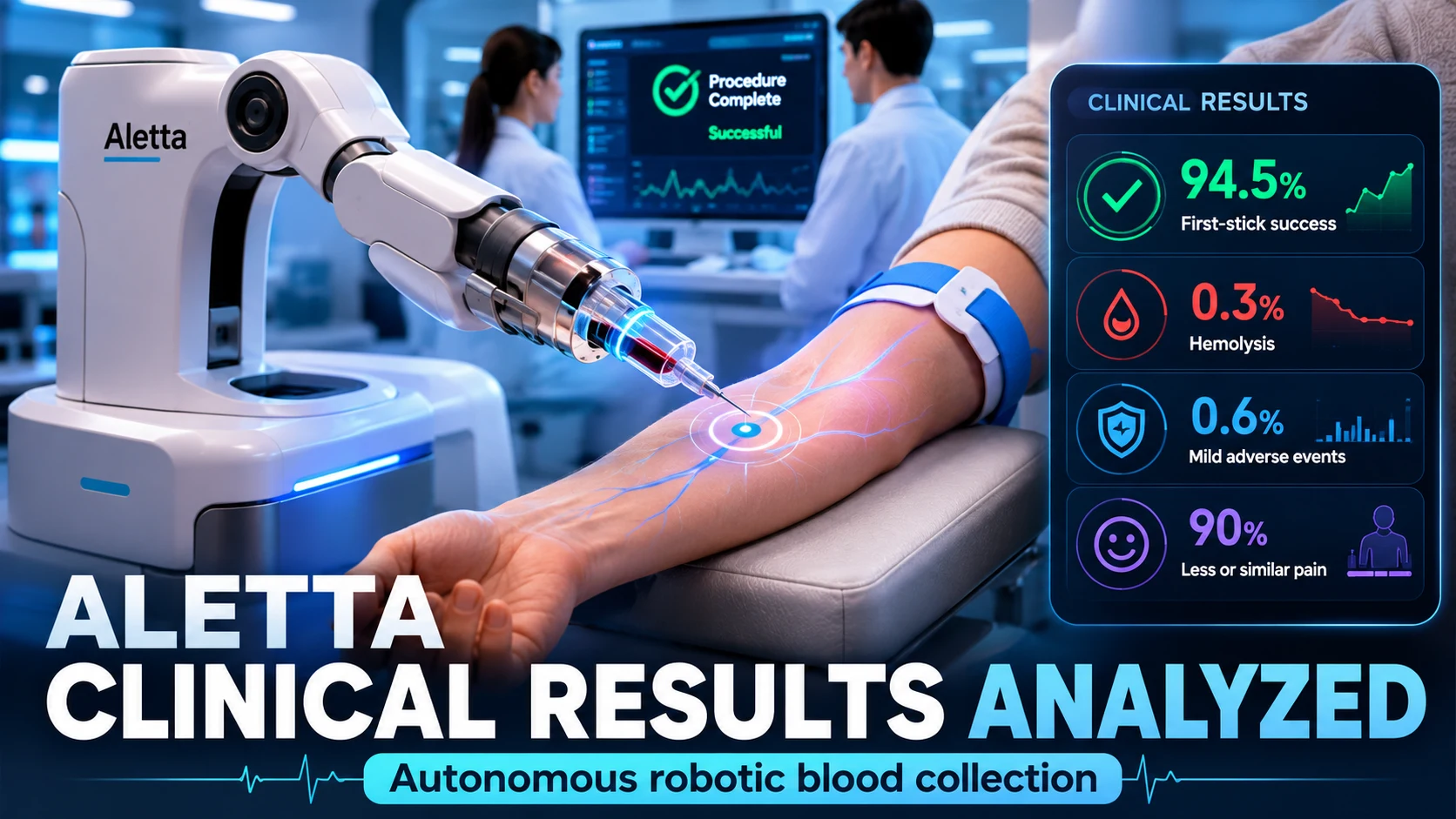
The future of healthcare automation is taking a massive leap forward. Vitestro has officially captured global attention with Vitestro Aletta autonomous blood draw robot clinical results, proving that automated robotic phlebotomy is ready for prime time.
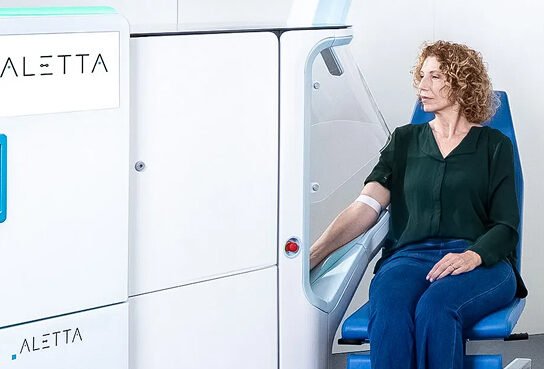
The Breaking Stats: Inside Aletta’s Multicenter Trial Performance
When it comes to evaluating medical hardware, rigorous clinical numbers tell the true story. The trial, conducted across outpatient settings including OLVG in Amsterdam, tested thousands of patient draws.
- First-Stick Success Rate: The device achieved an exceptional 94.5% success rate on the first attempt.
- Challenging Patient Demographics: The system successfully navigated difficult venous access scenarios, including elderly individuals and patients with challenging body mass index profiles.
- Safety and Quality: Trial data highlighted low sample hemolysis rates and an overall safe operating profile comparable to or exceeding standard human-operated procedures.
These specifications prove that autonomous medical devices can handle high-volume hospital environments without sacrificing clinical precision.
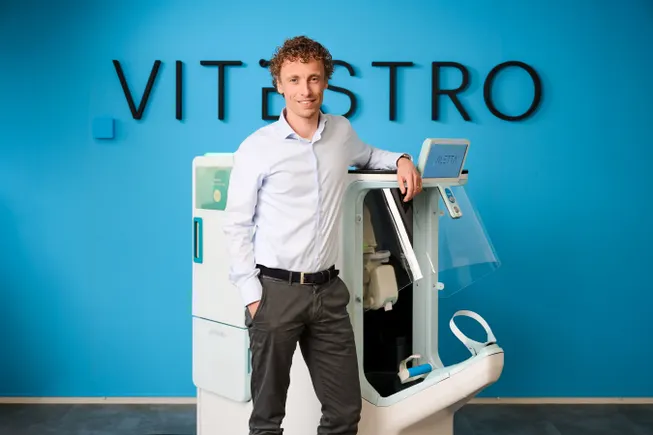
Engineering Synergy: How Artificial Intelligence and Multimodal Imaging Guide the Needle
The magic lies in a sophisticated combination of artificial intelligence, near-infrared (NIR) vein visualization, and real-time Doppler ultrasound imaging. Before inserting the needle, Aletta maps the subcutaneous vascular structure to accurately distinguish veins from surrounding arteries and tissue.
- What does the patient experience actually feel like? Patient acceptance trials revealed that roughly 90% of participants reported pain levels lower than or comparable to traditional manual blood draws, with a vast majority expressing a strong willingness to use the robotic device again.
How Autonomous Phlebotomy Solves Hospital Staffing Crises
Beyond technical precision, developments like Vitestro’s device carry major implications for hospital operational efficiency. As highlighted in Clinical Lab Products reporting on autonomous phlebotomy trials, healthcare facilities globally are facing severe laboratory staffing shortages.
By deploying automated workstations where a single trained supervisor can safely oversee up to three devices at once, hospitals can streamline workflow bottlenecks and improve throughput. For further details on clinical validation milestones, you can review Vitestro’s official Aletta clinical evidence overview.
This ROBOT could TAKE OVER ROUTINE BLOOD DRAWS from DOCTORS
Aletta AUTOMATICALLY LOCATES a VEIN
Device inserts NEEDLE while YOU DON’T EVEN SEE IT pic.twitter.com/8uzIvASHrF
— RT (@RT_com) August 16, 2026
Frequently Asked Questions About the Aletta Blood Draw Robot
What is Vitestro’s Aletta robot and how does it work?
Aletta is an Autonomous Robotic Phlebotomy Device (ARPD) that automates routine blood collection from start to finish, utilizing AI and ultrasound imaging to find veins and draw blood safely.
Is the robotic blood draw painful for patients?
Clinical trial data reveals that 90% of participants experienced pain levels less than or comparable to traditional manual blood draws, making it a comfortable experience for patients.