
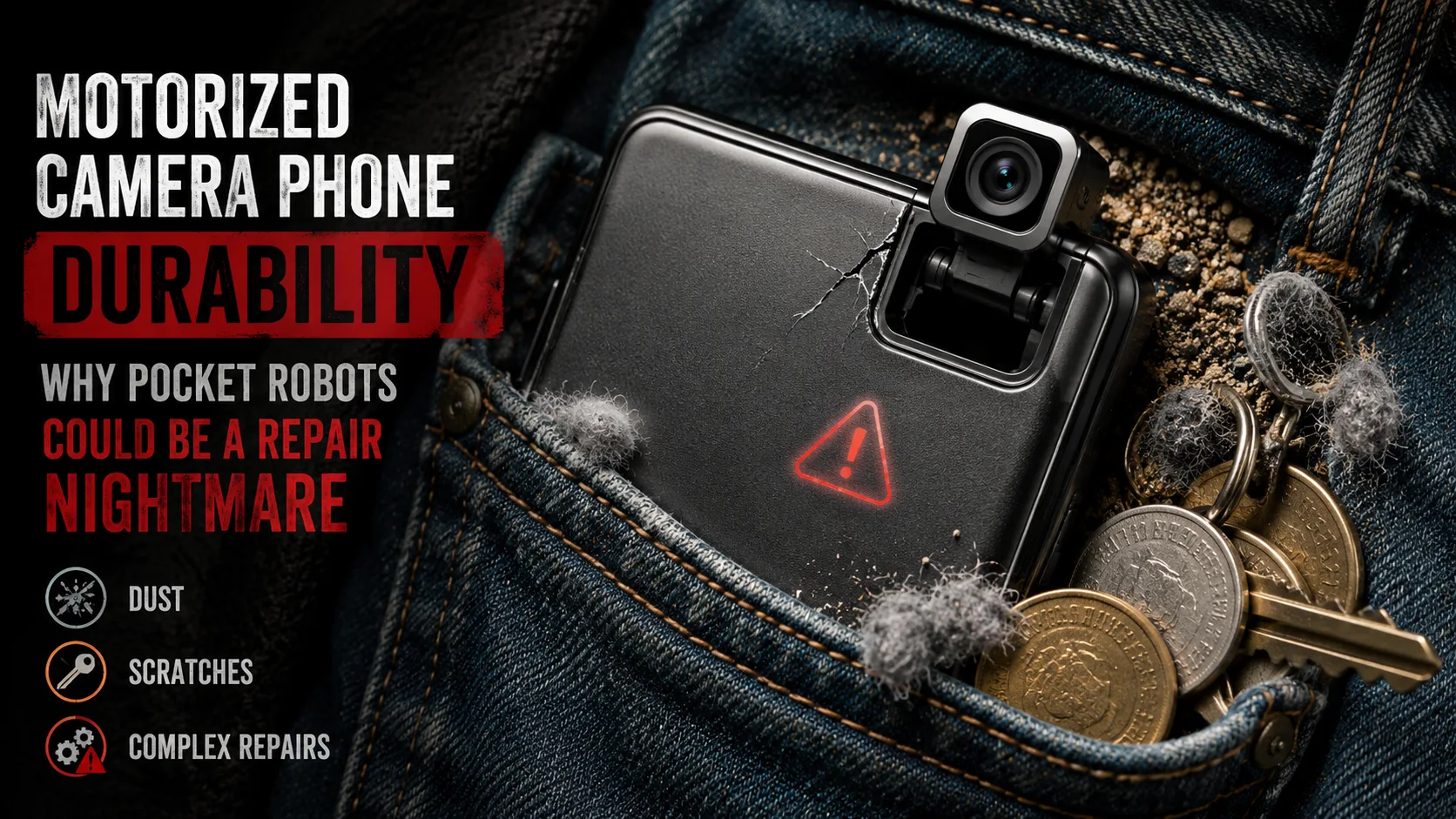
Your phone’s camera may soon do more than take pictures—it may physically follow you. HONOR’s Robot Phone brings a motorized gimbal camera into a smartphone, using a 200MP camera system and a 4-DoF mechanical design.
But what happens when that tiny robot meets the roughest environment imaginable: a pocket filled with keys, lint, sand, sweat, and accidental drops? A camera that moves can also jam, grind, or stop moving.
That question matters because the phone starts at RMB 9,999, or roughly $1,485, while reports say its camera module alone could cost about $455 to replace. Can a precision gimbal survive years in an everyday pocket? Early buyers may be testing a new mechanical design before long-term failure data exists.
What Is a Motorized Camera Phone?
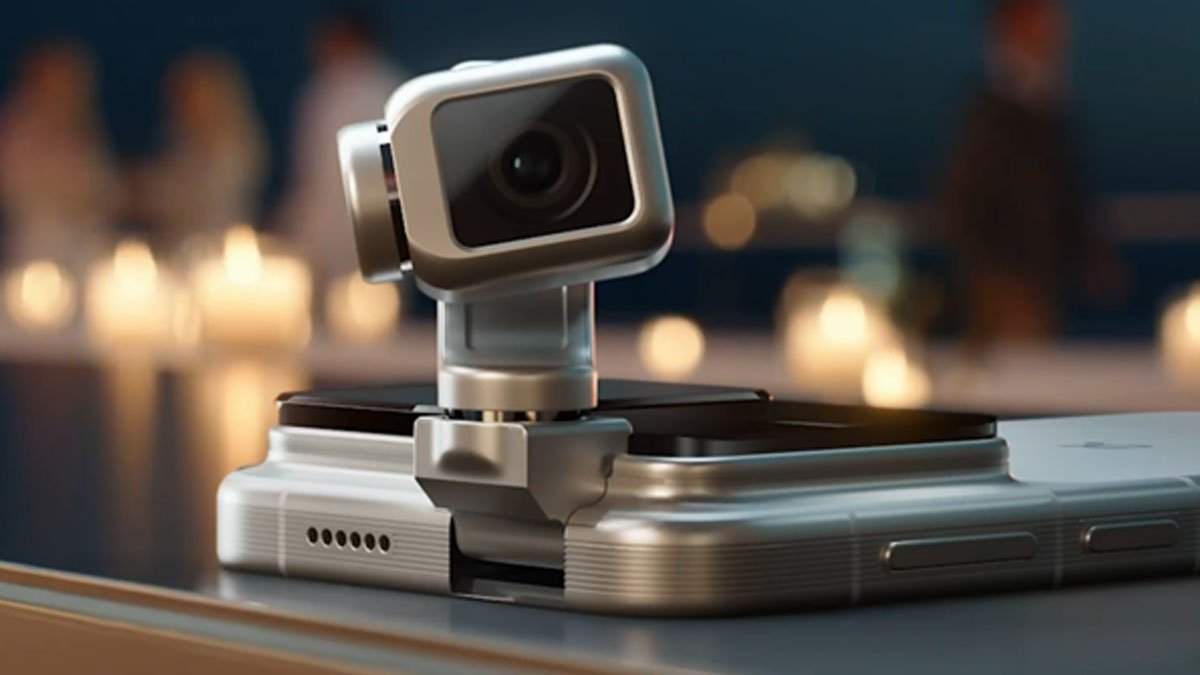
A motorized camera phone uses tiny motors and mechanical joints to physically move a camera module. Unlike optical image stabilization, which shifts a lens or sensor by a small amount, a robotic gimbal can tilt, pan, rotate, and track subjects.
HONOR says its Robot Phone uses a compact mechanical system with a titanium gimbal, a 200MP main camera, and three-axis stabilization. A fixed smartphone camera is like a window built into the phone. A motorized camera is more like a miniature camera operator attached to the phone.
Why the technology is exciting
The appeal is not only novelty. A moving camera can produce physical stabilization and framing effects that software alone cannot perfectly recreate, helping with smooth walking videos, subject tracking, and automatic framing.
| Camera type | How it works | Main benefit |
|---|---|---|
| Fixed camera | Lens and sensor stay in place | Fewer mechanical failure points |
| Optical stabilization | Tiny internal lens or sensor movement | Reduces shake |
| Motorized gimbal | Camera physically pans and tilts | Stabilization, tracking, creative movement |

The Durability Problem Starts With Movement
Every moving component creates a new wear point. A motorized camera may depend on miniature gears, bearings, springs, flex cables, position sensors, seals, and hinges working together inside a thin phone.
The more a camera moves, the more ways it has to fail. A fixed camera can still suffer cracked glass or sensor damage, but it does not have a motor that must repeatedly extend, rotate, and return to its original position.
- Motor wear: Repeated movement can reduce performance over time.
- Gear damage: A drop may misalign or strip tiny gears.
- Flex-cable stress: Repeated motion can bend internal cables.
- Sensor misalignment: The camera may move but produce tilted or unstable footage.
Would you rather have a slightly less dramatic camera that stays fixed, or a smarter camera with more parts that can break?
Why Drops Are Especially Dangerous
A traditional phone drop usually threatens the screen, frame, back glass, or camera lens. A motorized camera adds a new concern: the impact can transfer force into a moving assembly that was designed to rotate precisely, not absorb a sudden collision.
| Drop scenario | Possible damage |
|---|---|
| Phone lands on the camera module | Cracked lens cover, bent housing, damaged gimbal |
| Phone falls while camera is extended | Broken arm, motor overload, misalignment |
| Phone lands on a corner | Frame distortion affecting camera movement |
| Phone is crushed in a bag or pocket | Stalled motor or damaged hinge |
Pocket Lint Could Be the Silent Killer
Pocket environments are hostile to precision mechanics. Denim fibers, dust, sand, skin particles, coins, and keys can enter tiny gaps or settle around moving joints.
Reports indicate that the HONOR Robot Phone carries an IP54 rating when the camera is stowed, meaning users should not assume the moving camera is fully dust-tight or waterproof while operating.
Important: An IP rating describes tested ingress protection under specific conditions. It does not guarantee that a moving camera will remain reliable after years of pocket lint, impact, or repeated mechanical cycles.
Repair Costs Could Be the Real Shock
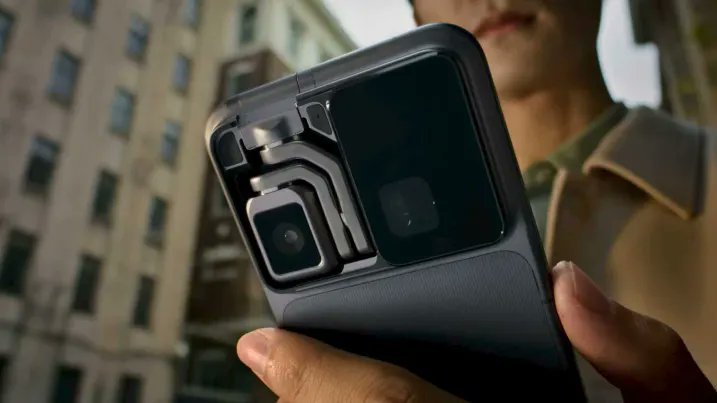
The biggest concern may not be whether the camera breaks, but how much the repair costs when it does. A report on the HONOR Robot Phone puts the replacement gimbal camera at approximately $455, close to one-third of the phone’s starting price.
| Repair issue | Fixed camera phone | Motorized camera phone |
|---|---|---|
| Number of major moving parts | Few or none | Motors, joints, gears, sensors |
| Likely repair complexity | Moderate | High |
| Accidental-drop risk | Lens and frame damage | Lens, motor, hinge, and alignment damage |
| Potential repair bill | More predictable | Could be substantially higher |
What Buyers Should Look For
Before purchasing a motorized camera device, consider checking these factors:
- Has the camera passed a published rotation-cycle test?
- Does the IP rating apply only when the camera is closed?
- Is accidental damage covered under standard or extended warranty options?
- Can the camera module be replaced independently?
✨🇨🇳This is the new Robot Phone from Honor, a Chinese tech brand. It has a detachable rotating camera and a super unique design! pic.twitter.com/2cLYODlX6A
— 🇨🇳XuZhenqing徐祯卿 (@XueJia24682) March 2, 2026
Frequently Asked Questions
Are motorized camera phones more fragile? They may be more vulnerable to certain types of damage because they contain additional motors, joints, and moving assemblies. Actual durability depends heavily on engineering, sealing, and materials.
Can pocket dust damage a robotic camera? It creates a risk if dust, lint, or sand reaches the moving mechanism. An IP rating helps describe baseline protection, but it does not guarantee total resistance to harsh pocket conditions.
How much could a motorized camera repair cost? Reported replacement gimbal modules for high-end robotic camera configurations approach $455, though local repair pricing varies by region and taxes.