
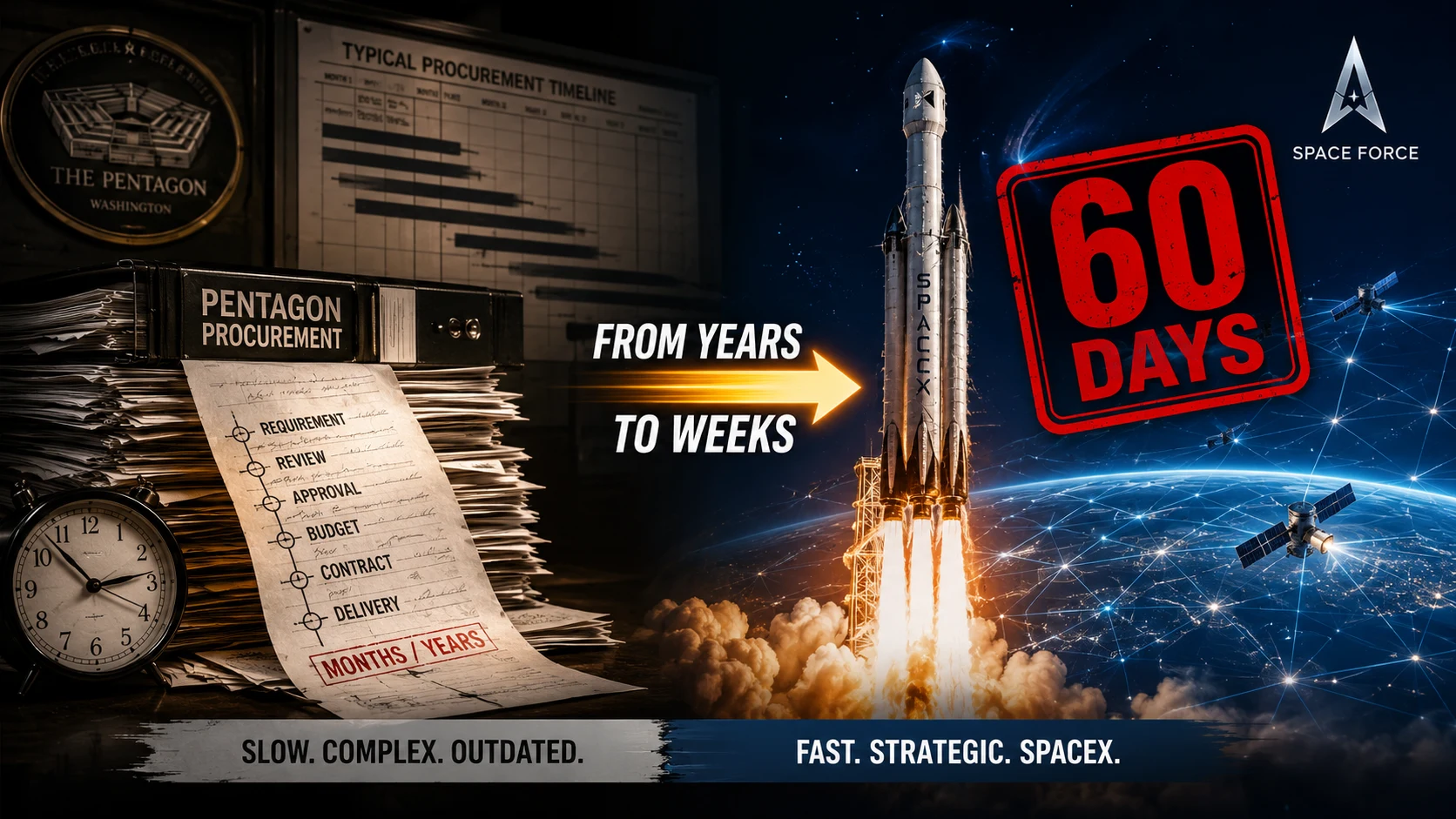
Shocked by the speed, military analysts watched the Space Force approve a $1.6 billion SpaceX deal in just 60 days. That is a timeline that would normally stun defense observers used to multi-year procurement delays.
How did a military program move this fast? Because the answer signals an unprecedented shift in defense acquisition. With 18 Falcon 9 launches locked in through 2027 and 2 task orders finalized in record time, military speed is being radically redefined.
What Happened
Space Systems Command officially issued two major launch task orders to SpaceX under the National Security Space Launch (NSSL) Phase 3 Lane 1 framework. The deal accelerates critical communications and air target tracking satellite deployments.
| Detail | Summary |
|---|---|
| Contract Value | $1.6 Billion |
| Procurement Timeline | 60 Days (1 month for proposal, 1 month to award) |
| Main Agency | U.S. Space Force (Space Systems Command) |
| Contractor | SpaceX (18 Falcon 9 launches) |
| Key Missions | Air Moving Target Indication & Space Data Network |
| Bigger Meaning | Faster, commercial-style military acquisition |
That is not normal in defense contracting. The Space Force completed initial requirement identification, vendor proposal preparation, and final contract execution in just two months.
Why the Speed Matters
Traditional Pentagon acquisition cycles often stretch for years, weighed down by endless review loops and bureaucratic friction.
- Streamlined Contracting: The NSSL Phase 3 Lane 1 structure removes restrictive mission assurance steps for lower-risk payloads.
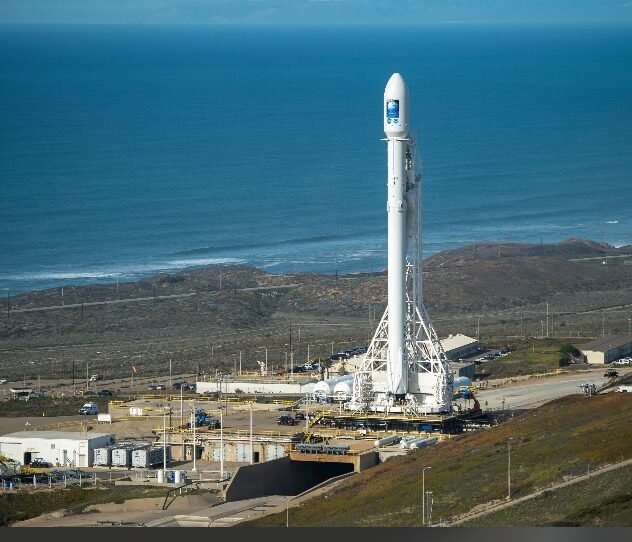
- Commercial Integration: Leveraging commercial Falcon 9 reusability avoids long hardware production cycles.
- Tactical Urgency: Orbiting near-real-time threat detection networks requires instant deployment to maintain domain superiority.
So what changed behind the scenes? Defense leaders realized military space systems cannot afford multi-year delays when commercial innovation moves in months.
What This Means for Defense
This rapid award proves that military acquisition can adopt Silicon Valley execution speeds without sacrificing mission scope.
- Faster Satellite Deployment: Payloads hit orbit in months rather than staying grounded in administrative review.
- Shift Toward Commercial Partners: Established private launch providers gain an advantage over slow-moving legacy contractors.
- Flexible Architecture: Dual-lane acquisition mechanisms allow the Space Force to scale launches dynamically as national threats change.
“We have set an unprecedented two-month acquisition timeline… Ultimately, this timeline results in the speed our warfighter demands more than ever before.” — Col. Eric Zarybnisky, Space Access Portfolio Acquisition Executive
Is this the future of defense acquisition, or a one-off exception?
BREAKING: SpaceX has been awarded a $1.6 billion contract by the U.S. Space Force for 18 Falcon 9 missions to launch military targeting satellites. pic.twitter.com/F5SzRrWyg3
— DogeDesigner (@cb_doge) July 29, 2026
What Comes Next
The Space Force expects demand for Lane 1 launches to nearly triple as more tactical satellite programs seek fast-track launch service contracts.
- Agencies Following Suit: Other military branches are evaluating similar dual-lane buying models to bypass legacy acquisition bottlenecks.
- Pressure on Competitors: Rival launch providers must match SpaceX’s rapid readiness or risk losing future defense task orders.
- Modernization Acceleration: Near-real-time sensing and targeting capabilities will deploy directly to joint warfighters by the end of 2027.
What happens when military urgency meets commercial launch speed? The Pentagon gets a blueprint for building an agile space defense network in real time.
Official announcements and contract details are accessible on Air & Space Forces Magazine: Space Force $1.6B SpaceX Contract and GuruFocus SpaceX Defense Contract Report.