
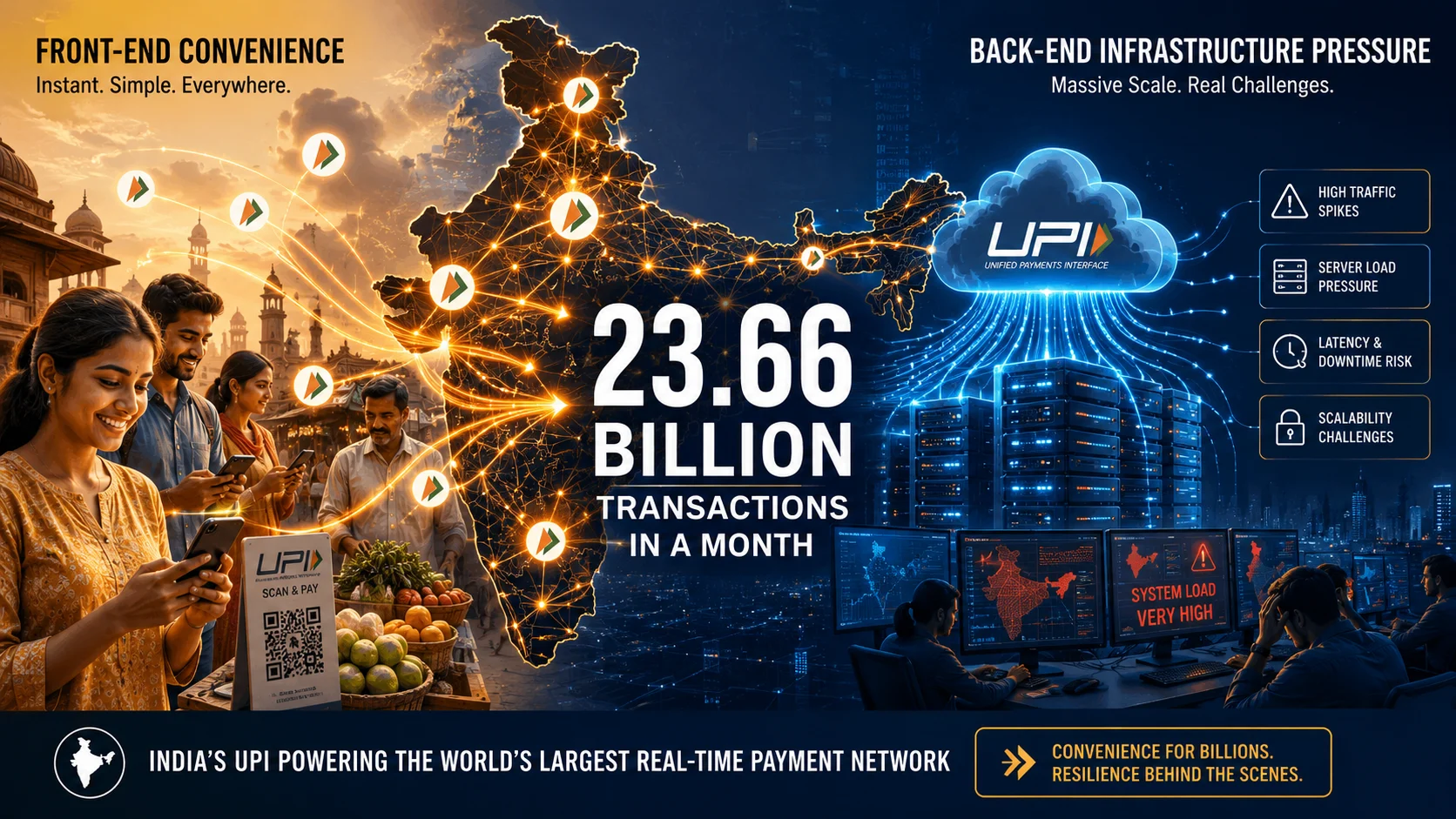
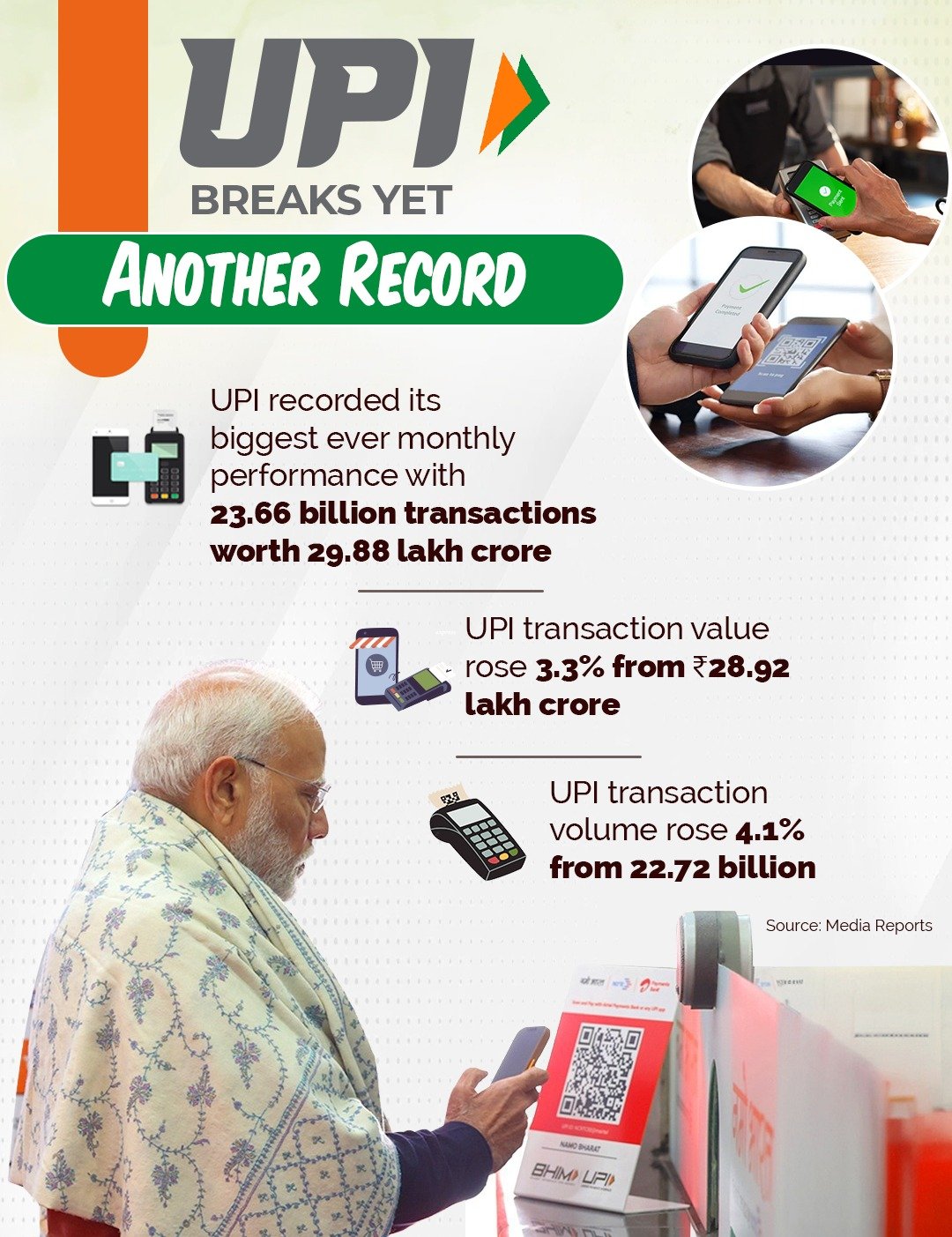
India’s digital payments system just shattered another record. UPI shattered expectations in July 2026 by processing an astonishing 23.66 billion transactions valued at ₹29.88 lakh crore, averaging 763 million transfers daily.
How did one national payment rail handle relentless peak-hour traffic without collapsing under extreme pressure? The answer lies in distributed server architecture, low-latency API queues, and a digital backbone powered for massive scale.
Why the Record Matters
The story behind this 23.66 billion figure goes beyond raw consumer adoption. It is a global case study in infrastructure resilience under heavy digital load.
| Angle | What to Cover |
|---|---|
| User Experience | Seamless sub-second payments for merchants, billers, and P2P transfers. |
| Backend Tech | Real-time load balancing, low-latency API handling, and automatic failover. |
| Network Effect | Deep penetration across Tier-2, Tier-3, and rural markets. |
| Global Relevance | Operational blueprint for real-time rails across 10 international markets. |
Inside the UPI Machine
How does the system prevent widespread outages when millions pay simultaneously?
The National Payments Corporation of India (NPCI) and participating banks rely on distributed architecture and multi-bank routing. When one bank server slows down, smart routing algorithms redirect payment payloads instantly.
- Dynamic Load Balancing: Automatically shifts traffic across redundant server clusters during traffic surges.
- Low-Latency Fraud Checks: Scans every transfer for anomalies in milliseconds without stalling checkout times.
- High-Throughput APIs: Processes thousands of requests per second per node to keep checkout queues moving.
But processing massive volume is only half the battle — keeping processing latency near zero is the real engineering challenge.
The Backend Challenge
To maintain uninterrupted uptime, backend systems must balance transaction queues across hundreds of member banks and third-party apps.
- Uptime Guarantee: Core banking solutions maintain active-active failover databases to avoid single points of failure.
- Latency Reduction: API payloads are kept lightweight so even low-bandwidth 4G/5G connections complete transfers quickly.
- Queue Smoothing: Peak-hour traffic spikes from utility bills and daily shopping are distributed across dedicated microservices.
What Experts Say About the Scale
“A payments rail like UPI succeeds when scale becomes invisible to the end user,” says a senior payments infrastructure researcher. “The true milestone is maintaining sub-second speeds and bank-grade uptime while daily volume clears 763 million transactions.”
India’s UPI Transaction Volume Hits All-Time High Of 23.66 Billion In Julyhttps://t.co/i23XcLiPNQ via NaMo App pic.twitter.com/bsHSXkSyvD
— PMO India (@PMOIndia) August 3, 2026
The Next Scaling Test
Can payment networks stay ahead as global linkages expand?
As UPI expands across international corridors like the UAE, Singapore, France, and Sri Lanka, infrastructure teams must manage cross-border currency conversions and global compliance rules alongside domestic volume.
Official Portals & Verification
Official Data & Analysis: • NPCI Official Throughput Portal • Reserve Bank of India Payments Data • Economic Times Banking & Finance • Business Standard Financial Insights