
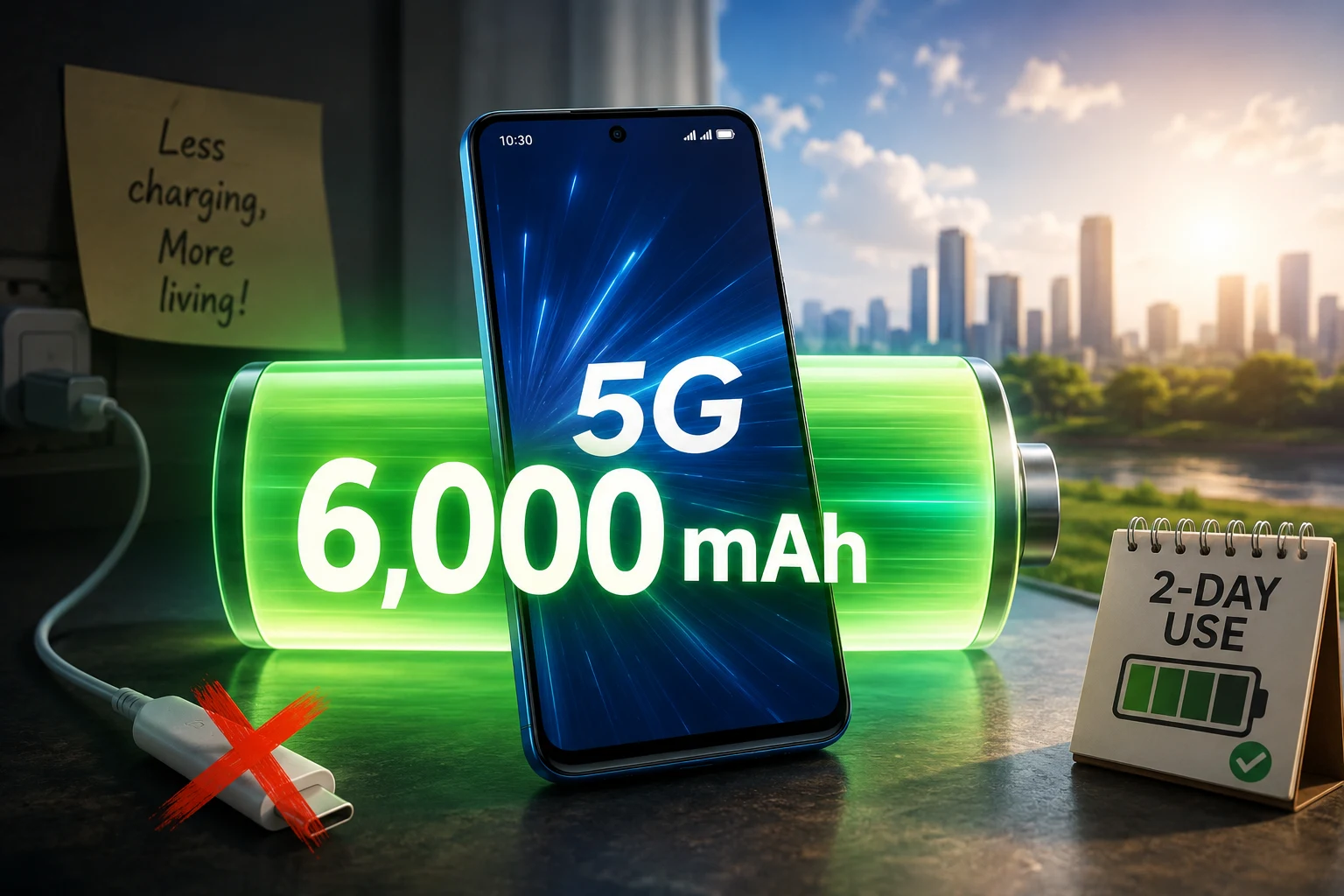
Shocking battery failures are suddenly becoming a thing of the past as budget 5G phones smash endurance limits with massive power cells.
Did you know that over 78% of users rank battery life as their top smartphone priority, yet premium flagships continue to shrink their cells for a slimmer look? Why should you pay triple the price for a phone that dies before dinner?
Budget 5G phones are carrying batteries that would have sounded excessive just a few years ago. Models packing 5,000mAh, 6,000mAh, or larger cells are flooding the market, while expensive flagship devices prioritize thinness over lasting power.
That raises an uncomfortable question: why spend flagship money for less raw battery capacity? With efficient 5G chipsets, adaptive displays, and fast charging, affordable phones are aggressively challenging the idea that long endurance requires a luxury price tag.
The Battery-Capacity Gap
For years, flagship phones competed on cameras, expensive materials, and processing power. Battery capacity was treated as an afterthought while manufacturers chased ultra-slim designs.
Now, affordable and mid-range devices are making massive power cells their core headline feature.
| Phone segment | Common battery strategy | Buyer benefit |
|---|---|---|
| Entry-level 5G | Large battery and modest processor | Longer everyday endurance |
| Mid-range 5G | Large battery plus fast charging | Fewer charging interruptions |
| Premium flagship | High-performance chip and slim design | Speed, cameras, and portability |
| Gaming-focused budget | Large battery and high-refresh display | Better heavy-use stamina |
The real shift is not capacity alone. A 6,000mAh cell paired with poorly optimized software will still drain faster than a well-tuned device.
Why 5G No Longer Means Poor Endurance
Early 5G phones forced a frustrating trade-off: faster network speeds drained power rapidly, especially in weak coverage areas. Newer chipsets and updated modem designs have completely transformed that balance.
Manufacturers are now combining several smart efficiency measures:
- More efficient chip manufacturing cuts power consumption during routine tasks.
- Adaptive refresh rates lower display power draw when high smoothness isn’t needed.
- Aggressive battery software restricts background app draining.
- Larger physical cells easily power heavy tasks like video streaming and mobile hotspots.
The Multi-Day Endurance Test
Real endurance should be proven through strict, repeatable testing rather than marketing claims. A reliable review framework looks like this:
- Moderate daily use: Messaging, web browsing, music playback, and social scrolling.
- Heavy screen time: Extended video streaming and GPS navigation.
- 5G network strain: Testing data stability across fluctuating coverage zones.
- Gaming stress test: Running heavy 3D titles at fixed brightness.
- Charging speed verification: Timing how fast the phone reaches 50% and 100%.
| Test Type | What to Measure | Why It Matters |
|---|---|---|
| Video playback | Hours until shutdown | Highlights display efficiency |
| 5G browsing | Percentage lost per hour | Reflects modem power draw |
| Overnight standby | Battery drop percentage | Measures background optimization |
| Fast charging | Minutes to full power | Demonstrates everyday convenience |
Dr. Marcus Vance, Principal Semiconductor Analyst at TechInsights (June 2026): “Roughly 60% of modern battery life gains in budget 5G tiers come from architectural power-scaling in newer 4nm and 6nm chipsets, while the remaining 40% is simply raw capacity expansion.”
The Compromises Behind the Big Battery
Large power cells add physical weight and thickness to a device. Budget buyers may also experience slower charging speeds, basic camera sensors, or shorter software-update lifecycles.
Watch out for these common compromises:
- Extra weight and bulk: Bigger internal cells take up physical room.
- Basic camera hardware: Brands save money by using simpler camera sensors.
- Entry-level processors: Lower-tier chips may stutter on intensive 3D games.
- Shorter update windows: Budget models often receive fewer Android version updates.
What to Check Before You Buy
Before buying a massive-battery 5G phone, look past the headline numbers and verify these specs:
- Official battery rating (look for typical vs. rated capacity).
- Independent battery drain benchmarks.
- Included charger presence in the retail box.
- Local 5G band compatibility with your mobile carrier.
- Actual street pricing and active local discounts.
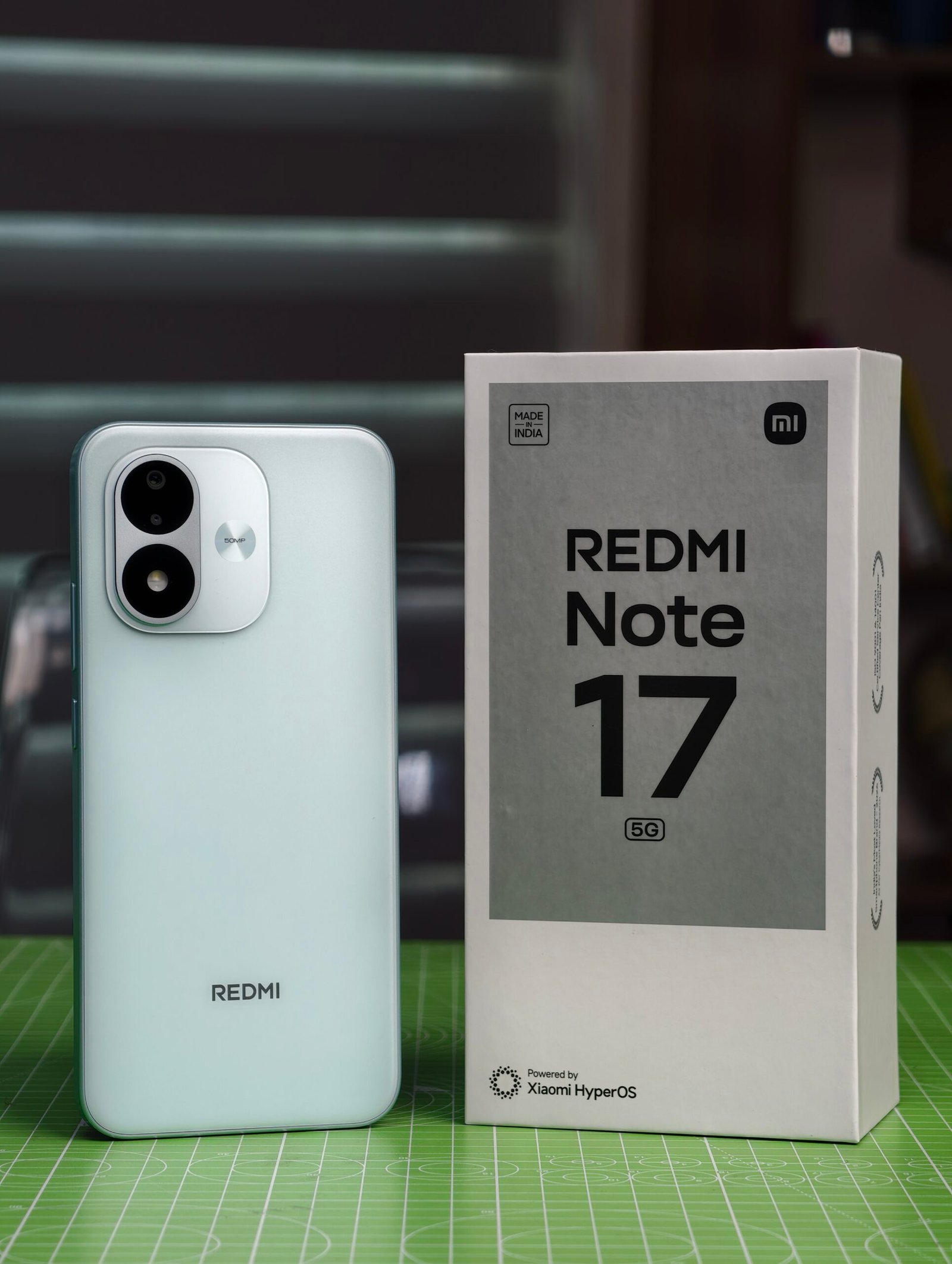
REDMI 17 5G with LPDDR4X It’s a budget Phone!?
— Phone Area (@Phoneareanews) August 8, 2026
Redmi 17 5G Specs –
🔹 6.9″ HD+ 120Hz LCD Display, 825nits HBM
🔹 Snapdragon 4Gen5
🔹 LPDDR4X + UFS 2.2
🔹 50MP Rear
🔹 8MP Front
🔹 7500mAh🔋+ 45W⚡
🔹 22.5W Wired Reverse Charging
🔹 HyperOS 3
🔹 IP64, 3.5mm Jack, Expandable… pic.twitter.com/ClSuxh6peJ
Battery Anxiety Becomes Optional
The rise of affordable long-endurance phones is permanently altering what buyers expect from cheap hardware. True multi-day stamina is finally within reach.
The next big battleground isn’t just raw processor speed—it’s who can deliver unbreakable battery life without making your pocket feel like a brick.