
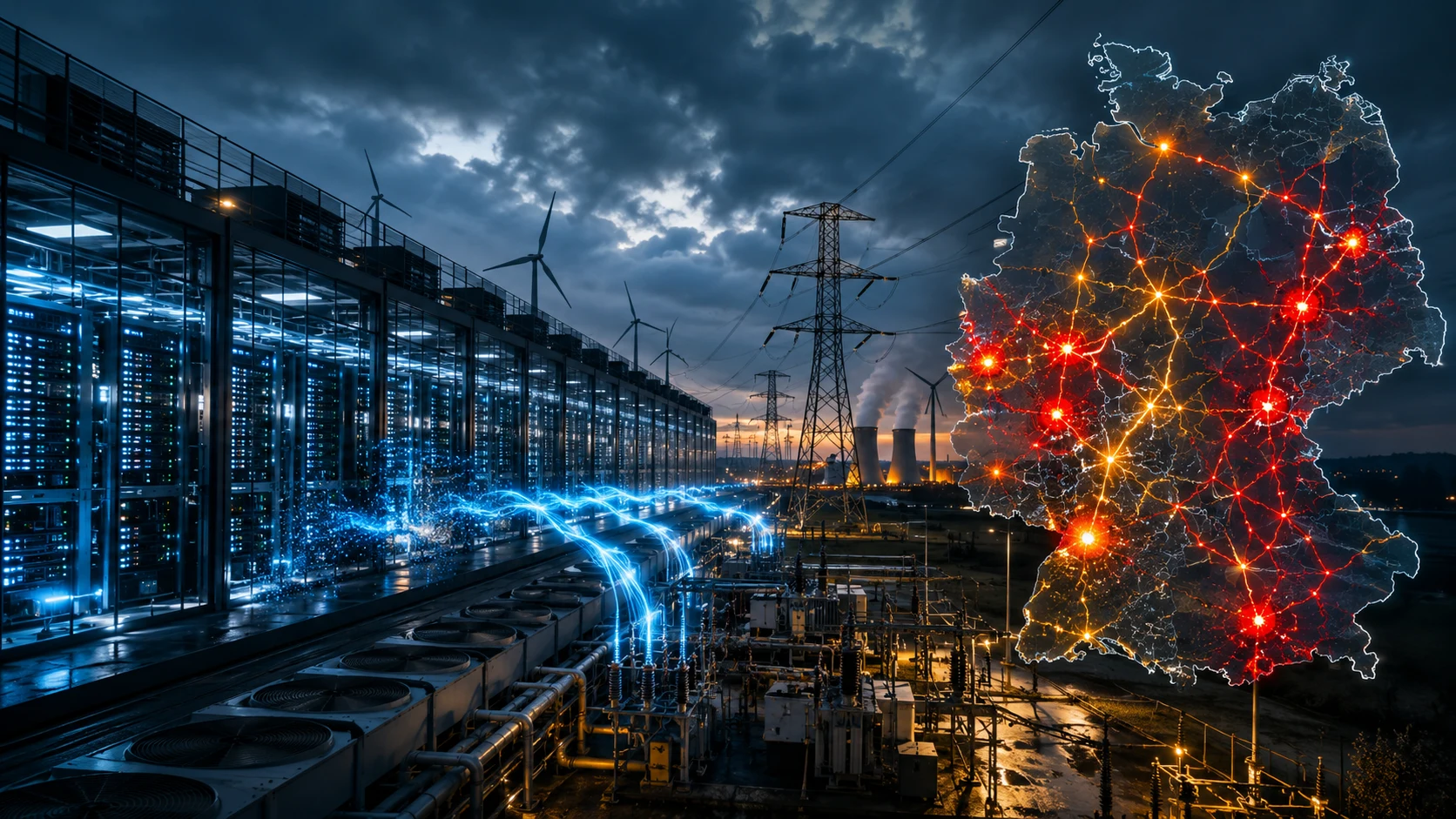
Germany’s AI boom is shattering against a brutal physical wall: the power grid simply cannot deliver enough electricity to keep next-generation server clusters online.
With total data center capacity targeting 5,000 MW by 2030 and connection wait times stretching up to 10 to 15 years, AI developers are scrambling for power. 21.3 billion kilowatt-hours of annual power demand is forcing operators off the public grid and into building their own private energy plants.
If local utility grids cannot scale fast enough, where does the electricity come from? The industry’s glossy digital cloud is hitting a gritty physical reality of substations, turbines, and permit delays.
The Grid Meets the AI Boom
For decades, digital infrastructure relied on straightforward grid hookups. Today, training complex artificial intelligence models demands massive, unbroken baseload power that traditional urban distribution networks were never designed to carry.
- Massive rack density: AI servers consume up to 3 to 4 times more energy per rack than classic web hosting setups.
- Concentrated demand hubs: Over 1,000 MW of capacity is jammed into Frankfurt alone, choking local substations.
- Long queues: Brandenburg regional grids logged 22 GW in connection inquiries, but only connected 200 MW.
Why Megawatts Matter More Than Models
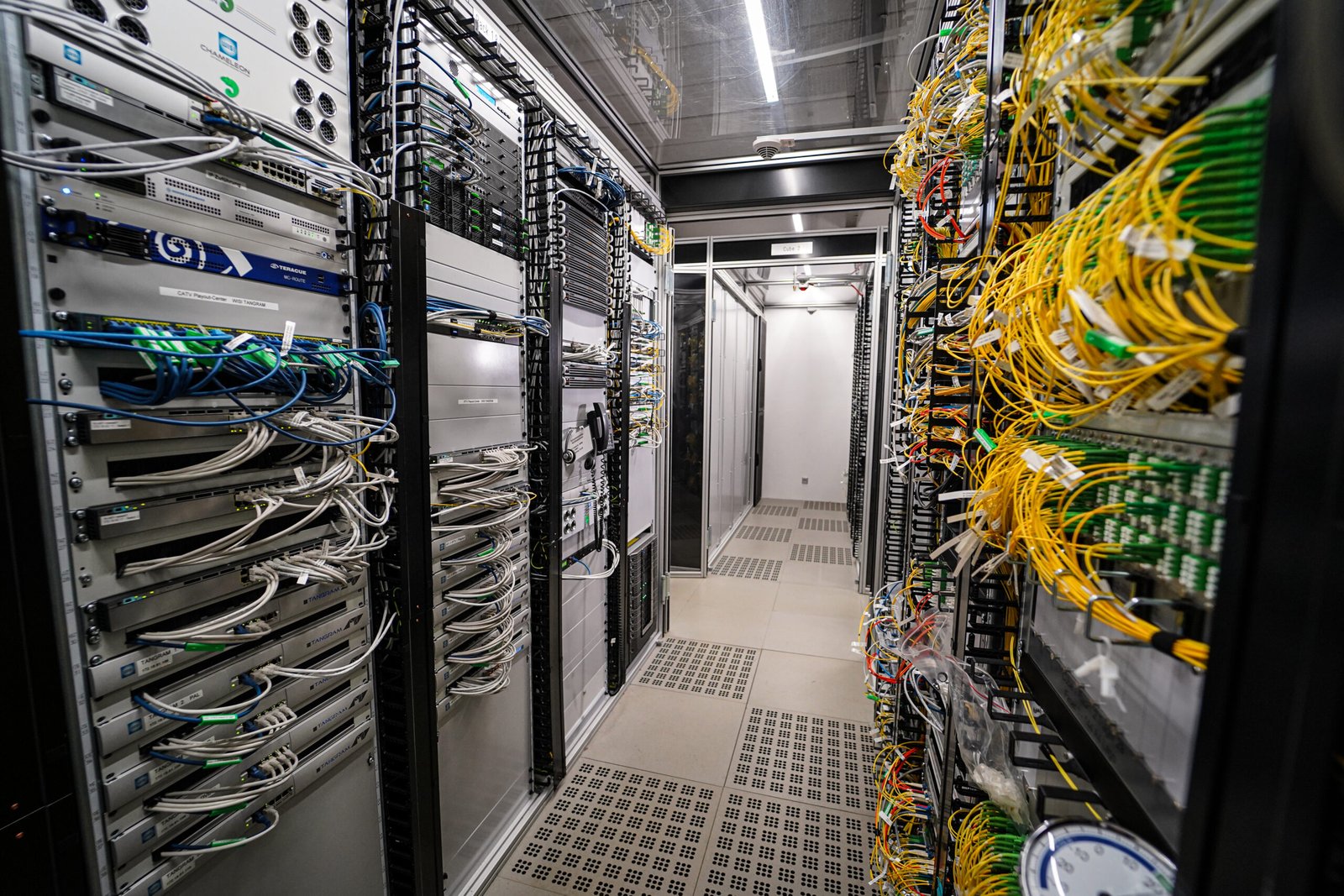
What good is an advanced AI chip if there are no electrons to power it? Grid capacity, connection delays, and strict local environmental permitting are creating a massive mismatch between computing ambitions and grid reality.
| AI Demand Reality | Infrastructure Constraint | Operator Response |
|---|---|---|
| High continuous power load | Limited transmission grid capacity | Private high-voltage substations |
| Rapid scaling needs | Slow permitting and 7+ year wait times | On-site gas turbines & engines |
| Zero downtime tolerance | Regional grid congestion | Industrial battery storage arrays |
| Dense compute clusters | Coal phase-out power gaps | Hybrid micro-grids |
Can European AI scale if municipal grids cannot keep up? Developers are quickly learning that power delivery dictates computing success.
Inside the Workarounds
Rather than waiting years for grid expansions, data center operators are taking matters into their own hands. They are constructing self-contained micro-grids capable of generating their own electricity.
“We are seeing more and more data centers building their own power plants in the immediate vicinity.”
Key strategies deployed across Germany include:
- On-Site Gas Generation: Building 60 MW+ natural gas plants directly adjacent to server halls to bypass grid queues.
- Hybrid Battery Micro-Grids: Pairing large-scale battery banks with solar and standby generators for islanded operation.
- Hydrogen-Ready Infrastructure: Installing turbines designed to transition to 25% hydrogen blends to meet future European green mandates.
Germany’s Energy Bottleneck
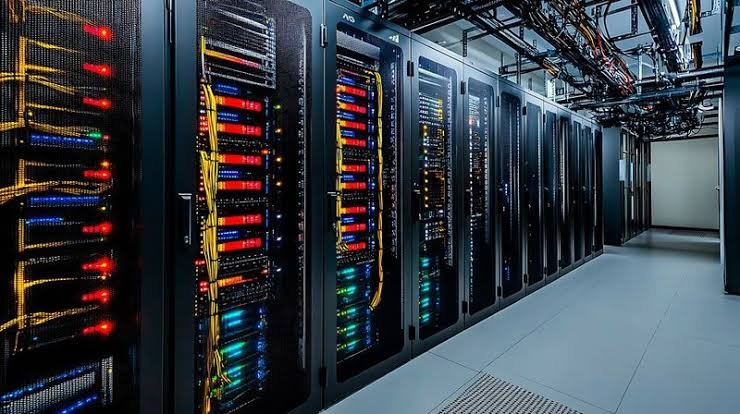
Germany sits at a challenging crossroads. The nation wants to lead Europe’s digital economy while simultaneously undergoing a major green energy transition that limits fossil-fuel baseload.
- Federal goals: Aiming to quadruple AI-related compute capacity by 2030.
- Strict legislation: The Energy Efficiency Act forces facilities to adopt stringent power usage goals by 2027.
- Market spillovers: Frankfurt grid congestion is forcing developers to relocate toward Berlin and Munich.
Is the next data center a power plant first, and a server farm second?
The New Data Center Playbook
The shortage of megawatt connections is fundamentally changing how technology companies buy land and build facilities.
According to industry reports from Clean Energy Wire and market intelligence via Mordor Intelligence, power access now determines site location above all else. Official national infrastructure plans detailed on etAlytics show that energy access is now the main driver of digital strategy.
- Land acquisition: Developers now buy land based on nearby gas pipelines or high-voltage lines rather than proximity to cities.
- Capital allocation: Millions in capital expenditure are moving from server procurement into energy generation equipment.
- Regulatory pushback: Local authorities are demanding waste heat reuse for municipal heating networks before issuing permits.
What This Means for AI Expansion
What happens when the cloud runs out of power? AI growth is no longer limited solely by silicon chips, but by physical land, environmental permits, and available electrons.
If Germany’s grid constraints force data centers to become self-powered island grids, this hybrid infrastructure playbook could soon spread across all energy-constrained markets globally.