
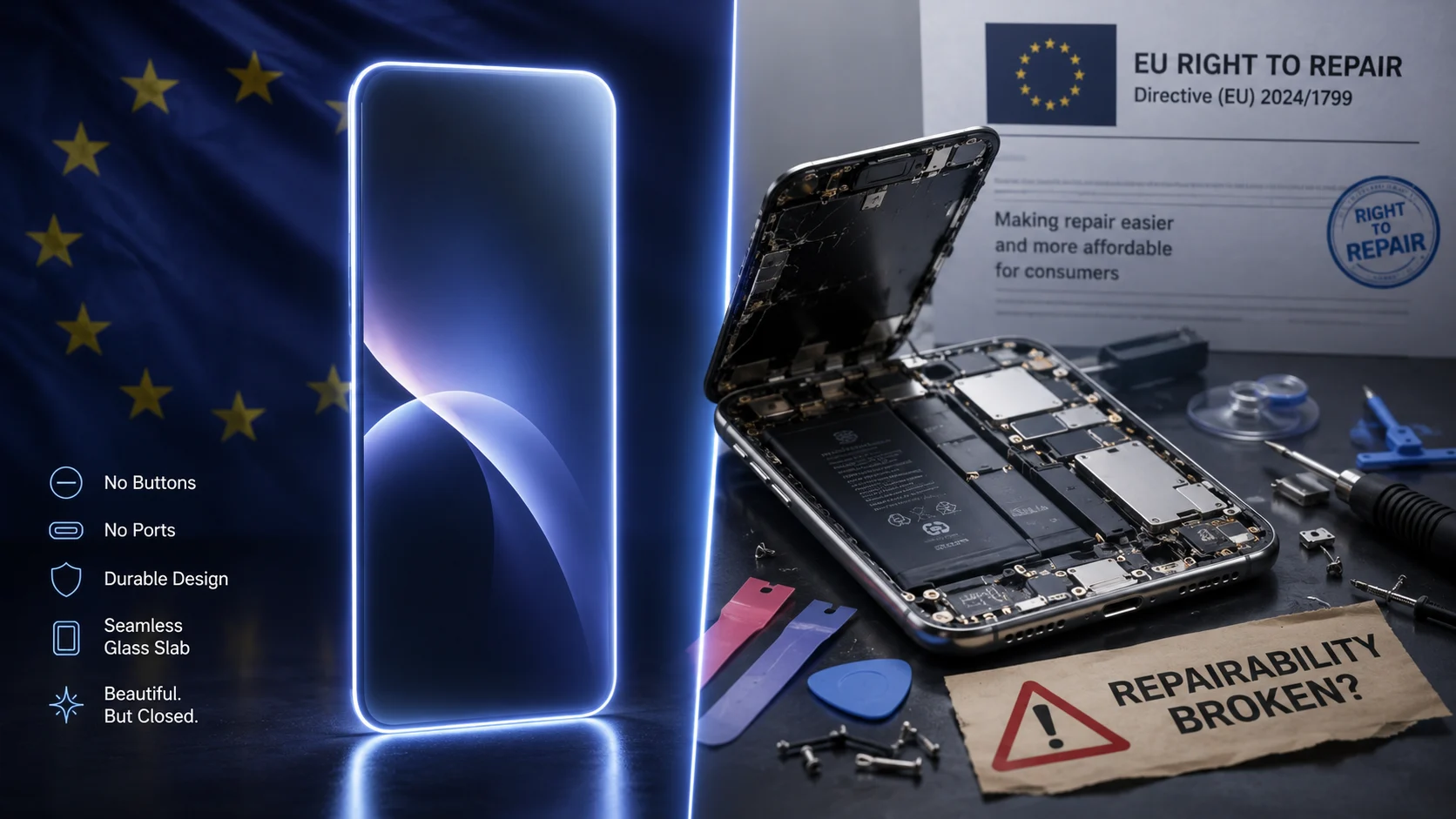
Apple may be about to shatter the last limits of phone design—and quietly gut repairability in the process. With over 300 million refurbished devices resold globally each year and new EU mandates requiring 10-year spare parts access, can a totally fused glass slab survive legal scrutiny? The $200 billion repair industry faces immediate disruption as ultra-sealed designs threaten independent fixes.
Rumours surrounding Apple’s anniversary hardware indicate a push toward a zero-port, buttonless, quad-curved glass body. But what happens when a smartphone is designed to physically disappear, yet legally required to be fixable?
The tension is clear: closed designs offer stunning aesthetics, but open architectures allow long-term ownership.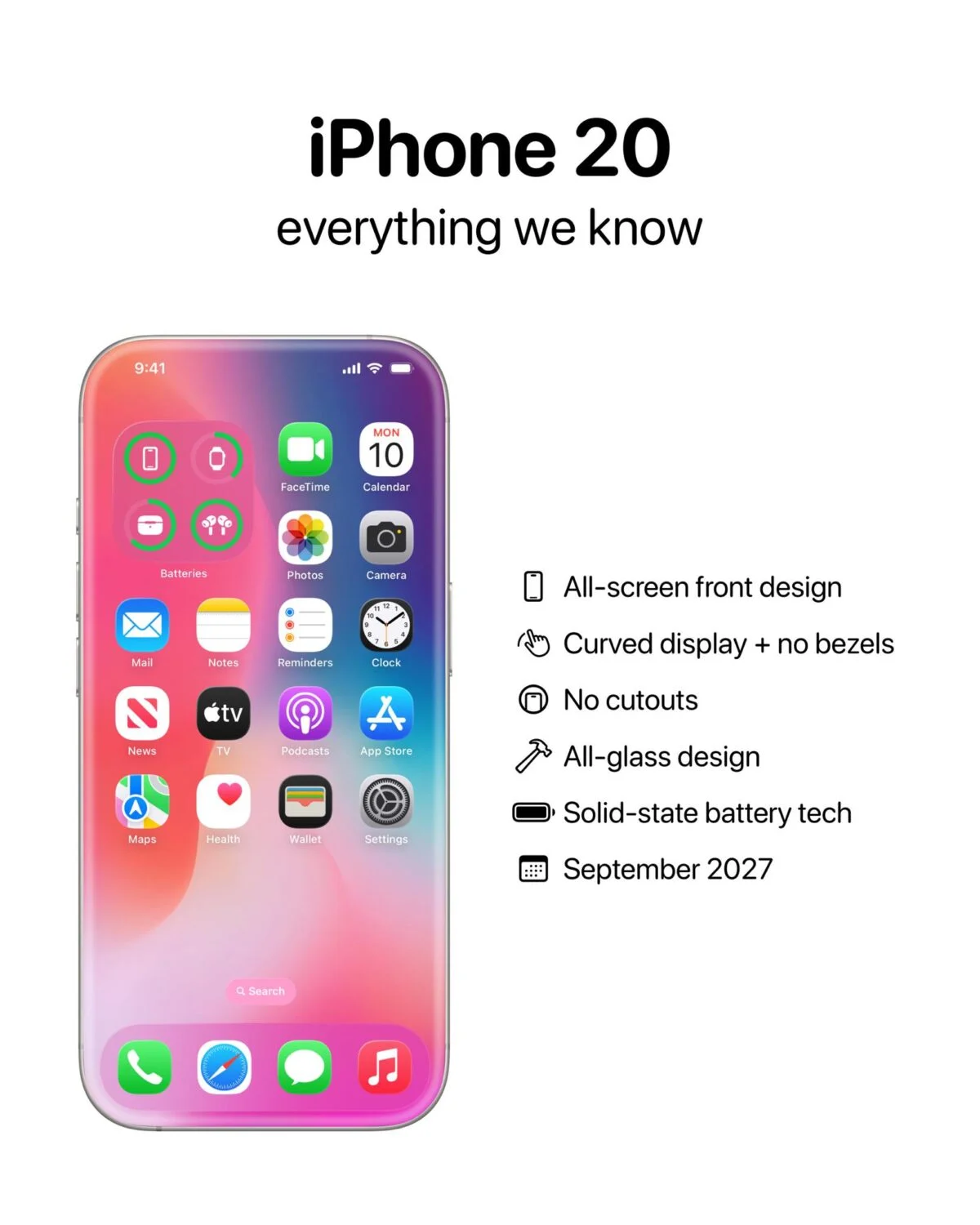
Jony Ive’s Original Vision Returns
For over a decade, former chief designer Jony Ive described his ultimate dream for the iPhone: “a single slab of glass”. Recent developments in under-display Face ID and seamless casing are bringing that concept closer to reality.
This is not just another incremental update. It is the logical conclusion of minimalist industrial design.
However, the exact features that make the phone look futuristic may make it nearly impossible to open, disassemble, and service.
Why the New Design Changes Everything
A completely fused glass body eliminates traditional entry points like screws, speaker grilles, and physical SIM trays.
| Design Vision | Consumer Benefit | Hidden Cost |
|---|---|---|
| Seamless Glass Body | Futuristic, premium feel | Extremely hard to open chassis |
| Zero External Ports | Maximum water resistance | Total dependency on wireless service |
| Quad-Curved Fused Glass | Unbroken visual continuity | High replacement costs if dropped |
| Under-Display Sensors | Uninterrupted screen real estate | Complex component pairing barriers |
Can a phone be truly futuristic if everyday users can’t fix simple battery failures? That’s where the real conflict begins.
Apple’s 20th anniversary iPhone is expected to arrive in fall 2027, bringing the most significant design overhaul since the iPhone X! The redesign reportedly aims for a single, seamless slab of glass, featuring a quad-curved display, under-display Face ID and cameras, and new… pic.twitter.com/ma50kGpGI9
— Apple Cycle (@theapplecycle) July 27, 2026
Repairability Gets Squeezed
Independent teardown experts at iFixit have repeatedly highlighted how structural adhesives and software locks hinder repairs. When internal components are layered tightly beneath quad-curved glass, routine screen or battery replacements become high-risk operations.
- Adhesive Barriers: Heat-sealed glass requires specialized industrial equipment to remove safely.
- Component Pairing: Swapping parts without vendor validation tools can trigger system warning banners.
- Escalating Costs: Single-piece housing designs mean minor damage requires replacing entire sub-assemblies.
“When hardware is sealed shut and software limits part swapping, independent repair shops simply cannot survive,” stated a representative from the European Right to Repair Coalition.
Europe May Push Back
Apple’s aesthetic ambitions are heading toward a direct collision with European consumer protection laws. The European Union recently passed strict Right to Repair rules demanding easier disassembly and accessible spare parts.
- Mandatory Spare Parts: Manufacturers must provide spare components at fair prices for years.
- Anti-Obstruction Clauses: Rules forbid software tricks that block independent repairs.
- Extended Warranties: Repairs gain additional legal guarantee periods under EU directives.
Will Europe force Apple to compromise its purest hardware vision? The fight is no longer just about engineering—it is about legal compliance.
What Apple Gains — and Risks
The benefits of a completely sealed, seamless device are obvious for brand positioning and industrial design.
- Cleanest Industrial Aesthetic: Sets a dramatic visual benchmark for the industry.
- Enhanced Durability: Eliminating ports drastically reduces liquid ingress points.
- Unmatched Brand Identity: Solidifies Apple’s reputation as a premium hardware pioneer.
But every step toward a purer object moves the iPhone further away from the people who keep it running: local repair shops, recyclers, and budget-conscious users.
The Bigger Battle Over Device Control
A seamless glass iPhone could represent the ultimate realization of Jony Ive’s design dream. Yet it might also trigger the most intense political battle over consumer technology ownership in decades.
The core question remains simple: is Apple defining the future of mobile hardware, or creating a world where consumers never truly own the products they buy?