
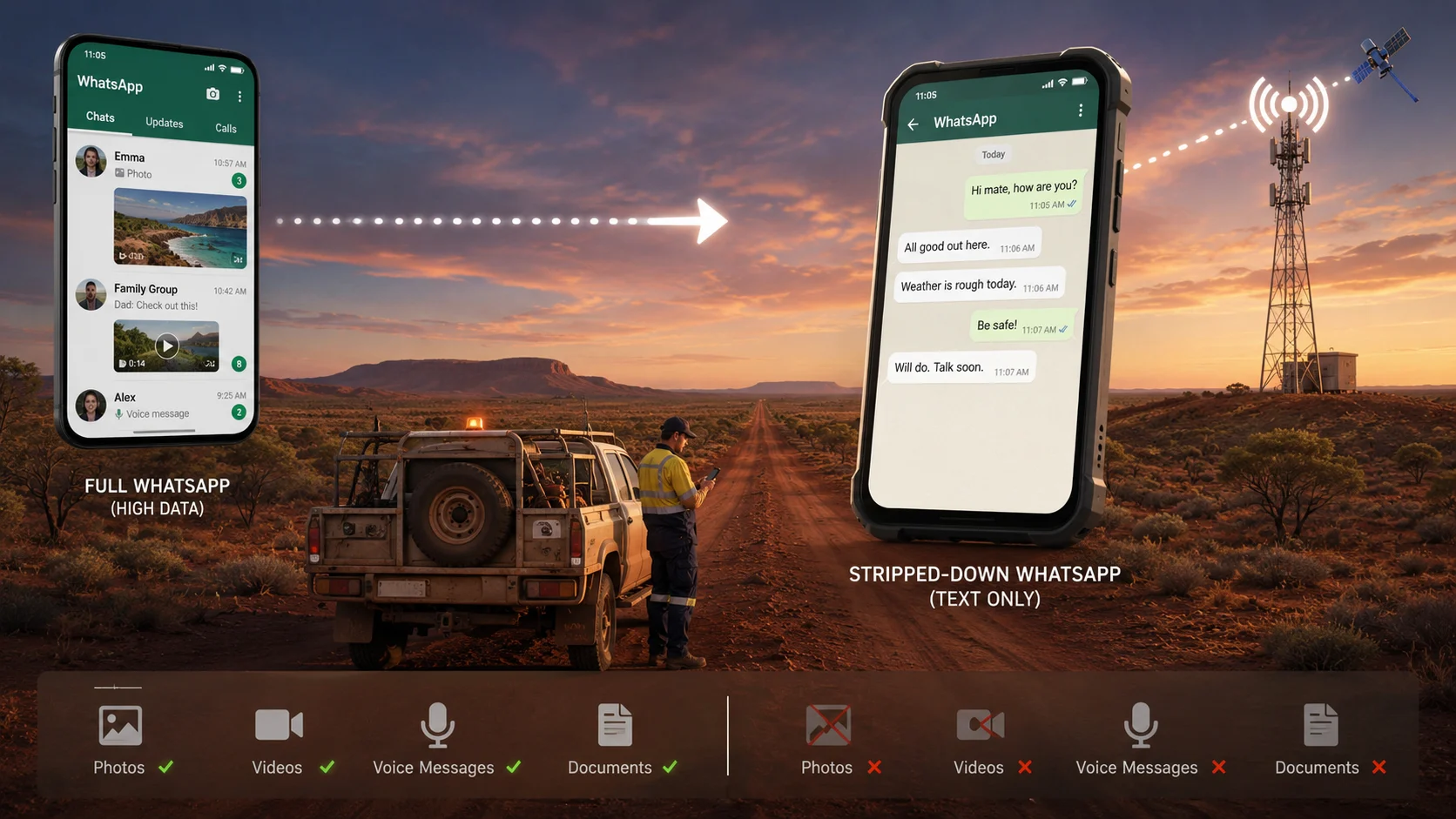
Telstra has quietly gutted the WhatsApp experience in the outback, forcing Meta to adapt the app for a brutally narrow satellite pipe. Across 7.6 million square kilometers of remote land, bandwidth limits cap throughput at under 50 kbps. How can a messaging giant function when every byte counts? In dead zones where media fails, text-first satellite messaging is becoming the new survival layer.
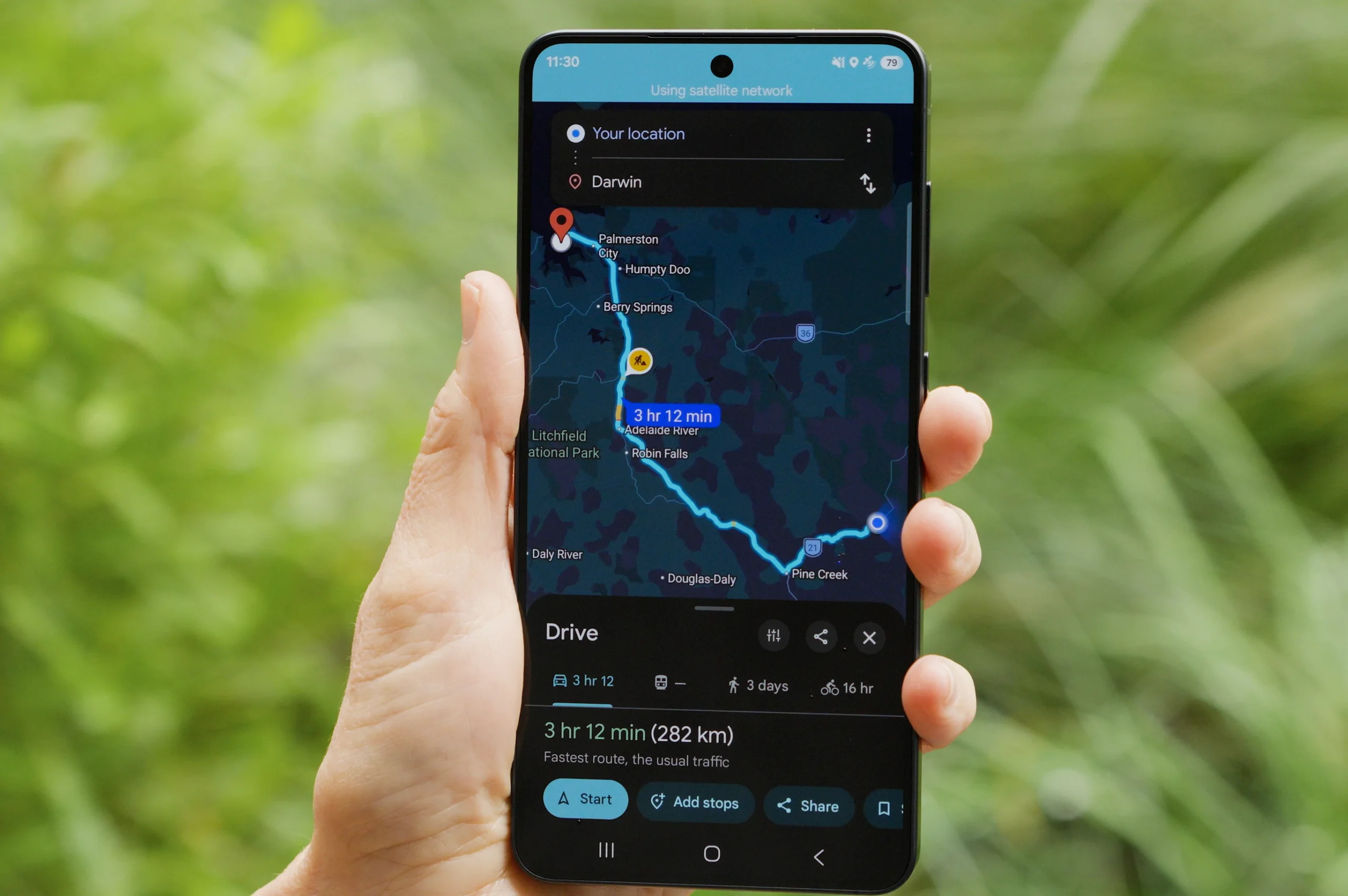
When field workers lose cellular coverage, heavy apps usually crash or freeze. Under Telstra’s Direct-to-Cell satellite system—powered by SpaceX—selected apps operate in a stripped-down, bandwidth-thrifty mode.
This is not “WhatsApp everywhere,” but a micro-messaging framework stripped of voice calls, video feeds, and auto-syncing. For mining crews, logistics teams, and agricultural workers, this text-only satellite messaging shift could fundamentally weaken our historical reliance on legacy carrier SMS.
What Changes Over the Satellite Pipe
To run smoothly over low-Earth-orbit satellites, messaging tools must drop data-heavy assets. Gateway-level restrictions suppress auto-syncing and rich media so plain text travels instantly.
| Feature | Standard WhatsApp | Satellite “Micro-WhatsApp” |
|---|---|---|
| Text Messaging | Full support | Text-only supported |
| Photos & Video | HD uploads | Stripped or disabled |
| Voice Notes | Instant delivery | Restricted or paused |
| Voice/Video Calls | High-speed data | Disabled / Not supported |
| Background Auto-Sync | Continuous sync | Paused to save bandwidth |
If messaging apps can survive on almost nothing but raw text, what happens to the old carrier SMS model? That’s where the story turns.
BREAKING: Telstra has expanded its Starlink Direct to Cell service across Australia beyond SMS, allowing customers to use select apps in areas with no mobile coverage. 🇦🇺
— DogeDesigner (@cb_doge) July 27, 2026
Supported apps include iMessage, Google Maps, Apple Maps, AllTrails, Weather apps and more. pic.twitter.com/tLSGgiyt2Y
Why “Micro-Apps” Matter for Remote Industries
For decades, outback operations depended on satellite phones or basic SMS text threads. The arrival of satellite-optimized app profiles changes enterprise workflows across Australia’s interior.
- Encrypted Group Coordination: Enterprise teams keep end-to-end encrypted chats active across remote job sites.
- Zero Special Hardware: Standard smartphones connect directly to overhead satellites without external dishes.
- Bandwidth Preservation: System-level rules prevent background updates from clogging the satellite link.
“Satellite-enabled apps provide select functionality with lighter capabilities, rather than the usual data-heavy experience powered by a terrestrial mobile network,” notes Telstra’s technical infrastructure documentation.
The Broader Industry Impact
According to coverage from Telstra Satellite Support and technical breakdowns on Telstra Satellite now available, mobile operators and developers are building for satellite constraints first.
- Messaging Becomes Utility Infrastructure: Core text layers operate as essential safety tools rather than social media feeds.
- Reduced Carrier Dominance: Encrypted OTT apps displace default SMS as the primary contact method.
- Enterprise App Adaptation: Software developers now build light mode fallbacks into enterprise software.
- Bandwidth Optimization Standards: Satellite-friendly data protocols become standard across global software stacks.
What the Future Holds
If this text-first framework succeeds in Australia’s desert, similar low-bandwidth messaging models could deploy in disaster zones, oceanic routes, and isolated industrial installations worldwide.
Is the future of global messaging not richer media, but smarter survival under brutal network limits? The shift in the outback suggests that staying connected matters far more than sending a photo.