
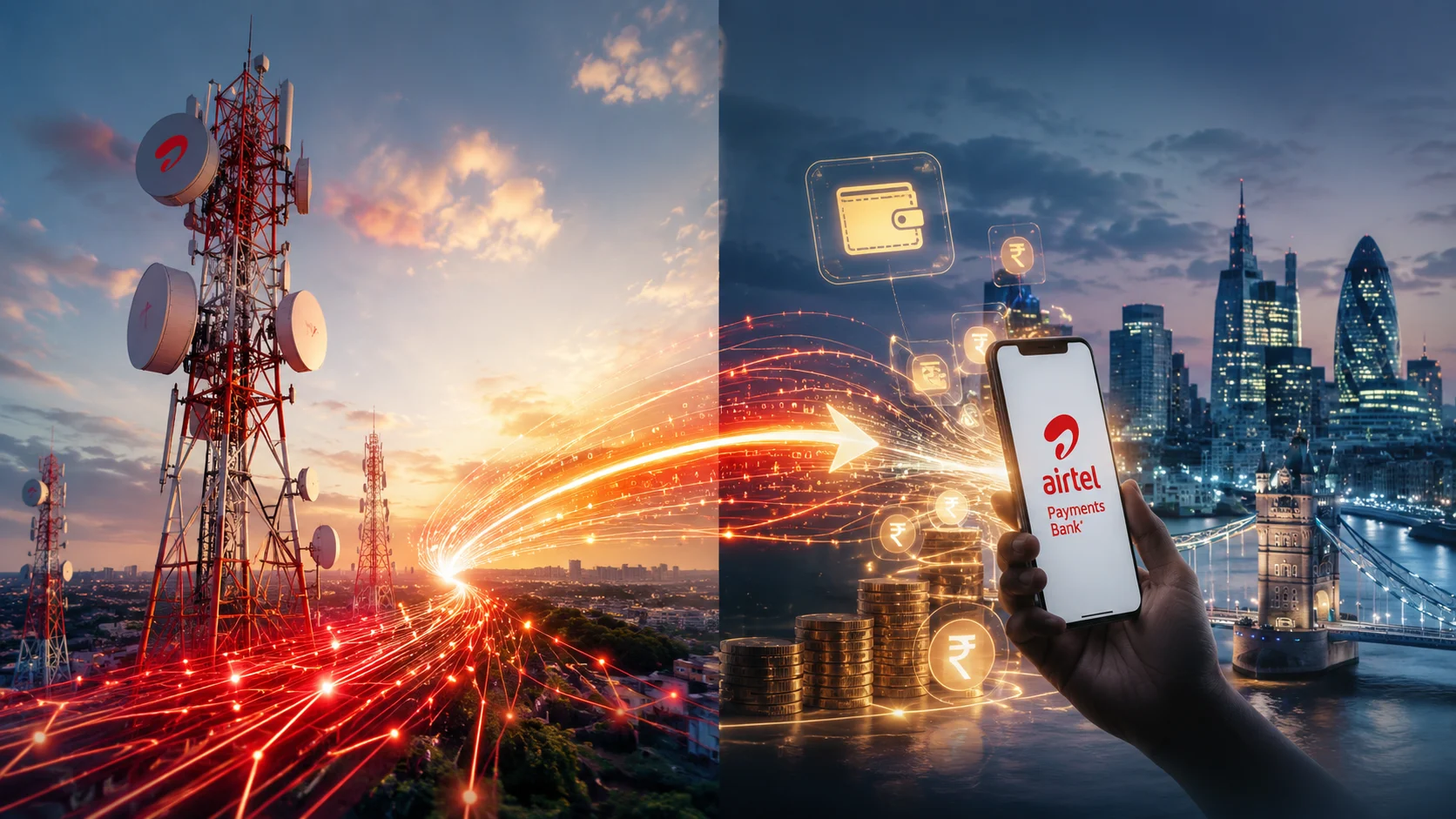
Airtel just shocked global markets by engineering a massive pivot from traditional telecom to high-margin fintech. With its mobile money platform surging past $245 billion in annualized transaction volume across 56.5 million active users, the company is now preparing a landmark London listing.
How did a mobile operator quietly build a financial powerhouse, and why spin it off now? The answer will reshape valuation models across emerging markets, ignite investor competition, and unlock a projected $10 billion standalone valuation.
From Telecom Giant to Fintech Story
Traditional mobile services face intense tariff pressure and heavy infrastructure costs. In contrast, Airtel Money operates as an asset-light digital engine processing billions in payments, transfers, and loans every month.
| What Changed | Why It Matters |
|---|---|
| Telecom to Fintech | Moves revenue mix toward 50%+ core profit margins |
| Domestic Focus to London IPO | Taps global capital pools on the London Stock Exchange |
| Infrastructure to Platform | Commands higher earnings multiples than legacy connectivity |
Could this spin-off unlock a valuation that the core telecom business could never achieve alone? By separating the payment network, Airtel gives equity markets a pure-play fintech asset.
Why Airtel Money Became the Real Prize
Airtel Money is no longer just an add-on feature for cell phone subscribers—it is an essential financial engine across 14 operating markets.
- Massive Transaction Scale: Annualized total processed value (TPV) surged 51.5% to $245+ billion.
- Rapid User Growth: Active customer bases expanded 23.3% to 56.5 million digital wallet holders.
- High Profit Margins: The fintech unit operates with an impressive 50.1% EBITDA margin.
- Subscriber Monetization: Average monthly transaction values now reach approximately $371 per user.
This was not a routine restructuring. It was a strategic asset unbundling.
Why London Is Part of the Plan
Choosing the London Stock Exchange gives Airtel Money access to deep international institutional capital. Financial analysts estimate the float could raise $1.5 billion to $2 billion in fresh capital.
“A digital payments arm with telecom distribution can command a completely different valuation multiple than a traditional network operator.” — Emerging Market Fintech Analyst
The listing provides fundraising flexibility while insulating the fintech arm from local currency volatility across regional operating units. Will international investors value African mobile money at Silicon Valley multiples?
Airtel has now stopped allowing unlimited 5G data through hotspot sharing with laptops or other devices. This means people who use two phones may have to recharge both, increasing their monthly expenses.
Jio is still providing unlimited 5G data through hotspots, but there is a… pic.twitter.com/2qOPzHhvbU — Bharat Mata ke Sewak (@CountryGulshan) July 29, 2026
What Investors Will Be Watching Next
While the market narrative is compelling, several execution risks remain on the horizon:
- Macroeconomic Volatility: Currency devaluations in key markets like Nigeria can weigh on dollar-denominated financial reporting.
- Regulatory Compliance: Central banks across multiple jurisdictions are increasing scrutiny on cross-border payment limits and transaction fees.
- Energy & Infrastructure Costs: Regional fuel price spikes continue to put short-term pressure on operating margins.
If Airtel’s mobile money arm lists at its target valuation, will rival operators follow with their own spinoffs?
Full financial metrics and listing details are available on Business Insider Africa: Airtel Picks London for Fintech IPO, Techpoint Africa: Airtel Money Heading for London IPO, and Morningstar: Airtel Africa Chooses London LSE.