
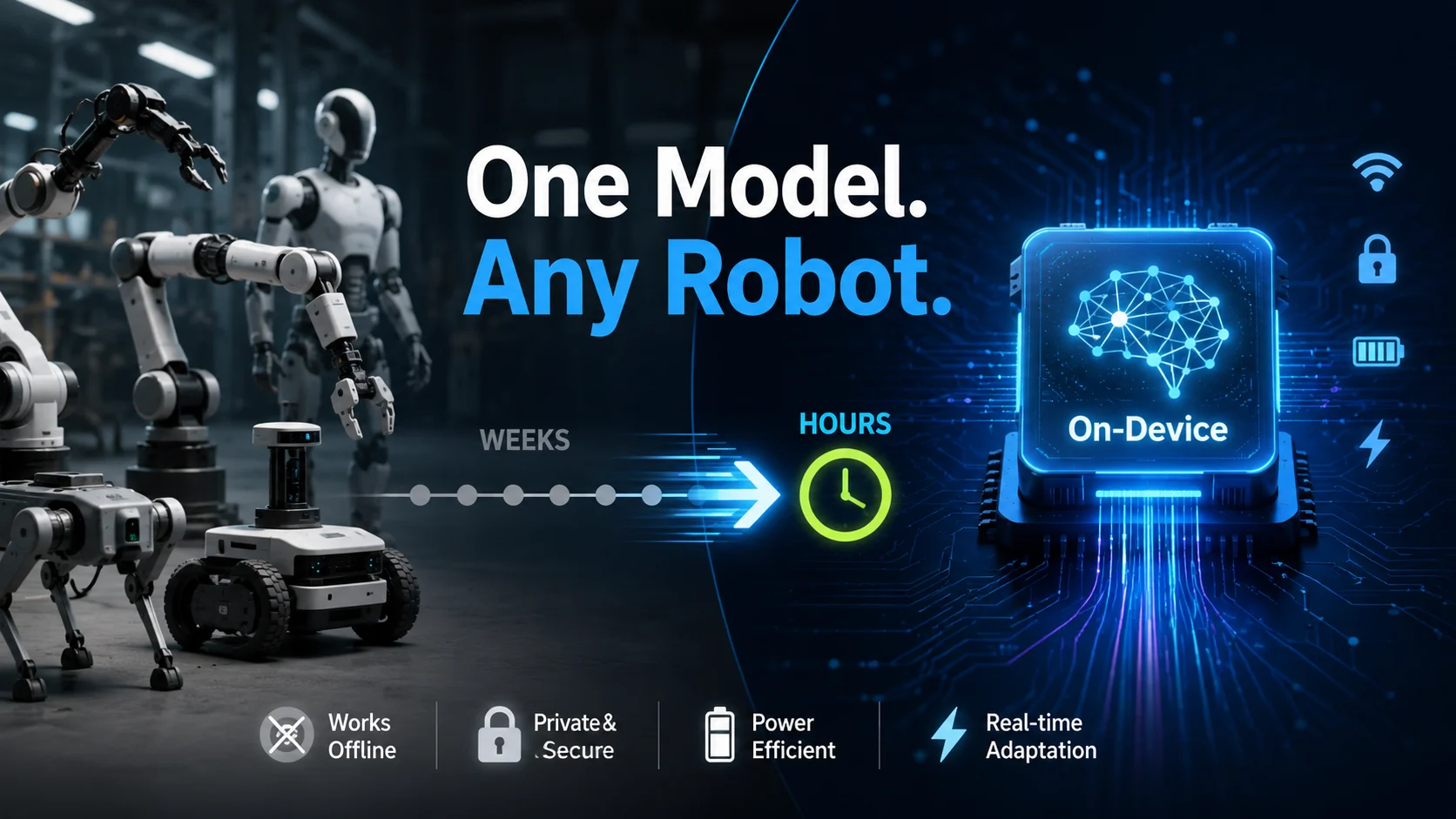
DeepMind just stunned the robotics world. Its new lightweight AI architecture allows robots to adapt to completely unknown physical hardware in under 3 hours rather than weeks of calibration.
Can one universal model truly control thousands of different machine bodies without cloud reliance? This breakthrough shatters traditional software integration delays and accelerates the push toward plug-and-play industrial automation.
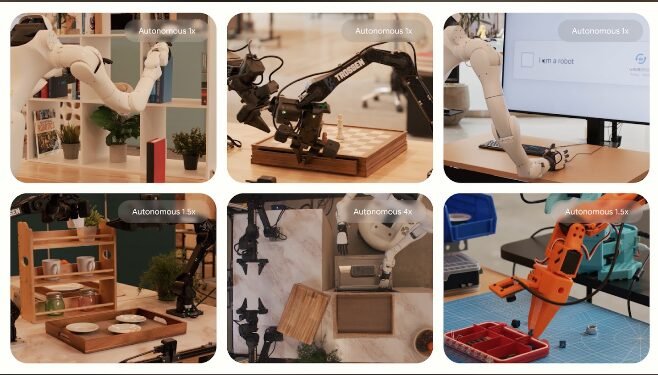
What DeepMind Changed
The engineering breakthrough lies in running intelligence locally on physical machines instead of streaming commands from massive cloud servers.
By deploying an efficient multimodal model directly onto embedded hardware, machines can evaluate sensor data locally without network latency. What once took teams of engineers weeks of custom tuning may soon take far less time.
| Traditional Setup | DeepMind On-Device |
|---|---|
| Robot-specific code written for each model | One lightweight model across different hardware |
| Long integration cycles lasting 4–8 weeks | Faster adaptation completed in a few hours |
| Cloud-heavy workflows prone to latency | Local execution running entirely on-device |
Is this the beginning of true plug-and-play robotics? According to official research published in the Google DeepMind Robotics Research portal, embodied intelligence is moving fast toward universal hardware control.
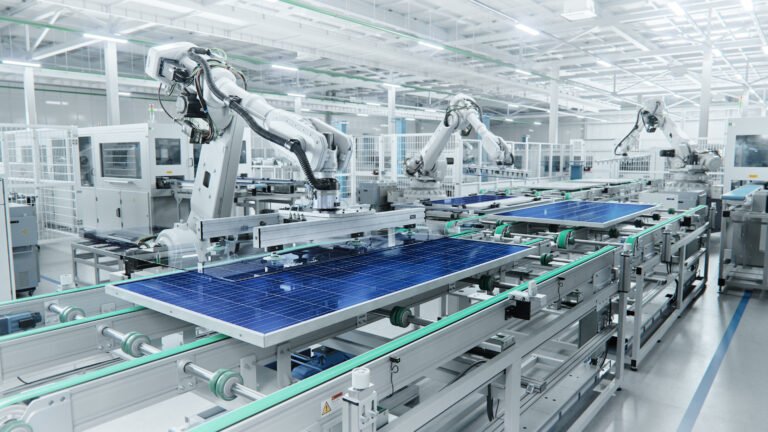
Why On-Device Matters
Local execution unlocks major operational advantages for factories, warehouses, and remote facilities.
- Zero Network Dependency: Machines operate continuously even during severe Wi-Fi or cellular dropouts.
- Real-Time Decision Making: On-device processing eliminates milliseconds of cloud round-trip delay.
- Lower Engineering Overhead: Teams deploy one base model across mixed robotic fleets.
“This is an important step toward modular robotics, where intelligence becomes portable across completely different machines.” — Embodied AI Analyst
Additional operational perspectives can be explored through MIT Technology Review and IEEE Spectrum Robotics.
The model uses generalized spatial understanding to map its physical joints, grippers, and wheels automatically. In just hours, the system adjusts to new motors, gear ratios, and payload weight limits.
One brain. For any robot. 🤖 We’re launching Gemini Robotics 2: our next-generation physical AI bringing full body intelligence to humanoids, advanced dexterity, multi-robot teamwork and more. pic.twitter.com/1rFw3NUytb
— Google DeepMind (@GoogleDeepMind) July 30, 2026
What This Does Not Solve Yet
Can one model really handle every physical challenge? Despite rapid adaptation times, real-world deployment still faces notable hurdles:
- Hardware Diversity Risks: Extreme differences in joint mechanics still require safety testing.
- Physical Wear and Tear: AI software cannot automatically fix mechanical gear slippage or hardware degradation.
- Validation Requirements: Industrial environments demand strict safety certifications before autonomous operation.
But the real breakthrough may be what happens next as multi-robot coordination improves.
The Bigger Robotics Shift
We are witnessing a fundamental move from custom-coded industrial tools to adaptable, general-purpose platforms. As on-device AI models become smaller and more capable, the gap between prototyping a robot and deploying it on a factory floor is collapsing rapidly.