
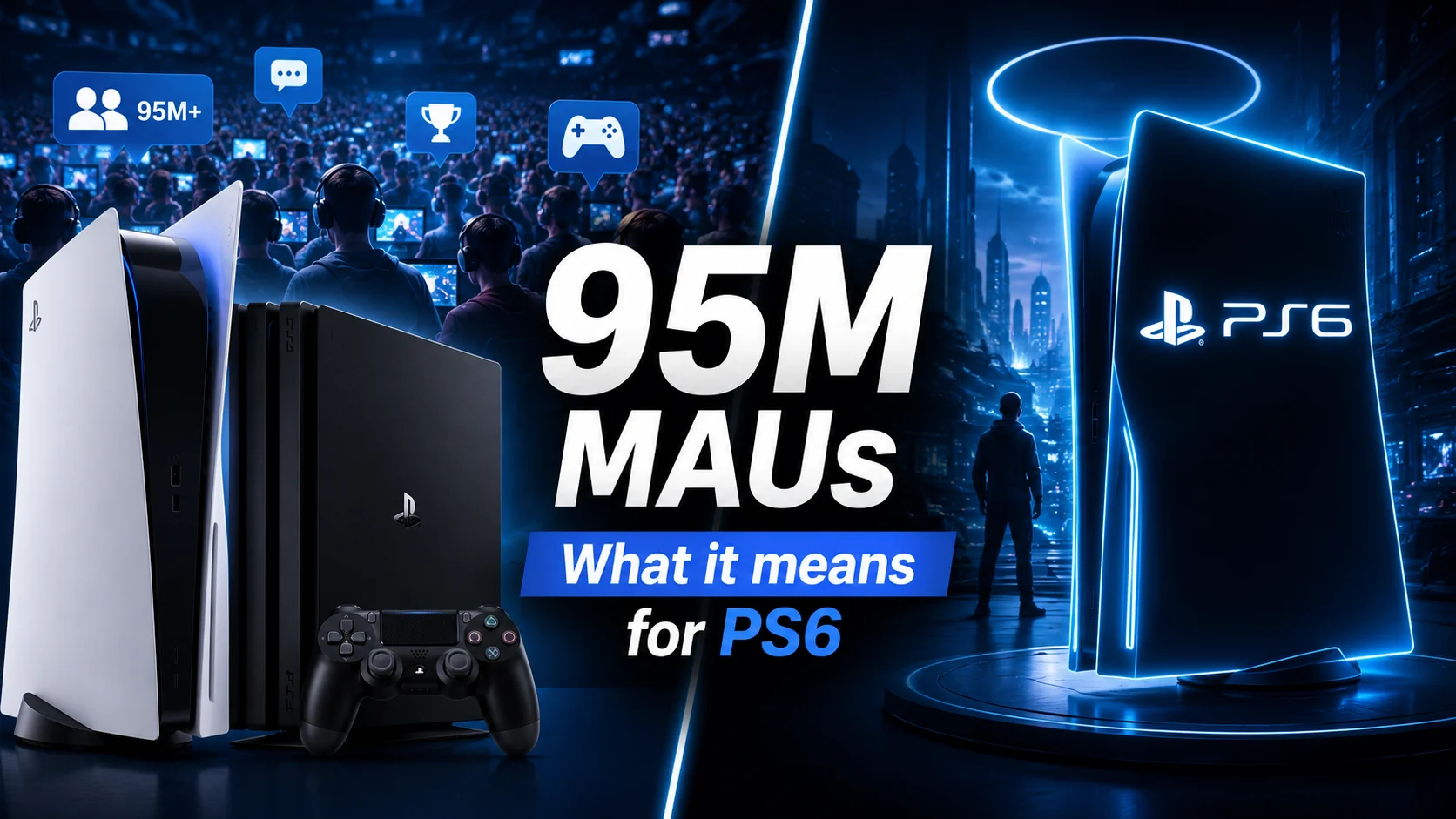
PlayStation has surged past 95 million monthly active users, and that massive number raises a critical question: how soon does Sony really need to launch the PS6?
With over 125 million active players still deeply engaged across PS5 and PS4 hardware, the platform’s momentum reshapes the traditional console lifecycle. If millions of gamers are actively buying software on current systems, why would Sony rush next-gen hardware?
What the 95 Million MAU Milestone Means
The 95 million active user base isn’t just a vanity stat—it proves PlayStation’s network ecosystem is more profitable than ever.
- Sustained Engagement: Active users are spending millions of hours online without needing an immediate hardware upgrade.
- Digital Software Dominance: Digital game downloads and subscriptions drive consistent recurring revenue.
- Extended Generation: The line between console generations is blurring faster than in previous eras.
Is hardware momentum slowing down, or has software engagement rendered immediate console upgrades secondary?
Why Sony Can Afford to Wait
| Metric | Business Impact | What it Suggests |
|---|---|---|
| 95M+ MAUs | Massive recurring software sales | Strong ecosystem engagement |
| 125M Total Base | Massive cross-gen audience | Broad market for new game releases |
| PS5 + PS4 Activity | Unprecedented software tailwind | Extended hardware lifespan |
| PS6 Release Window | Zero immediate launch pressure | Strategic, unhurried timeline |
“The focus is on growing profitability and not on chasing MAU at all costs… We are focusing more on monetizing our user base.” — Hideaki Nishino, SIE CEO
For a deeper financial breakdown, review official updates on Sony Investor Relations, alongside industry analysis on IGN and GamesIndustry.biz.
What This Means for the PS6 Timeline
Why rush a PS6 when engagement on current devices remains at record highs? Extending the PS5 lifecycle lets Sony maximize hardware profit margins.
- Higher Adoption Threshold: Players won’t move to PS6 unless graphic and processing jumps are massive.
- Mid-Generation Strength: Upgraded models like the PS5 Pro give tech enthusiasts a bridge without forcing a full generational reset.
- Developer Headroom: Studios are still mastering current console architecture to build blockbuster titles.
The Risk of Waiting Too Long
Can Sony extend the PS5 lifecycle indefinitely without losing market momentum? Delaying next-gen tech holds inherent risks:
- Competitive Pressure: Competitors could steal headlines with brand-new silicon or cloud architecture.
- Hardware Fatigue: Core enthusiasts eventually demand true generational leaps in ray tracing and AI capability.
- Market Saturation: High-margin console sales eventually hit a natural ceiling.
Sony | Q1 FY2026 (April–June) Results ▫️95.3M PS5 consoles shipped (LTD) ▫️1.6M PS5 consoles sold this quarter ▫️66.1M PS4 & PS5 games sold ▫️6.0M PlayStation first-party games sold ▫️82% of full-game sales were digital ▫️18% sales were physical ▫️125M monthly active users… pic.twitter.com/VgldZwpgLF
— GameVerse (@TheGameVerse) July 31, 2026
What to Watch Next
Keep your eyes on three major indicators over the next fiscal year:
- First-Party Release Cadence: Major single-player releases signal how long PS5 remains the primary target.
- Quarterly Earnings Calls: Watch for shifts in hardware unit targets versus network services revenue.
- Supply Chain Leaks: Next-gen silicon manufacturing contracts usually leak 18–24 months before launch.