
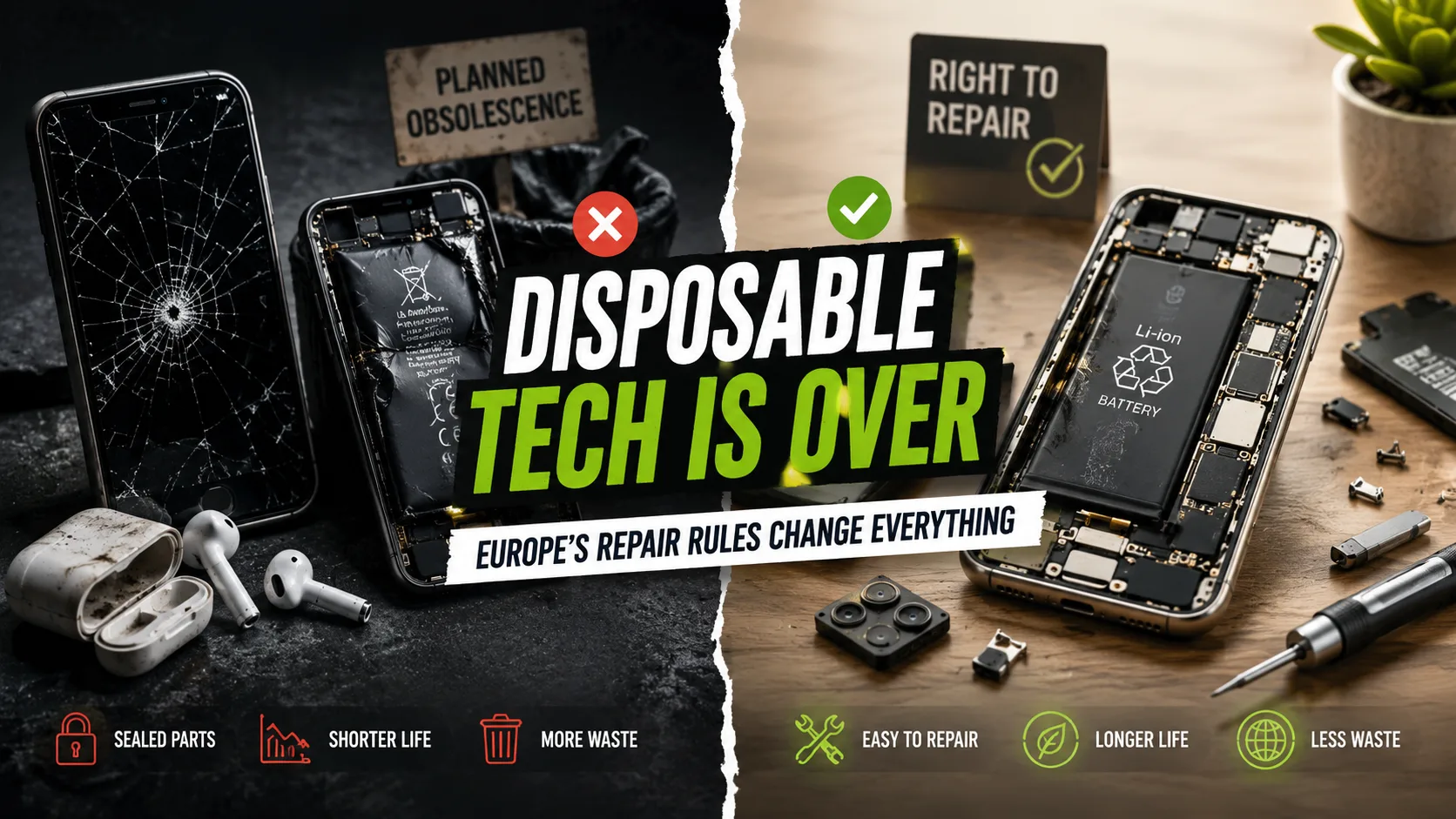
Europe just cracked open the gadget industry—and the age of throwaway tech may be ending faster than manufacturers expected.
Under Directive 2024/1799, 27 EU member states must enforce radical “Right to Repair” laws that force brands to offer up to 10 years of spare parts while banning software tricks that kill independent repairs.
If devices must be easily repairable for 450 million Europeans, how can tech giants avoid updating their designs globally? This single regulation could rewrite how hardware is manufactured, sold, and maintained worldwide.
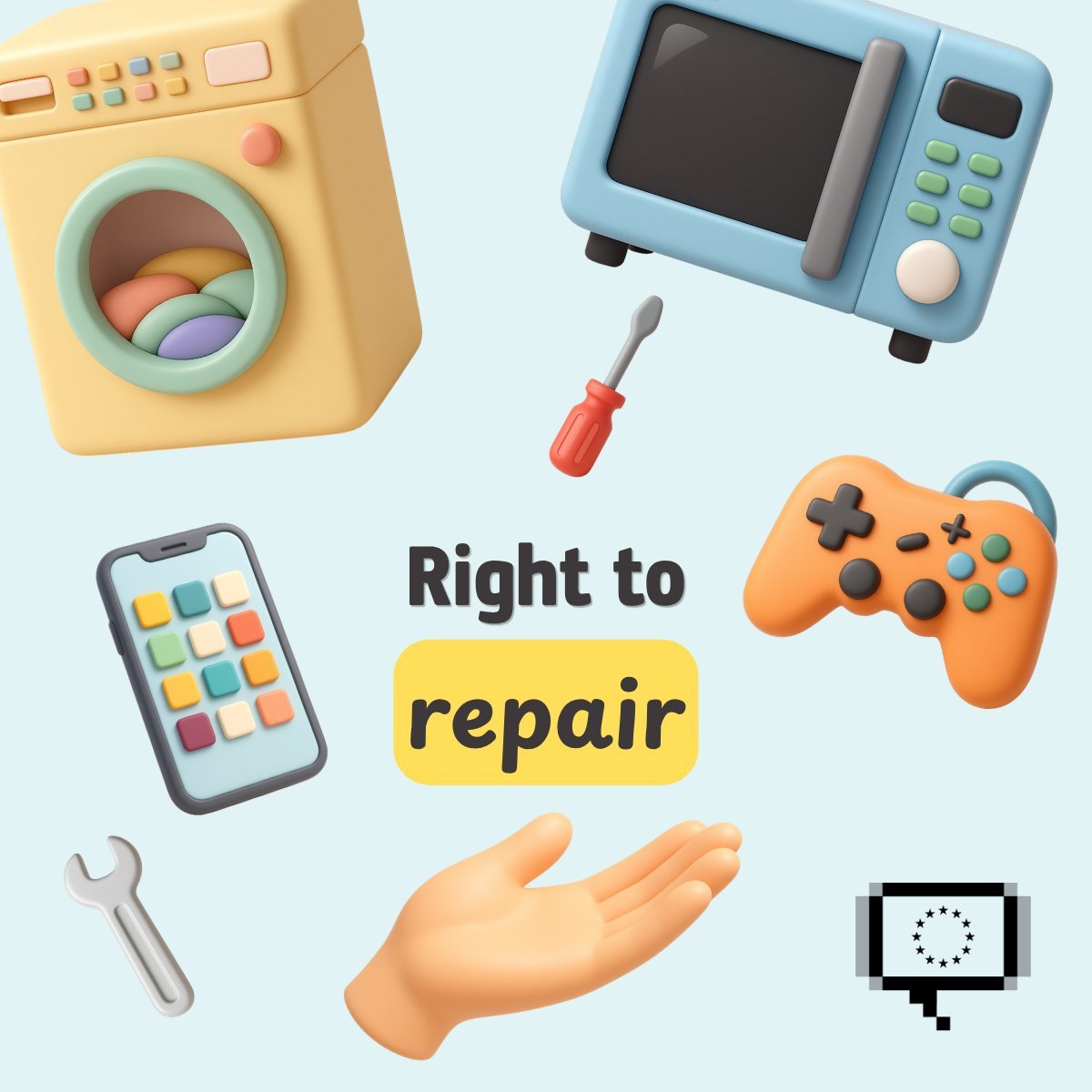
What the Rule Changes
The European Commission’s framework eliminates classic planned-obsolescence tricks. Manufacturers can no longer glue batteries shut or use software serialization—known as “parts pairing”—to block third-party fixes.
| Change | What It Means for Consumers |
|---|---|
| Longer spare-parts access | Companies must supply parts for up to 10 years after product launch. |
| Less software blocking | Software locks that reject third-party or 3D-printed parts are banned. |
| Extended warranty incentives | Choosing repair over replacement adds 12 full months to legal guarantees. |
If a phone screen breaks after three years, brands must offer original or compatible replacement screens at reasonable rates. According to official documentation on the EU Right to Repair Directive portal, hardware makers must also publish public repairability scores and repair manuals.
Why This Matters Globally
Global supply chains rarely build bespoke device designs for individual markets. Maintaining separate assembly lines for Europe versus the rest of the world creates immense operational cost.
- Repairability by Design: Modular components become standard on global assembly lines.
- Parts Availability: Global logistics hubs must maintain long-term spare inventories.
- Consumer Leverage: Independent repair shops globally gain access to open technical documentation.
- Global Spillover: Standards established in Brussels quickly become default production benchmarks.
Will repairable tech become the new premium standard? Consumer protection advocates at iFixit and the European Environmental Bureau emphasize that open hardware designs ultimately benefit buyers everywhere.
Who Gets Hit First
Device categories with historically short lifespans face immediate redesign mandates. To remain legal on European store shelves, major electronics brands must rethink four core operational areas:
- Modular Architecture: Eliminating heavy adhesives around batteries and displays.
- Open Diagnostics: Releasing software diagnostic tools to third-party repair shops.
- Logistics Pipelines: Warehousing replacement batteries and chips for a full decade.
- Software Freedom: Allowing secondary owners to calibrate replaced parts without factory clearance.
“Repairability is becoming a design requirement, not a marketing slogan.” — Circular Economy Analyst
Your tech breaks. Buying new seems cheaper than repairing. We’re making the Right to Repair the new standard in Europe. pic.twitter.com/DDfCxIdJkv
— European Commission (@EU_Commission) July 31, 2026
What Consumers Gain
The long-term economic shift favors consumer wallets over disposable hardware sales.
- Lower Cost of Ownership: Replacing a $30 battery beats buying an $800 replacement phone.
- Extended Device Lifespan: Smartphones and laptops easily push past 5–7 years of usable life.
- Dramatically Less E-Waste: Millions of tons of electronics are diverted from landfills annually.
- Stronger Resale Value: Working devices with accessible repair paths retain market value far longer.
Should consumers pay a little more upfront if devices last twice as long?
The Catch
If Europe changes the rules, how long before the rest of the world follows? While the rules empower consumers, the transition won’t be entirely frictionless.
Hardware manufacturers may pass early compliance and warehousing costs onto initial retail prices. Furthermore, ultra-thin water-resistant designs may require sophisticated engineering to remain easily openable without compromising structural integrity.
But the biggest shift may not be what happens in Europe—it is how fast global markets demand the exact same repair freedom.