
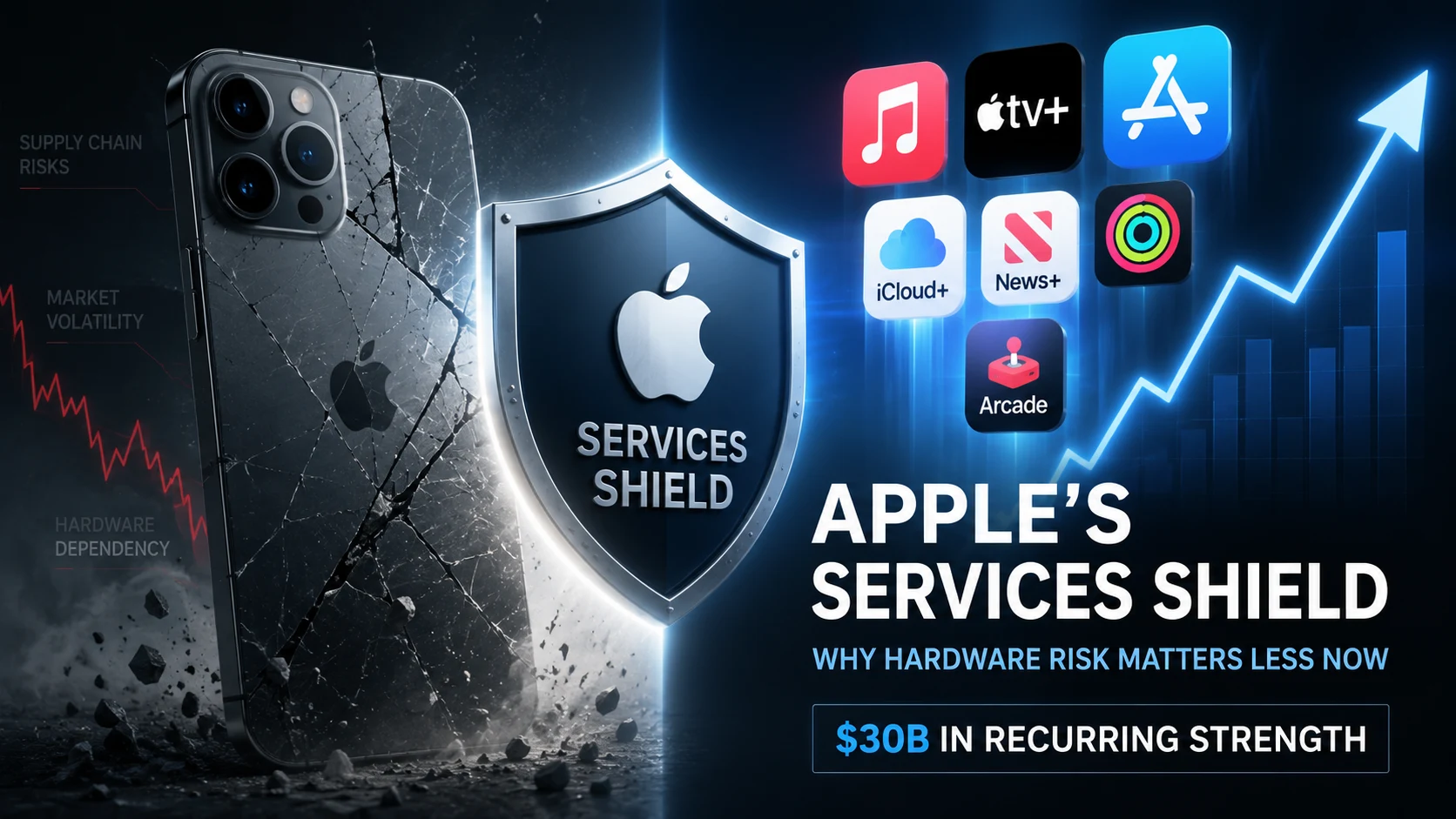
Apple just shocked global markets as hardware supply chains bleed! $30.74 billion in quarterly Services revenue surged past projections this year, but can recurring app and cloud subscriptions really insulate the tech titan from catastrophic component shortages right now?
Wall Street is frantically watching because 1.5 billion paid subscriptions are now generating 12% year-over-year growth, creating an unshakable financial fortress that shatters Apple’s historical reliance on seasonal smartphone upgrade cycles. That shift matters because Apple is no longer relying on the iPhone alone—it is building a stronger, stickier, and more predictable earnings machine.
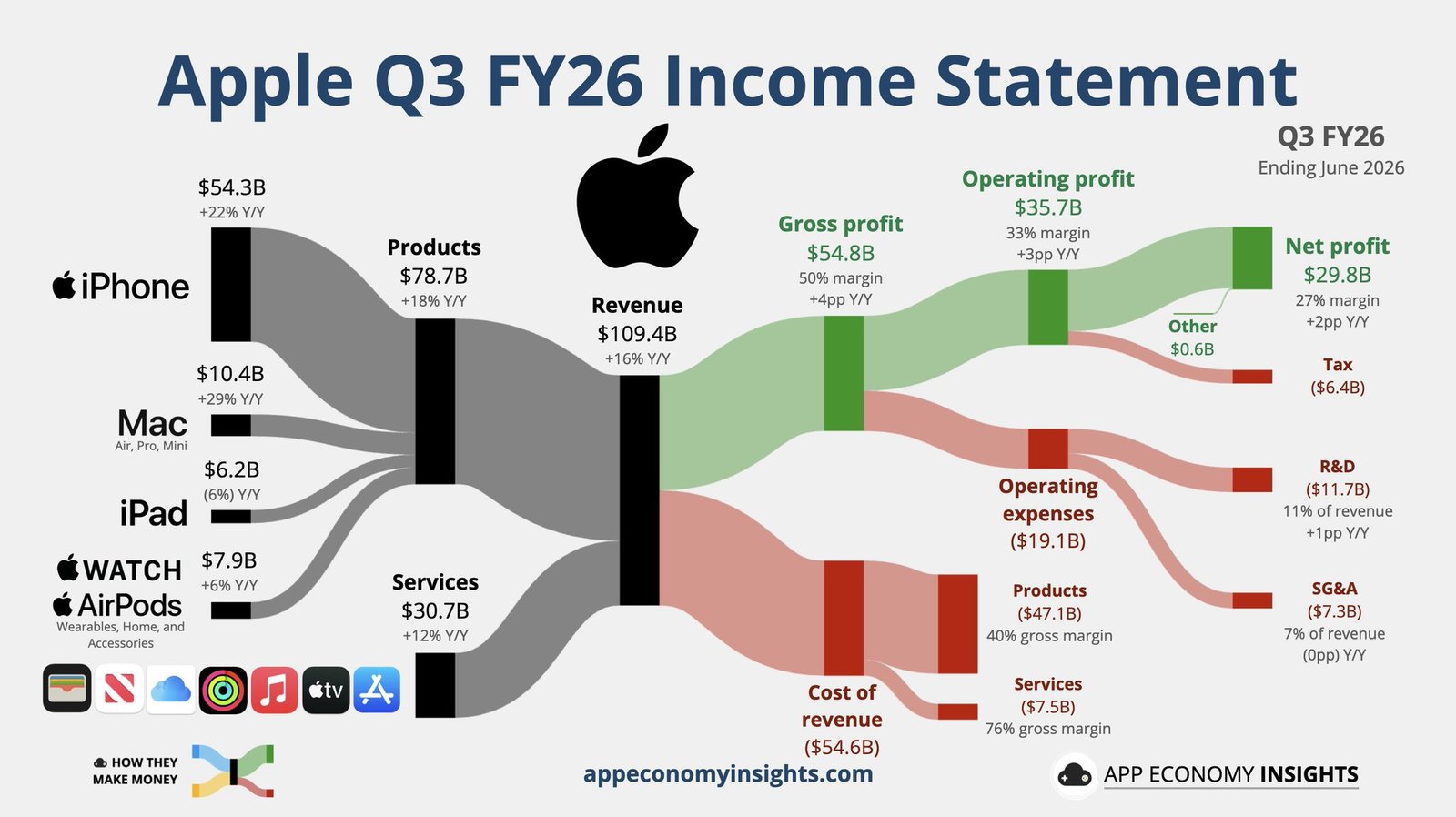
Apple’s Business Is Changing
For over a decade, Apple was mostly an iPhone story, leaving its quarterly valuation hostage to factory delays and component costs.
Today, Services is the steadier cash engine, churning out recurring profits regardless of global manufacturing hiccups.
This massive shift makes Apple far less dependent on perfect hardware cycles, giving executive leadership a massive safety net when consumer spending contracts.
What happens when the iPhone slows but Services keep climbing?
Why Services Is the Real Buffer
Subscribers rarely cancel their daily storage or music plans even during steep economic downturns. That sticky consumer behavior gives Apple a high-margin barrier against hardware volatility.
| Services Pillar | Why It Matters |
|---|---|
| iCloud+ | High-margin recurring subscription revenue tied directly to user device backups. |
| App Store | Reliable platform transaction income on every third-party app purchase. |
| Apple Music | Sticky consumer retention that keeps users anchored inside the Apple ecosystem. |
| AppleCare | Consistent support and device protection revenue paid monthly or annually. |
What the Growth Numbers Say
The latest financial results reveal four key operational insights:
- Double-digit Services growth continues for 12 consecutive quarters, reaching a record $30.74 billion in revenue.
- Predictable recurring cash flow dramatically lowers overall earnings volatility during supply squeezes.
- Hardware supply chain shocks hurt overall quarterly momentum far less when digital platforms scale globally.
- Institutional investors gain long-term confidence from this high-margin revenue mix shift.
How Supply Shocks Affect Hardware
Global memory shortages and rising tariffs continue to threaten hardware margins across the technology sector.
While supply constraints temporarily slow iPhone delivery times, Apple’s $30B+ quarterly digital engine cushions the blow.
Could Apple’s real competitive moat now be recurring digital revenue rather than physical aluminum and glass?
JUST IN: 🇺🇸 Apple $AAPL says it received $600,000,000 in tariffs refunds from the US government. pic.twitter.com/A1P0JhCRFH
— Watcher.Guru (@WatcherGuru) July 30, 2026
Why Investors Should Care
Hardware products build the primary gateway, but Services locks in the long-term value.
Industry experts agree that this transformation alters how Wall Street values Apple’s stock during volatile market cycles:
“Apple’s services base is becoming the stabilizer that makes the overall business far less cyclical.”
Apple is rapidly morphing from a pure product maker into an indispensable global platform company.
Verified Sources & Further Reading
- Official financial data from the Apple Fiscal Q3 2026 Earnings Release.
- Market reaction analysis via AppleInsider Q3 Revenue Report.
- Comprehensive industry context from The Hindu Smartphone Revenue Share Report.
- Watch a quick 45-second overview of Tim Cook’s Apple Earnings Strategy on CNBC.