
Why This Phone Matters Right Now
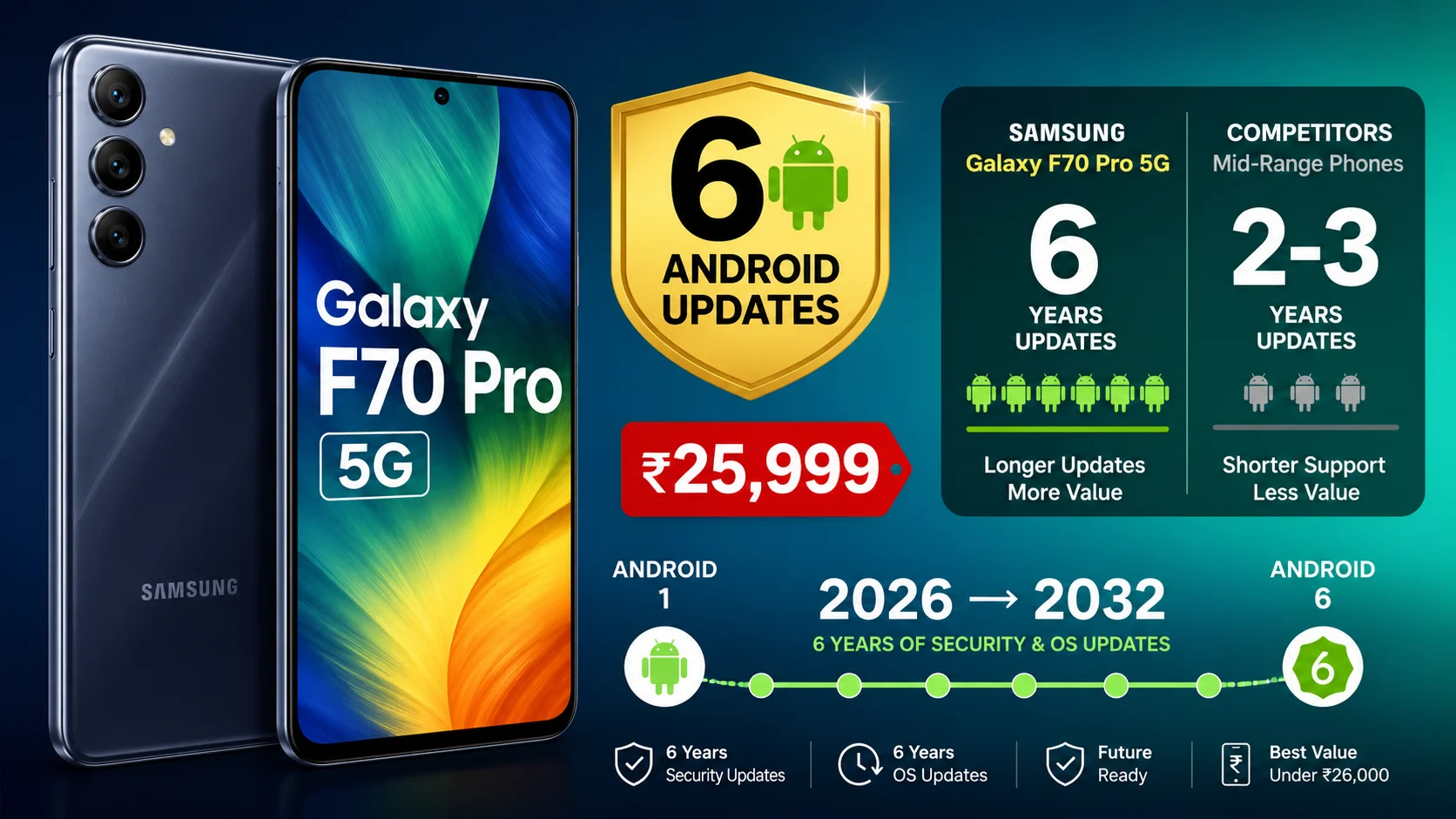
Average upgrade cycles are stretching past four years. Most buyers want reliable security, smooth performance, and long battery life without spending flagship money. Software support is now a core buying factor rather than a secondary perk.- 6 years of OS upgrades: Ensures your device stays modern and secure through 2032.
- 6,000mAh battery capacity: Delivers multi-day endurance without mid-day charging anxiety.
- ₹25,999 starting price tag: Brings top-tier software promises to sub-₹30k buyers.
The Update Advantage: Samsung vs. Mid-Range Rivals
Samsung is redefining mid-range value. While competitors focus on flashy charging speeds or raw benchmark numbers, long-term software support directly protects your investment.| Phone Category | Typical OS Updates | 5-Year Ownership Security |
|---|---|---|
| Samsung Galaxy F70 Pro 5G | 6 Years | High (Stays modern until 2032) |
| Common Mid-Range Rivals | 2–3 Years | Low (Rapid software obsolescence) |
| Budget Flagships (₹40,000+) | 4–5 Years | Medium-High (Requires much higher outlay) |
What Budget Buyers Actually Gain
Longer software support delivers direct financial savings. Instead of upgrading every two years, buyers can stretch device lifespan effortlessly.- Lower overall cost of ownership: Spending ₹25,999 across 6 years averages out to less than ₹4,350 per year.
- Stronger resale values: A three-year-old phone with 3 remaining Android updates holds significantly higher market value.
- Continuous feature drops: Users get ongoing UI enhancements, improved power efficiency, and new security protocols.
“Software support is becoming one of the strongest signals of real device value, especially in the mid-range segment where hardware parity is high.”
What Tech Readers Will Question
Can mid-range hardware truly keep up for six full years? Long update policies sound incredible on paper, but real-world endurance requires balance.- Processor longevity: The Snapdragon 6 Gen 3 chip handles daily tasks well, but heavy 2030-era apps will test its limits.
- Battery degradation: A 6,000mAh cell provides a cushion, but chemical aging will inevitably reduce capacity over time.
- Camera stack: The 50MP main sensor with OIS is solid today, though mid-range optics age faster than flagship glass.
Samsung Galaxy F70 Pro launching on 3rd August 🇮🇳 🚀
Specs: • 6.7″ FHD+ 120Hz Flat sAMOLED Display • Snapdragon 6 Gen 3 • LPDDR5X RAM + UFS 3.1 Storage • 50MP Main + 5MP Ultra-Wide + 2MP Macro • 12MP Selfie Camera • Gorilla Glass Victus+ • 6000mAh Battery + 45W Fast… pic.twitter.com/DaoIKCKD0T — Technical Sapien (@technicalsapien) July 31, 2026
Market Impact and Buyer Decision Framework
Competitors are now on notice. Samsung’s shift forces rival brands to choose between extending their own update commitments or losing value-conscious buyers.- Buy it if: You want maximum lifespan per rupee, clean software, and a massive battery.
- Skip it if: You upgrade every 12 to 18 months or demand top-tier gaming performance.