
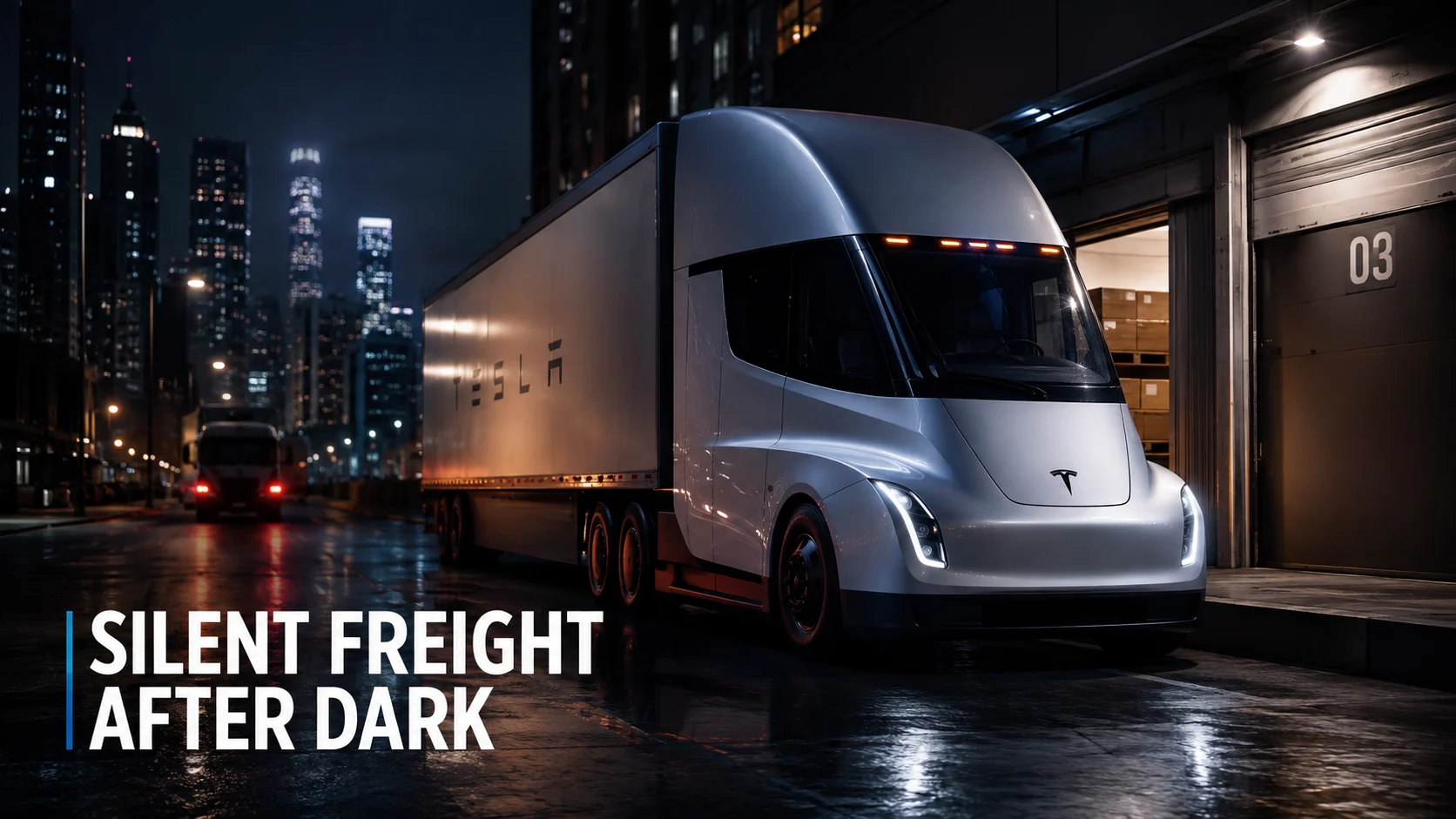
The freight industry just got jolted by a quiet breakthrough. Tesla Semi’s low-noise operation could let delivery fleets move through cities at night without triggering the noise complaints that often limit diesel trucks.
In dense urban zones, that matters more than many people realize: fewer delays, more flexible delivery windows, and a potential edge for operators racing the clock across over 500 miles of daily range.
But is silence enough to transform the economics of nighttime freight? And could this become one of the biggest hidden advantages of electric trucking as operators accelerate fleet adoption?
The Quiet Freight Shift
Tesla Semi is proving that electric trucking delivers benefits far beyond zero tailpipe emissions. In dense urban centers, strict municipal noise curfews traditionally ban heavy diesel trucks from unloading between 10 PM and 6 AM.
- Noise Reduction: Operates at a fraction of the decibel levels produced by traditional Class 8 diesel engines.
- Off-Peak Access: Enables logistics operators to bypass heavy daytime gridlock entirely.
- Reduced Idle Time: Eliminates noisy idling at urban loading docks near residential neighborhoods.
A silent truck may unlock a delivery window cities have been blocking for decades. That operational change gives fleet managers a new way to optimize route schedules.
Why It Matters Across the Industry
Different industry stakeholders see distinct advantages in near-silent nighttime freight movement:
| Angle | Why It Matters |
|---|---|
| EV Enthusiasts | Shows the Semi has a real-world edge beyond zero emissions |
| Logistics Operators | More delivery windows and significantly less idle time |
| Sustainability Readers | Cuts urban noise pollution and tailpipe emissions simultaneously |
| City Planners | Helps reduce daytime traffic congestion and delivery friction |
Is silence becoming the ultimate logistics shortcut? Moving freight while cities sleep drastically cuts delivery times and fuel consumption. 
What Companies Stand to Gain
- Flexible Routing: Run deliveries 24/7 without violating municipal acoustic ordinances.
- Faster Warehouse Turnaround: Stagger loading dock schedules across off-peak overnight shifts.
- Fewer Resident Complaints: Eliminate loud diesel idling near residential apartment blocks.
- Enhanced Brand Reputation: Showcase zero-emission and low-noise supply chain commitments.
- Lower Off-Peak Operating Costs: Capitalize on cheaper off-peak electricity rates while charging overnight.
The Catch: Challenges Remaining
While low-noise operation unlocks new routes, widespread adoption still faces operational hurdles across the industry:
- Megawatt Charging Access: High-power charging infrastructure must expand along major freight corridors.
- Payload Constraints: Heavy battery packs can affect maximum cargo weight limits compared to diesel.
- Varying City Laws: Municipal regulations on nighttime deliveries vary significantly from city to city.
“The real breakthrough is not just zero emissions — it’s access to delivery windows that were previously closed off.” — Urban Mobility Analyst
Will silent freight become standard in major cities, or will infrastructure limits slow the shift? As charging networks expand, overnight deliveries could quietly reshape urban logistics forever.
Short-haul trips between ports & warehouses are some of the biggest sources of freight-related pollution⁰ ⁰Semi brings quiet & clean cargo transport, helping eliminate diesel exhaust in nearby neighborhoods pic.twitter.com/0DfxGErn8J
— Tesla Semi (@tesla_semi) August 1, 2026
Industry Resources & Media
Official Electric Freight & Urban Logistics Coverage: • Tesla Semi Official Product Architecture • U.S. DOT Freight Management & Operations • North American Council for Freight Efficiency (NACFE)