
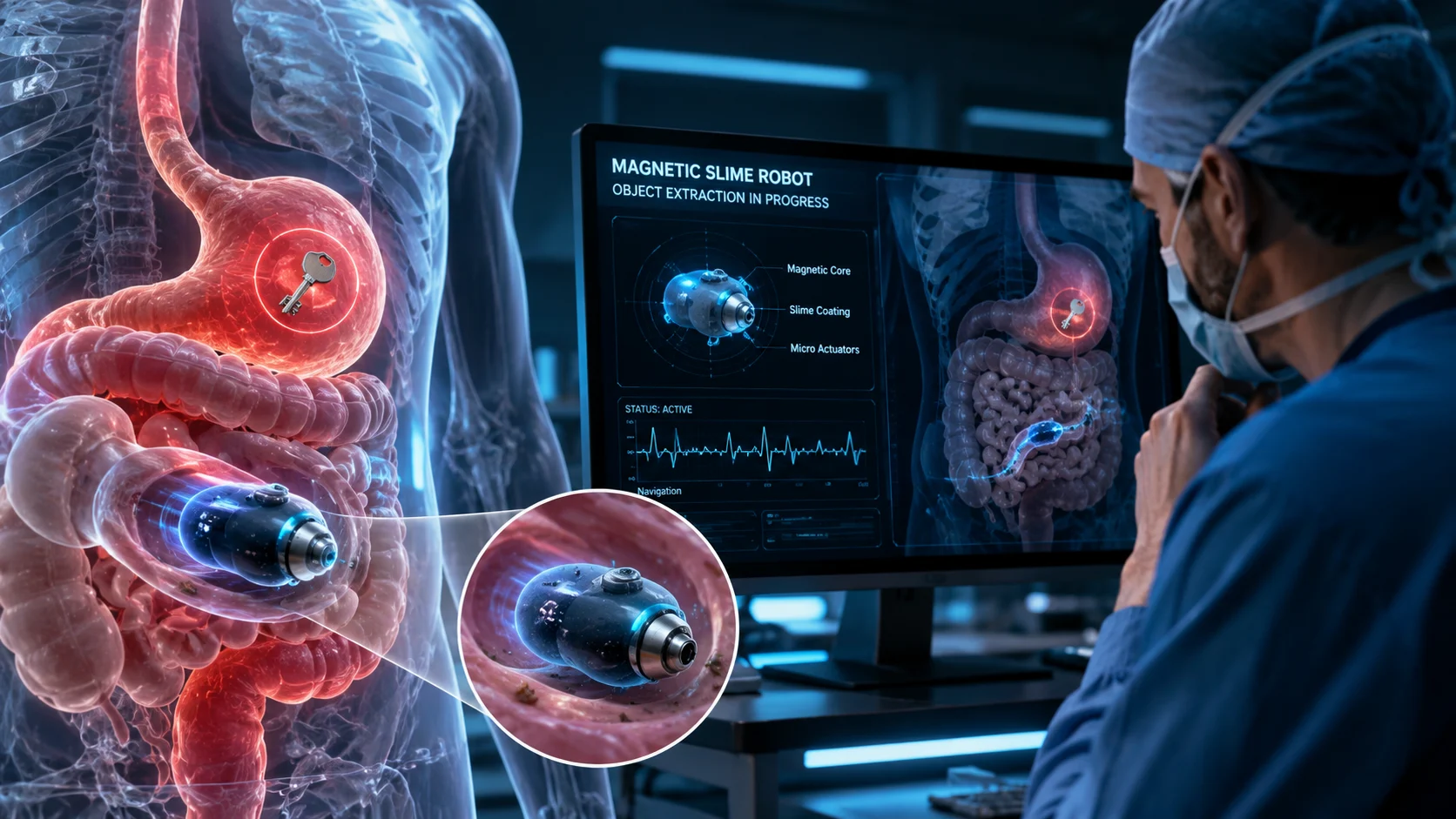
Scientists may have found a startling way to rescue patients from internal trauma without traditional surgery. Ingested foreign objects send over 100,000 patients to emergency care every year, with children accounting for 80% of severe cases requiring swift medical intervention.
What if doctors could extract swallowed batteries or sharp objects using a soft magnetic entity that dissolves recovery times by 50%? That possibility is moving closer fast.
The breakthrough promises to revolutionize emergency gastroenterology and unlock unprecedented precision inside the human digestive tract.
What the Magnetic Slime Robot Is
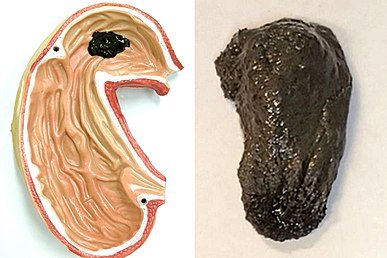
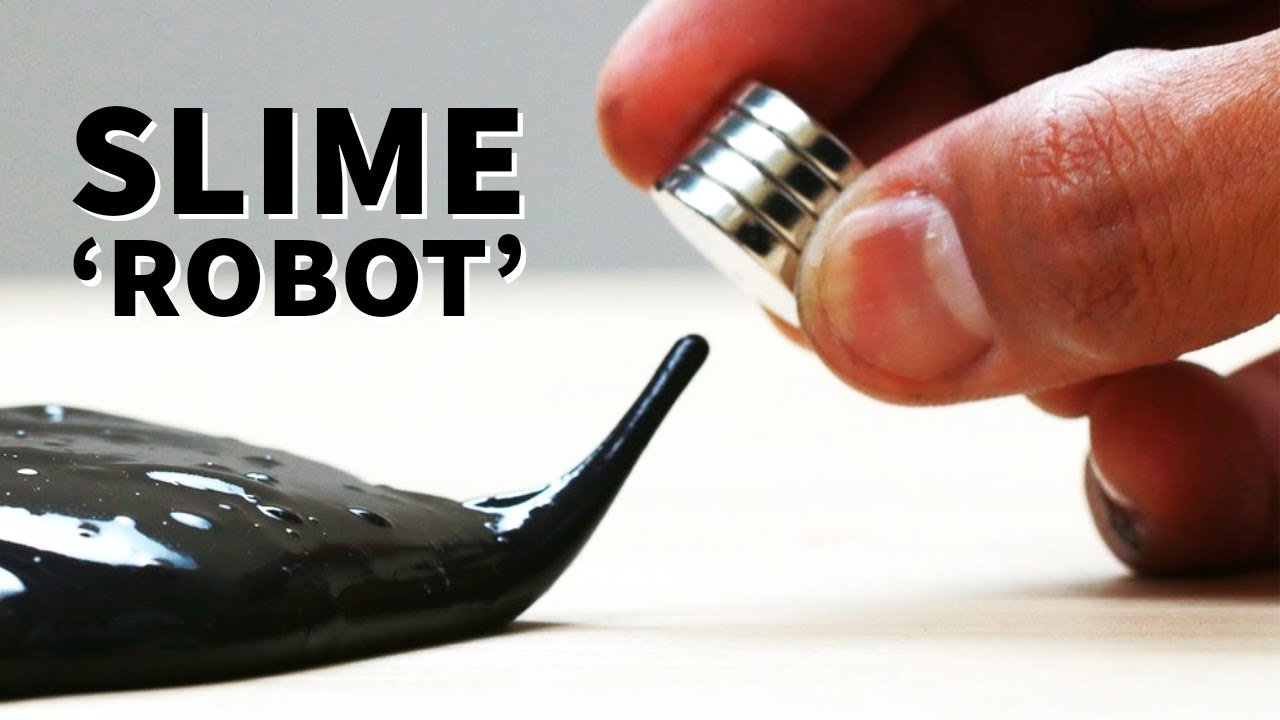
Researchers have developed a fluid-like, magnetic slime capable of navigating tight, curved internal passages. Controlled entirely from outside the body using magnetic fields, this soft material deforms around obstacles to reach complex locations.
- Deformable Chemistry: Blends elastic polymers with neodymium magnetic particles to achieve fluid-like agility.
- Self-Healing Properties: The material can split apart to pass tight gaps and rejoin seamlessly.
- High Electrical Conductivity: Can potentially be used to circuit-break swallowed batteries before they cause chemical burns.
How does a material that looks like a toy perform delicate surgical tasks? The secret lies in dynamic magnetic field manipulation.
Why It Matters Medically
Swallowed foreign bodies—especially button batteries and small metal parts—pose immediate life-threatening risks to internal tissue. Current endoscopic tools are rigid and cannot easily reach deep or narrow GI passages.
| Problem | Current Approach | Magnetic Slime Robot Advantage |
|---|---|---|
| Swallowed Foreign Body | Invasive endoscopy or open surgery | Less invasive retrieval via natural passages |
| Hard-to-Reach Areas | Manual surgical intervention | Magnetic navigation through tight digestive folds |
| Patient Discomfort | Anesthesia and long recovery | Potentially safer, faster outpatient recovery |
Could this be the future of emergency surgery? Minimizing surgical incisions reduces infection risks and cuts hospital stay costs significantly.
How It Works
- External Guidance: An operator applies magnetic fields outside the body to steer the slime toward the target.
- Shape Adaptation: The robot squeezes through narrow channels as thin as 1.5 millimeters.
- Encapsulation: The soft slime wraps around sharp or hazardous objects, sealing toxic surfaces.
- Safe Extraction: External magnets pull the slime and swallowed object back out through natural openings.
Real-World Implications & Future Testing
While lab trials show immense promise, researchers must address biocompatibility before human clinical trials begin. Toxic magnetic particles require leak-proof protective coatings to ensure safety inside living tissue.
- Pediatric Care: Reduces trauma for toddlers who accidentally swallow small objects.
- Emergency Medicine: Speeds up foreign object removal in busy trauma units.
- Targeted Drug Delivery: Could eventually transport medication directly to internal ulcers or tumors.
“The real breakthrough is creating a robot that adapts to the body’s natural contours rather than forcing the body to adapt to rigid tools.” — Biomedical Robotics Researcher
Would patients trust a robot-like material inside the body? With non-toxic siloxane coatings currently in development, clinical safety tests are advancing rapidly.
🇨🇳 This magnetic slime robot was directly inspired by the movie Venom. Researchers at the Chinese University of Hong Kong created it using neodymium particles, PVA, and borax. Some of the things it can do: * Squeeze through gaps as small as 1.5 mm. * Change shape to wrap…
— Mario Nawfal (@MarioNawfal) August 1, 2026
Sources
Official Research & Medical Robotics Resources: • CUHK Faculty of Engineering Research Release • Advanced Functional Materials Journal • IEEE Transactions on Biomedical Engineering • NIH PubMed Central Emergency Medicine Archives
If a magnetic slime can safely navigate internal organs, what other invasive surgeries could become obsolete? The line between science fiction and surgical reality continues to blur.