
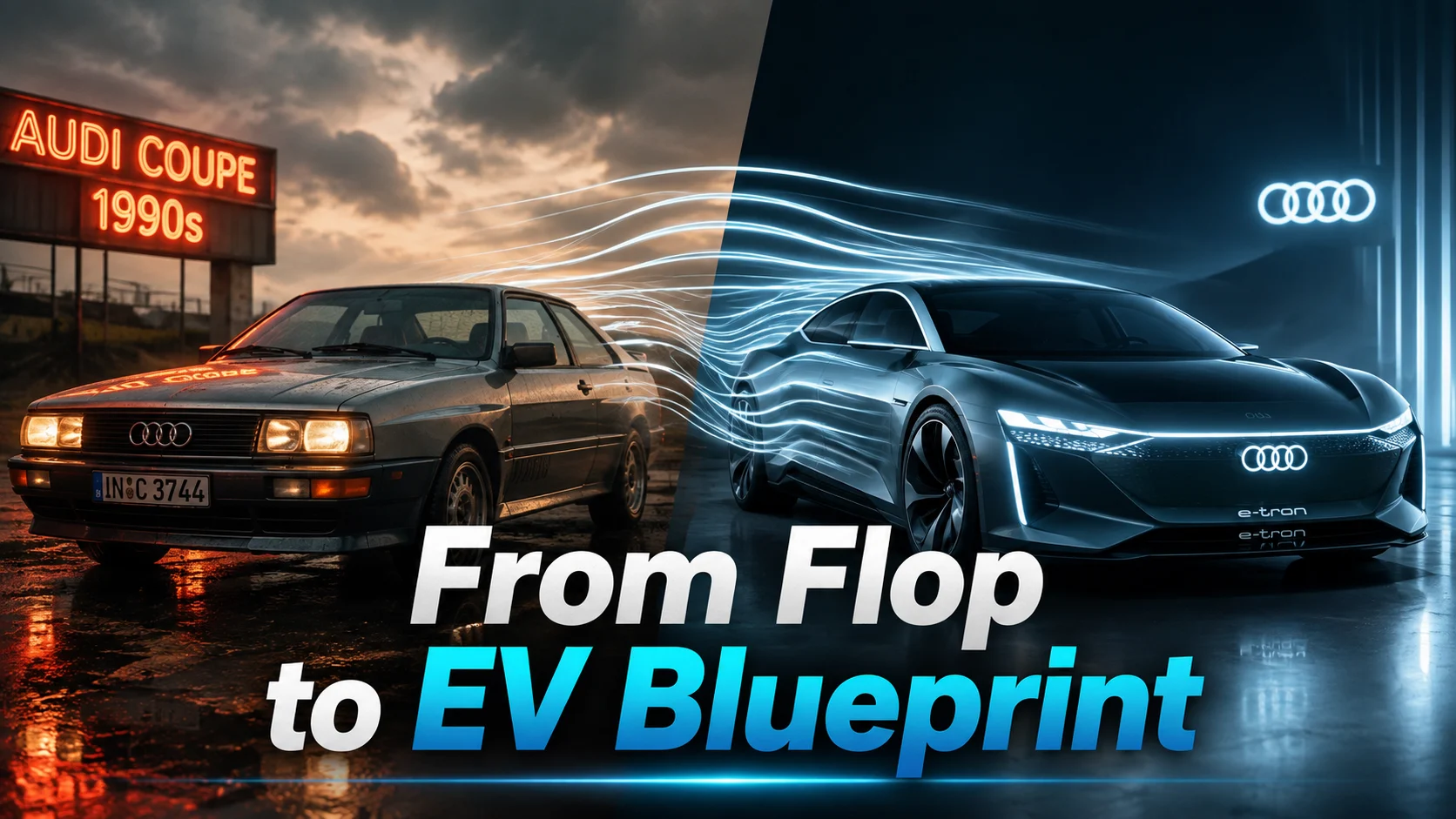
Audi is reviving the radical design lessons of its forgotten 1990s A2 supermini to engineer an ultra-efficient EV blueprint.
Audi just resurrected one of its most embarrassing 1990s experiments—and the reason will shock you. The original 1999 Audi A2 flopped commercially after selling only 176,377 units over six years due to sky-high production costs.
Yet, with modern EV range wars heating up, Audi’s new A2 e-tron leverages a 0.24 Cd drag coefficient to achieve an astounding 4.85 miles per kWh. How does a forgotten 25-year-old failure suddenly become strategic gold? With EV competition intensifying, Audi cannot afford to ignore aerodynamic purity any longer.
Did Audi just turn a classic market failure into its biggest electric advantage?
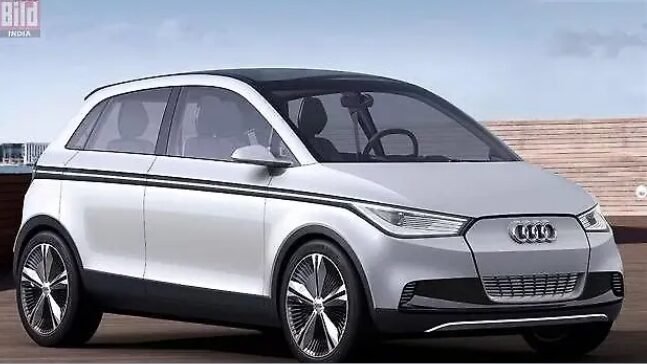
What the Original 1990s Audi A2 Was
Unveiled as a groundbreaking concept in the late 1990s and launched in 1999, the original Audi A2 was an engineering marvel. It featured an all-aluminum spaceframe chassis that cut weight down to just 895 kg (1,973 lbs).
| Technical Feature | Original 1999 Audi A2 | Modern Audi A2 e-tron EV |
|---|---|---|
| Body Construction | All-aluminum Audi Space Frame | Cell-to-pack LFP platform |
| Aerodynamic Drag | 0.28 Cd (0.25 Cd on 3L version) | Record-breaking 0.24 Cd |
| Efficiency Metric | 3.0 L/100km (~78 mpg) | 4.85 miles per kWh (WLTP) |
| Target Audience | Eco-conscious city commuters | Range-focused urban EV buyers |
Its ultra-tall, teardrop silhouette was optimized relentlessly in wind tunnels.
Why the A2 Flopped in the 1990s
Despite its visionary fuel efficiency, buyers in the late 1990s completely rejected the A2:
- Sky-High Sticker Price: The complex aluminum frame pushed production costs 30% higher than rival hatchbacks.
- Bizarre Styling: Consumers favored traditional hatchback proportions over the tall, bubble-like aerodynamic shape.
- Cheap Fuel Era: Cheap gasoline meant buyers cared little about saving a few liters of fuel.
Could this forgotten model be more relevant now than when it first launched?
Why EVs Changed the Equation
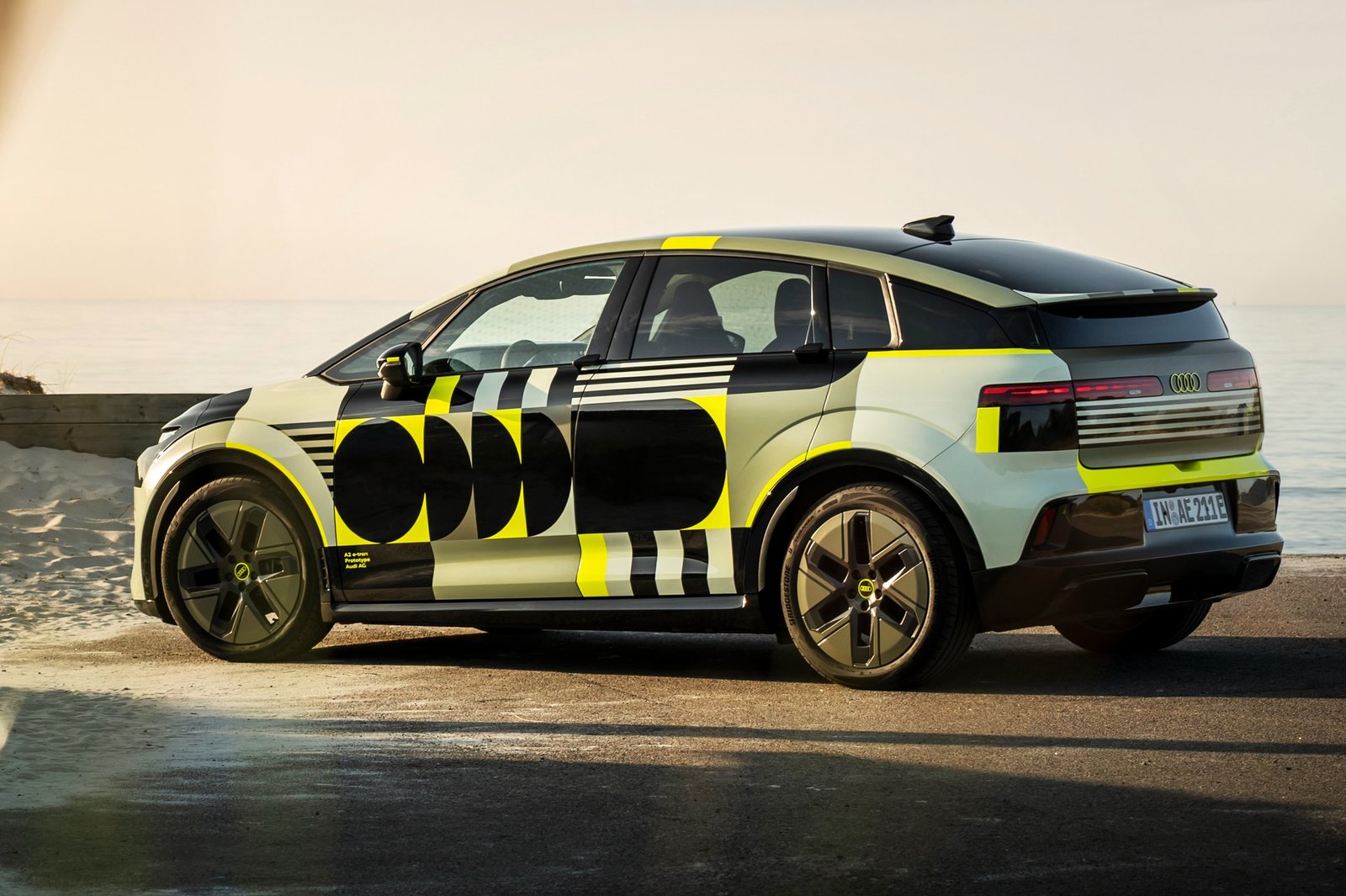
What failed in 1999 is precisely what modern electric vehicles desperately need today. Because battery packs are heavy and expensive, fighting air resistance is the most cost-effective way to boost driving range.
- Aerodynamic Drag Penalty: At highway speeds, overcoming air resistance consumes up to 60% of an EV’s energy.
- Active Air Management: The revived A2 e-tron uses active cool-air intakes that seal tight at high speeds to slash drag.
- Weight & Packaging Discipline: Short overhangs and high rooflines maximize interior space while keeping overall footprint compact.
“The Audi A2 has been a constant in my career since the 1990s… This is precisely the vision we are carrying forward: outstanding efficiency and excellent everyday usability.” — Gernot Döllner, Audi CEO
Audi’s Strategic EV Reset
Audi is shifting its electrification focus toward smaller, lighter, and vastly more efficient models. By resurrecting the A2 naming philosophy, the brand bridges nostalgic heritage with futuristic powertrain technology.
What if Audi’s worst-selling 1990s idea turned out to be its smartest EV breakthrough?
Audi’s brought back one of its greatest hits – and I’ve had an early taste… 👀 Is the new A2 as impressive as the original? 🤔 https://t.co/2fmJ8NN1sd pic.twitter.com/WUVkI8DzoA
— Autocar (@autocar) August 3, 2026
Official Coverage & Resources
Official Coverage & Portals: • Audi Official Press Release: A2 e-tron World Premiere • EV Powered: Audi A2 e-tron Tech Breakdown • Autocar: Reborn Audi A2 Driven
Do you think aero-focused retro designs are the future of electric cars?