
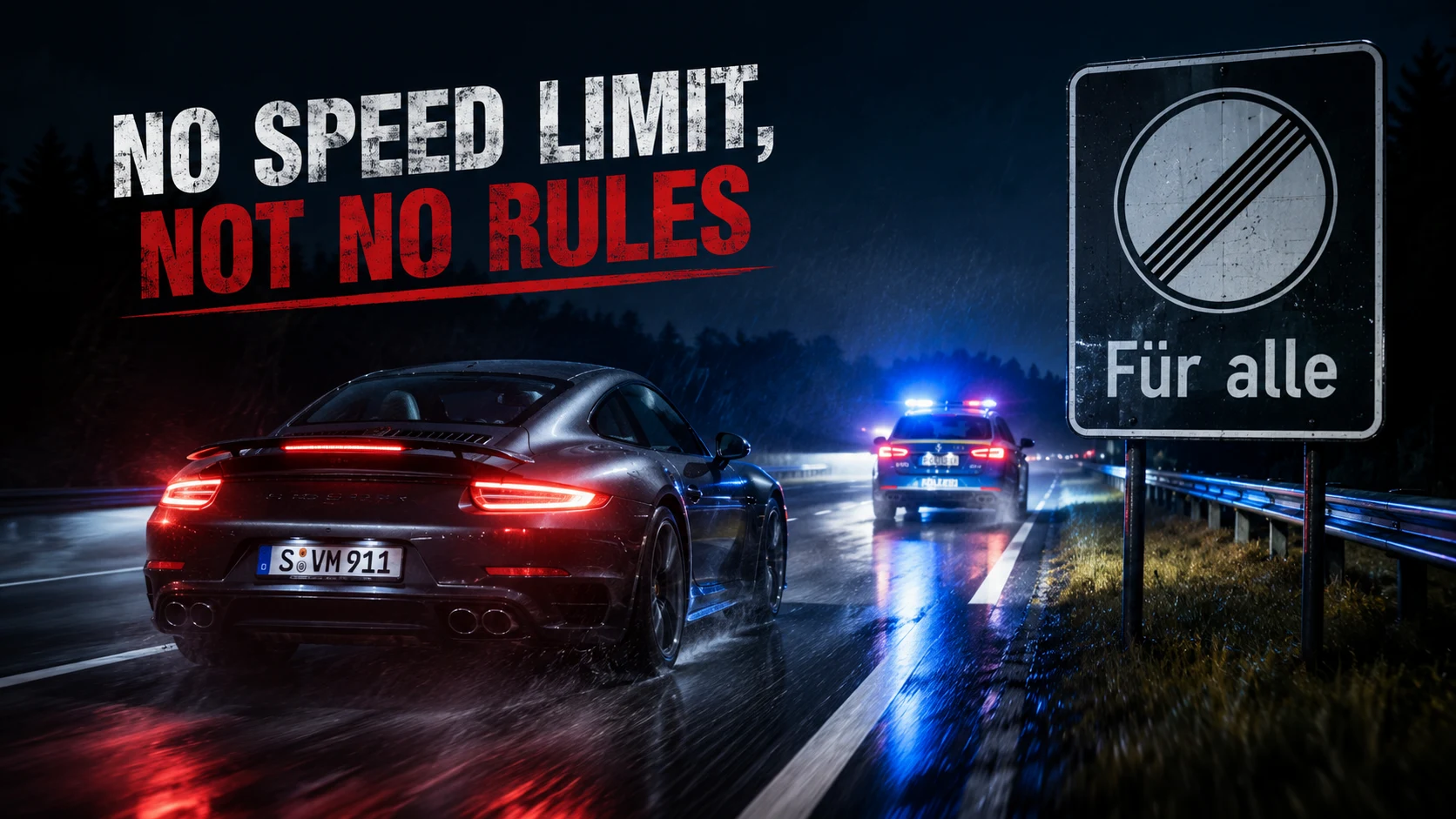
Germany’s Autobahn network is legendary for unrestricted speed, but “no speed limit” does not mean no criminal liability.
At 235 km/h, the Autobahn can turn from thrill to trouble in a heartbeat. Germany’s famous highway system has unrestricted stretches, but that does not mean reckless driving is allowed. In fact, police can act quickly when a driver creates danger, drives under the influence, or ignores traffic conditions.
So why do so many people still assume the Autobahn is a lawless speed zone? Another hard truth: speed itself may be tolerated in some places, but danger never is. That’s where the myth crashes into reality.
If the road allows unrestricted speed, does that mean the law allows unlimited risk?
The Myth of the Lawless Highway
The popular international belief is that Germany’s Autobahnen are wild west racing grounds. In reality, about 30% of the network has permanent or temporary speed limits, while the remaining sections operate under a recommended speed limit (Richtgeschwindigkeit) of 130 km/h.
| Driving Situation | Legal Speed Status | Police Action Trigger |
|---|---|---|
| Dry road, clear traffic at 235 km/h | Permitted on unrestricted zones | None (if driving safely) |
| Heavy rain / Fog at 235 km/h | Illegal (Inappropriate speed) | Fines, points, driving ban |
| Tailgating at high speed (Nötigung) | Criminal offense | Driver license seizure, police custody |
| Single-vehicle max-speed racing | Criminal offense (§ 315d StGB) | Up to 2 years prison, vehicle impoundment |
While you won’t be ticketed simply for hitting high speeds in designated zones, exceeding the 130 km/h recommendation dramatically shifts legal liability onto the driver if an incident occurs.
What Actually Gets Fast Drivers Arrested?
German traffic enforcement relies heavily on civil traffic laws as well as the German Criminal Code (StGB). Police patrol cars and unmarked video vehicles monitor speeds continuously.
5 Ways a Fast Drive Becomes a Legal Nightmare:
- Reckless Endangerment (§ 315c StGB): Driving at high speeds while changing lanes aggressively or cutting off drivers can lead to immediate arrest.
- Forbidden Solo Street Racing (§ 315d StGB): Moving at inappropriate speeds to achieve maximum velocity recklessly can trigger prison sentences.
- Coercion / Tailgating (Nötigung): Flashing headlights while driving dangerously close to a car ahead is treated as a serious criminal offense.
- Ignoring Weather Conditions: Driving 235 km/h during heavy rain or low visibility violates basic control laws.
- Impairment or Substance Use: Operating a vehicle at extreme speeds with a blood alcohol concentration above 0.03% turns simple driving into a major offense.
At what point does fast driving cross the line into criminal driving?
When Police Intervene and Take Drivers into Custody
When German highway patrols observe aggressive behavior at 235 km/h, they don’t just issue routine speeding tickets. Police have the authority to seize driving licenses on the spot, confiscate vehicles as evidence, and place drivers into temporary police custody if there is a risk of flight or serious public danger.
“No speed limit does not mean no responsibility; once driving becomes dangerous to others, legal enforcement can be immediate and severe.” — German Traffic Law Expert
Ein Niederländer fährt mit 235 Kilometern pro Stunde auf der A3, überholt rechts und nutzt jede Fahrzeuglücke. Der Mann gibt an, Cannabis konsumiert zu haben – aus beruflichen Gründen. https://t.co/fAoEYfHev4
— Frankfurter Allgemeine (@faznet) August 5, 2026
Why the Myth Persists
Viral social media videos showing drivers hitting 200+ km/h rarely display the strict requirements running behind the scenes. Drivers in those clips often check road conditions, traffic density, and weather meticulously beforehand.
- Controlled Reality: High-speed driving is only permitted when traffic flow, visibility, and pavement conditions allow full control.
- Strict Discipline: German lane discipline (keeping right except when overtaking) is strictly enforced to make high-speed passing predictable.
- Liability Shift: If you crash while driving above 130 km/h, insurance companies can reduce payout coverage due to implied gross negligence.
Official Sources & Legal References
Official Coverage & Portals: • Section 315c StGB – Endangering Road Traffic • Section 315d StGB – Forbidden Motor Vehicle Races • German Road Safety Council (DVR) Guidelines • ADAC Guide to Autobahn Regulations
Would you still floor it at 235 km/h if traffic or weather conditions suddenly changed?