
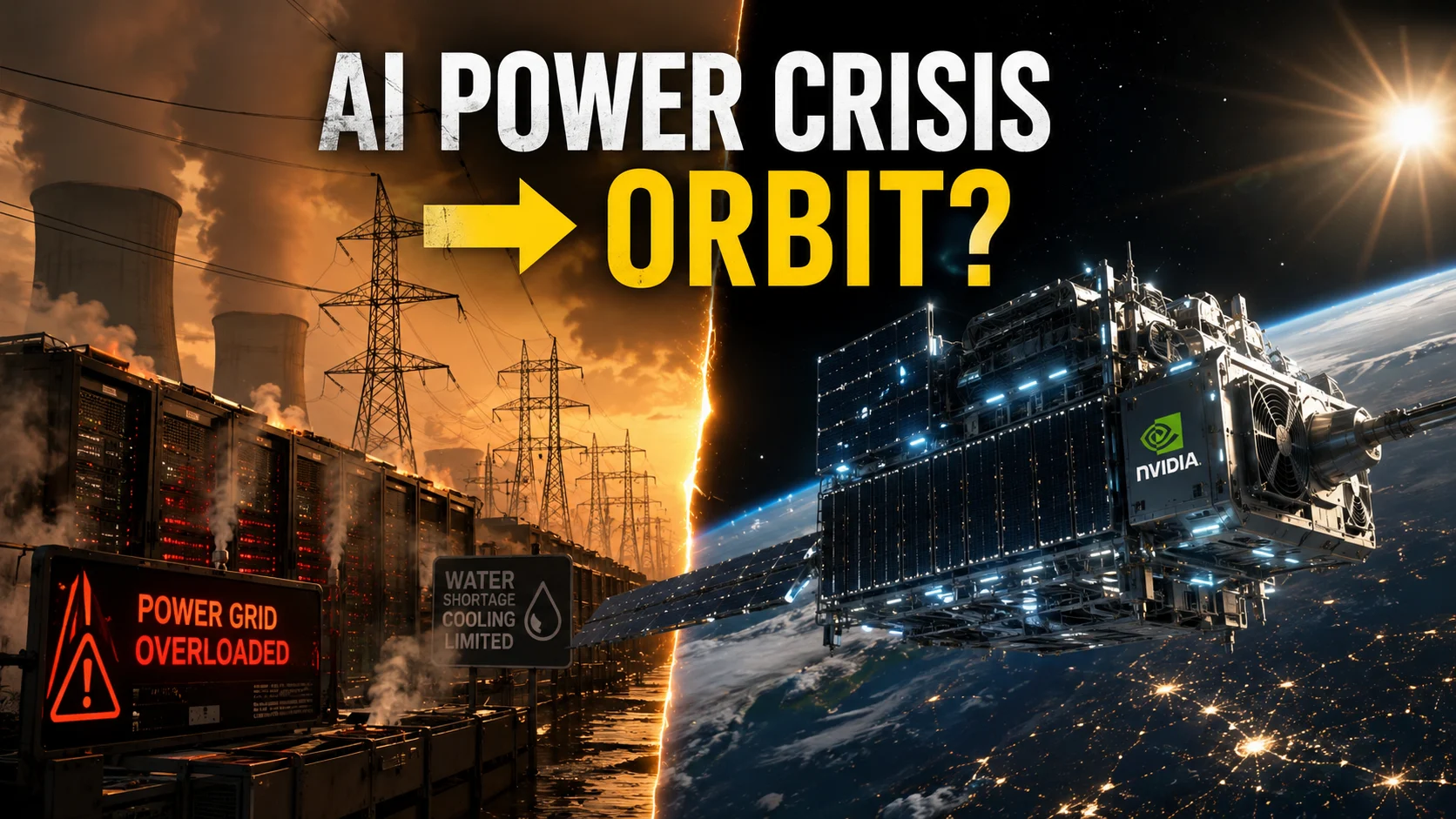
AI compute is colliding with Earth’s power limits, and orbit may be the most radical infrastructure workaround yet.
AI is devouring electricity faster than global power grids can physically expand. Modern AI data centers already consume over 200 terawatt-hours annually, and projections show energy demand surging by 160% before the decade ends.
How can tech giants scale next-generation models when local power systems are already at their breaking point? With water cooling systems consuming 5 million gallons daily per site, SpaceX and NVIDIA are pointing toward a radical answer: move the compute into space.
What if the cleanest and most efficient place to run high-density GPUs is actually in orbit?

Why Earth’s AI Infrastructure Is Hitting a Wall
Terrestrial data center buildouts are running out of land, power, and local public support. The explosive growth of generative AI is hijacking municipal electricity networks and causing severe interconnect delays.
- Grid Overload Risks: Local utilities face severe transformer shortages, leaving new data center projects waiting up to 7 years for grid connections.
- Water & Cooling Strain: Traditional liquid-cooling facilities drain local aquifers, provoking community pushback and legal injunctions.
- Land-Use Disputes: Mega data center campuses clash with local zoning laws and agriculture preservation needs.
So why are companies looking up? If AI keeps scaling exponentially, where will the electricity come from?
The Orbital Workaround
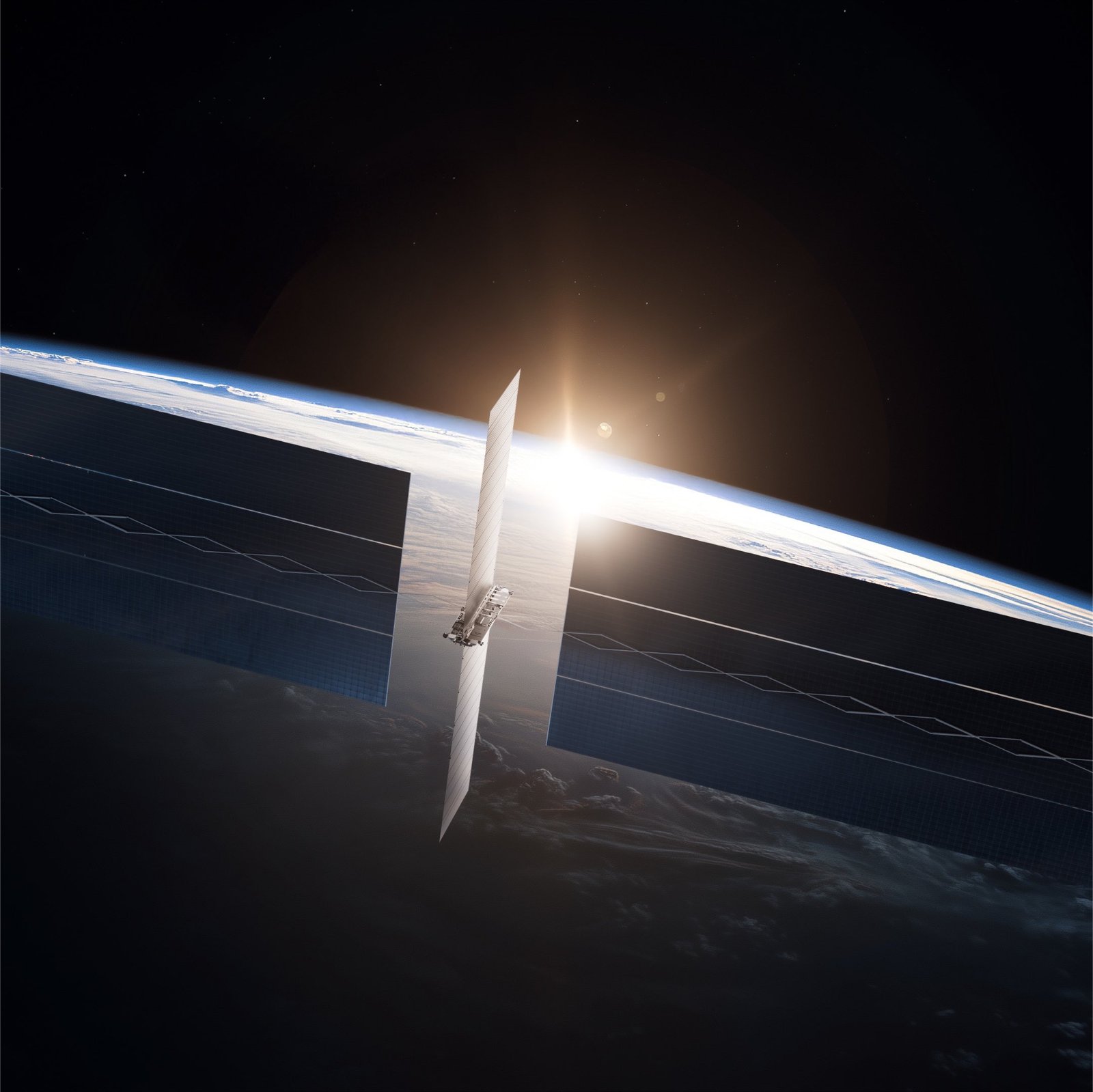
Placing GPU clusters in sun-synchronous orbits offers a continuous stream of solar energy that terrestrial facilities can only dream of.
- Uninterrupted Solar Energy: Satellites in specialized orbits receive 24/7 direct sunlight, bypassing night cycles and cloud cover completely.
- Zero Water Footprint: Vacuum-based radiative cooling removes the need for terrestrial freshwater consumption entirely.
- Zero Land Footprint: Deploying hardware in space avoids costly real estate acquisitions and municipal tax battles.
Here is the catch. The physics of outer space present severe engineering trade-offs.
The Engineering Obstacles & Physics Fight Back
While orbital energy is free and endless, operating high-performance microchips in space introduces brutal operational bottlenecks.
| Advantage in Orbit | Reality Challenge |
|---|---|
| Zero land-use conflict | High launch & deployment costs |
| Continuous 24/7 solar power | Thermal rejection is difficult in a vacuum |
| Zero freshwater cooling used | Hardware repair & maintenance is nearly impossible |
| Grid & utility independence | Bandwidth limits & atmospheric latency |
“The ultimate constraint on artificial intelligence isn’t silicon quantity—it is power generation and thermal density. If you can bypass terrestrial grids entirely, orbital compute stops looking like science fiction and starts looking like infrastructure.” — Dr. Elena Rostova, Senior Energy & Data Infrastructure Analyst
Why GPUs Make This Idea Credible
NVIDIA’s high-density accelerator architectures are changing the economics of space-based data processing. Rather than downlinking massive raw datasets back to Earth, orbital AI inference can process data directly in space.
- Edge Processing in Space: Earth-observation satellites can run real-time inference on space-borne GPUs, sending back only key insights instead of raw terabytes.
- Starlink Optical Mesh: SpaceX’s space lasers provide ultra-fast inter-satellite laser communications, enabling high-speed distributed compute nodes in low-Earth orbit.
🚨BREAKING: SpaceX is partnering with NVIDIA to design the Starmind AI1 satellite compute payload. Each Starmind satellite will carry NVIDIA Rubin GPUs and Vera CPUs for datacenter-class compute in orbit. Datacenters are officially leaving Earth. pic.twitter.com/2cxsmPbyAG
— The AI Colony R&D (@TheAIColonyRD) August 5, 2026
Official Coverage & Resources
Official Resources & Industry Portals: • IEA Report on Global Data Center Energy Demands • SpaceX Satellite Payload Capabilities & Launch Schedules • NVIDIA High-Density AI Data Center Solutions
Here’s What to Do Today
Will the next major AI model be trained on Earth or in space? The race to solve AI’s power crisis may ultimately be won hundreds of miles above the atmosphere.