
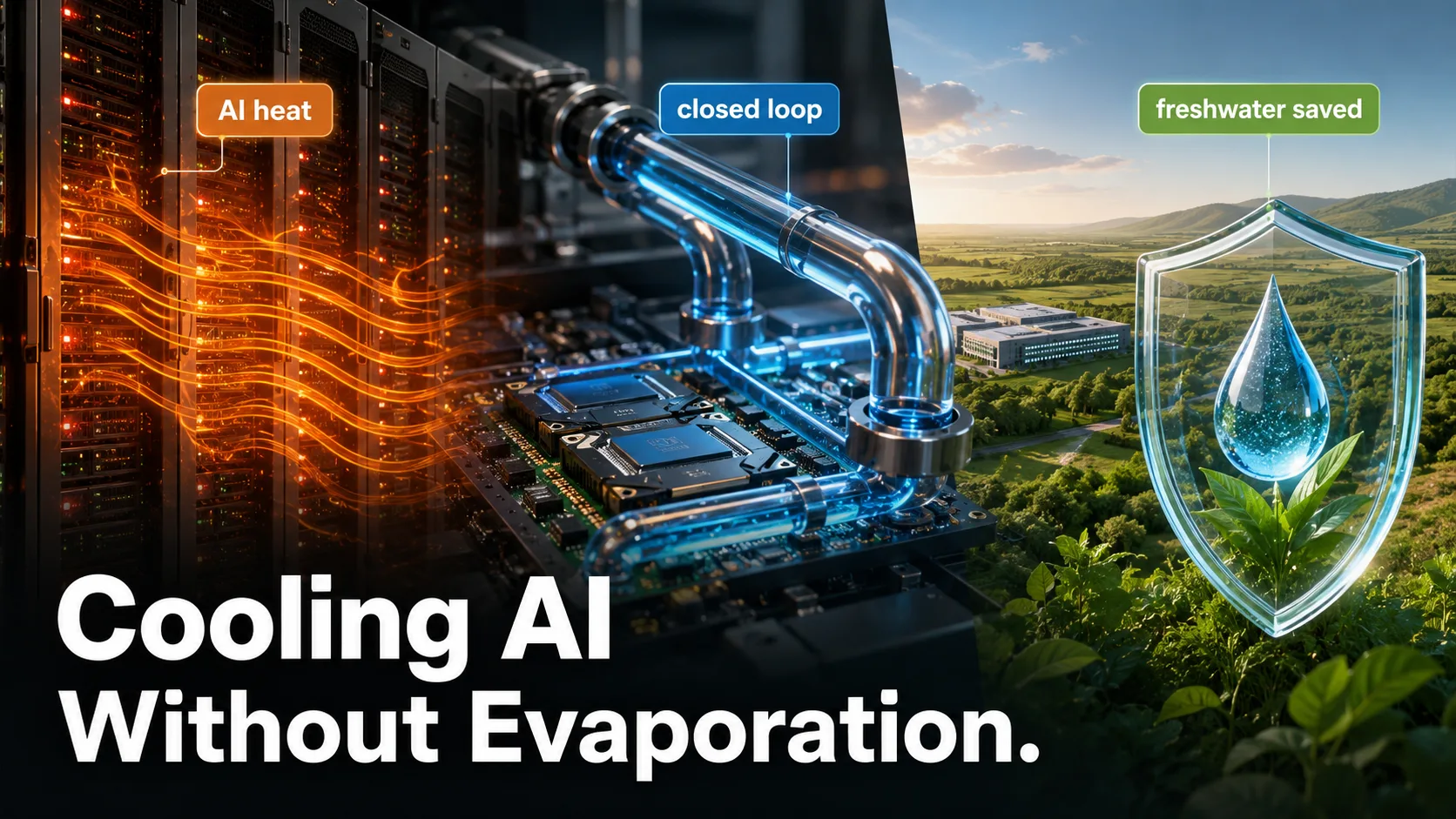
Heat paralyzes India’s rapid technological expansion as power-hungry artificial intelligence workloads overload standard cooling systems.
How much freshwater will data centers consume to keep servers from melting, and how fast can operators pivot to sustainable engineering?
The urgency is undeniable: with national capacity scaling aggressively, the search for eco-friendly infrastructure is transforming data center design.
The Hidden Bottleneck
India’s AI boom is colliding with a problem few users can see: heat. High-density AI servers generate far more thermal energy than conventional computing equipment, forcing operators to rethink how they cool the machines driving the country’s digital future.

India’s data-center capacity has risen more than fourfold since 2020, while national capacity continues to expand rapidly to meet rising demands. Can local resources support this massive digital footprint without running dry?
Microsoft says its next-generation data center design is intended to consume zero water for cooling, avoid more than 125 million litres of water per year per facility, and begin bringing new sites online from late 2027. That could turn cooling from an environmental liability into a competitive infrastructure advantage.
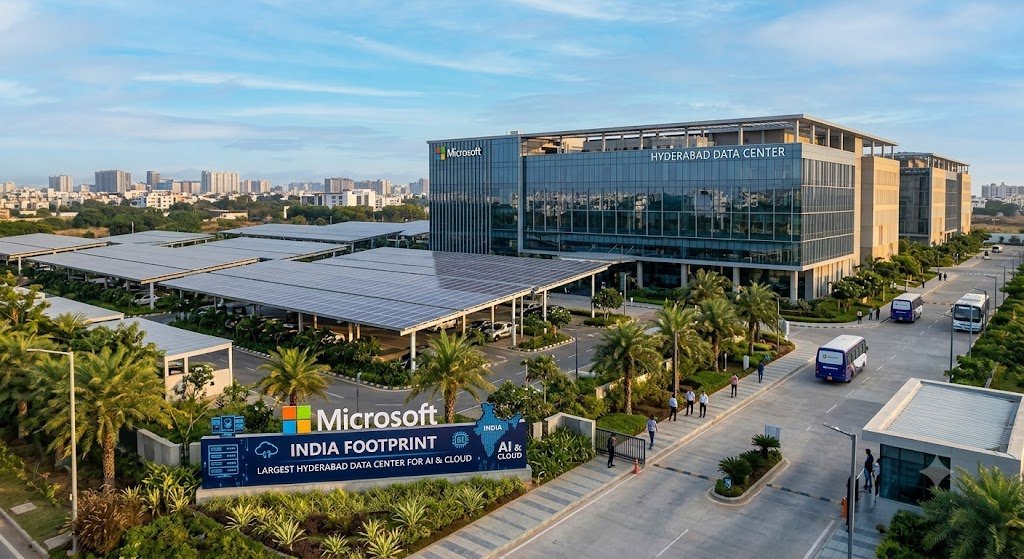
Telangana serves here as a critical regional lens for hot-climate tech expansion rather than proof of an active local Microsoft deployment.
Why AI Changes Cooling
Traditional air cooling becomes less practical as servers become denser and AI accelerators produce more heat. Cooling towers and evaporative systems can remove heat effectively, but they consume massive amounts of freshwater through evaporation—an especially sensitive issue in hot regions.
The shift is toward direct-to-chip cooling, in which a liquid loop carries heat away from processors through cold plates. The liquid is recirculated rather than continually consumed.
The Engineering Shift
- Air cooling: Uses fans and chilled air; simpler, but increasingly inefficient for dense AI racks.
- Direct-to-chip liquid cooling: Transfers heat directly from CPUs and GPUs into a closed loop.
- Immersion cooling: Places hardware in non-conductive fluid for high-density workloads.
- Dry cooling: Rejects heat through air-cooled heat exchangers without evaporating water.
What Microsoft Is Changing
Microsoft states that its next-generation design uses chip-level cooling and a closed-loop system that continuously circulates coolant between servers and chillers. Once filled during construction, the loop operates without drawing fresh water for cooling.
The company rolled out this architecture in late 2024, with pilot facilities in regions like Phoenix and Mt. Pleasant slated to come online through 2026. Will this hardware-level evolution set a new benchmark for global tech giants?
| Claim | Evidence Needed |
|---|---|
| Microsoft is deploying the system in Telangana | Local regulatory filings or company announcements |
| The facility uses zero-water cooling | Technical specifications or engineering statements |
| Annual water savings | Facility-specific consumption estimates |
| AI workload cluster density | Infrastructure partner disclosures |
| Local environmental benefit | Baseline water data and independent assessments |
Why Telangana Matters
Telangana has emerged as a premier technology and data-center hub, but its hot climate increases the difficulty of managing heat efficiently. The state’s ambitious AI infrastructure goals make cooling technology a strategic question, not merely an engineering detail.
A lower-water design reduces competition between industrial demand and local water needs. However, facilities still require substantial electricity, backup generators, land, and non-cooling water for facility operations.
Can Telangana become a global model for AI infrastructure that balances heavy computing power with strict resource conservation?
The Trade-Offs Behind “Zero Water”
“Zero-water cooling” applies specifically to zero water consumption for cooling, not total site elimination; administrative usage like restrooms still requires water.
Potential Trade-Offs
- Higher equipment complexity and intensive maintenance requirements.
- Greater reliance on robust mechanical systems for heat rejection.
- Strict requirements for treated coolant and leak-detection sensors.
- Potential variations in energy efficiency depending on outside temperatures.
Expert Insights on Sustainable Infrastructure
Industry experts emphasize that measuring efficiency requires looking at the entire resource footprint.
“The important question is not simply whether a facility uses water, but whether it consumes freshwater, how much electricity the cooling system requires, and what happens during peak heat,” notes an independent thermal infrastructure analyst.
Governments and standards bodies are pushing for stricter metrics, including Power Usage Effectiveness (PUE) and Water Usage Effectiveness (WUE), to keep hyper-scale expansion accountable.
JUST IN: 🇮🇳 $MSFT opens its largest India data center and expands Azure to four regions in a $21,000,000,000 investment.
— Whale Insider (@WhaleInsider) August 6, 2026
Adani and HDFC Bank are already customers as Microsoft scales local AI capacity for over 1 billion internet users. pic.twitter.com/2ukS5AH7zB
What This Means for India’s AI Boom
India’s digital acceleration depends on more than fast chips and cloud availability. It requires efficient power grid planning, renewable energy procurement, and transparent resource tracking.
Key resources:
- Read Microsoft’s explanation of its zero-water datacenter design for technical framework details.
- Review Government and industry reporting on India’s data-center capacity and cooling standards to understand local regulatory shifts.
- Explore an Overview of vertical and direct-to-chip cooling approaches outlining next-gen thermal management.
Will resource efficiency eventually dictate which states attract the next wave of AI data investments?