
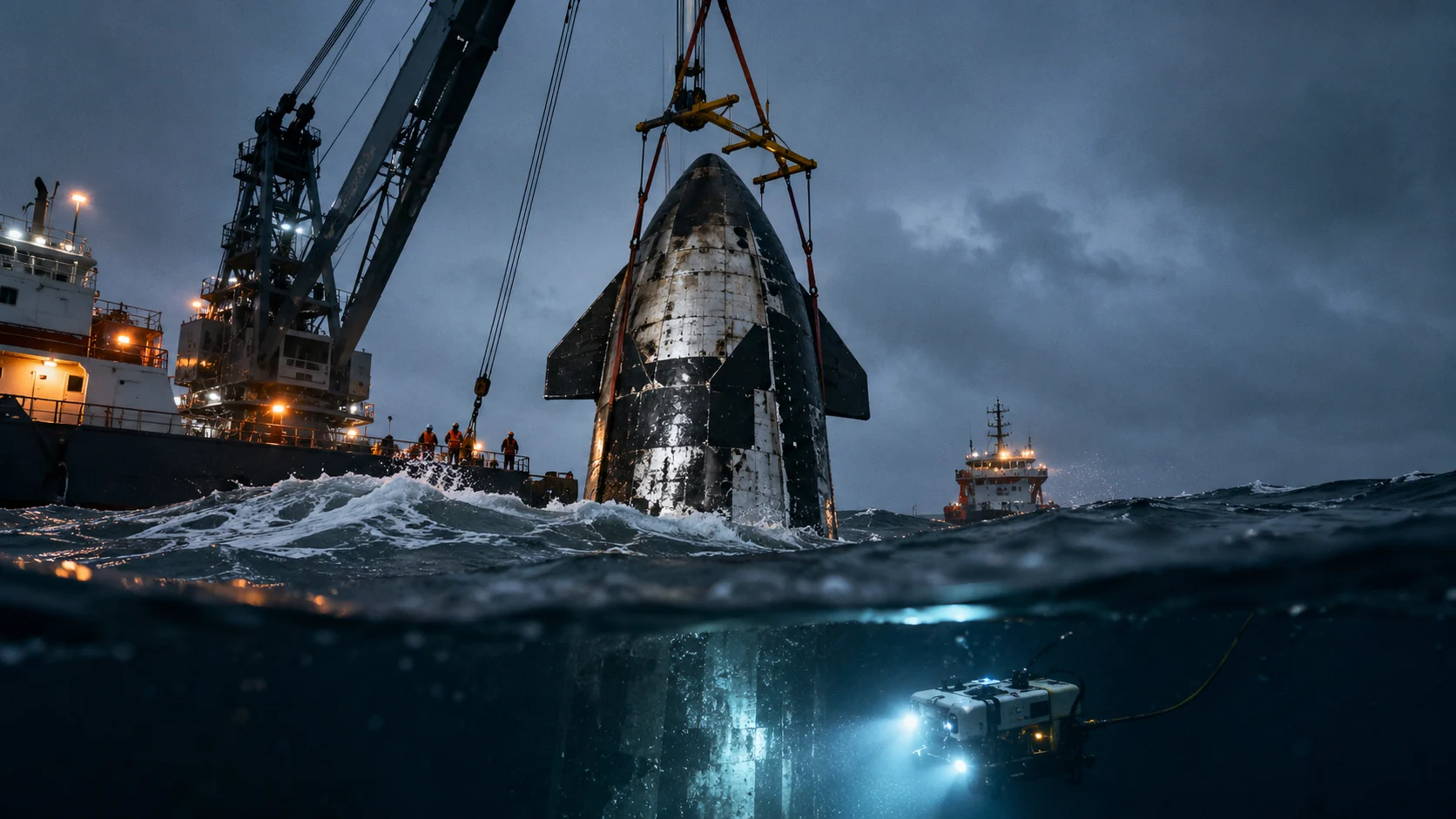
A massive spacecraft has unexpectedly become a high-stakes marine salvage nightmare. Recovering Starship from turbulent offshore waters could require heavy-lift vessels, 3 specialized crane systems, and 12 synchronized salvage teams.
If the vehicle is damaged or partially flooded, every single swell increases the terrifying risk of structural failure. How do engineers move a colossal rocket built for space when the immediate threat is the raging ocean?
The recovery team faces a brutal race against time to stabilize, inspect, secure, and transport a fragile structure before unpredictable currents tear it apart.
The Central Challenge
A Spacecraft Is Not a Ship
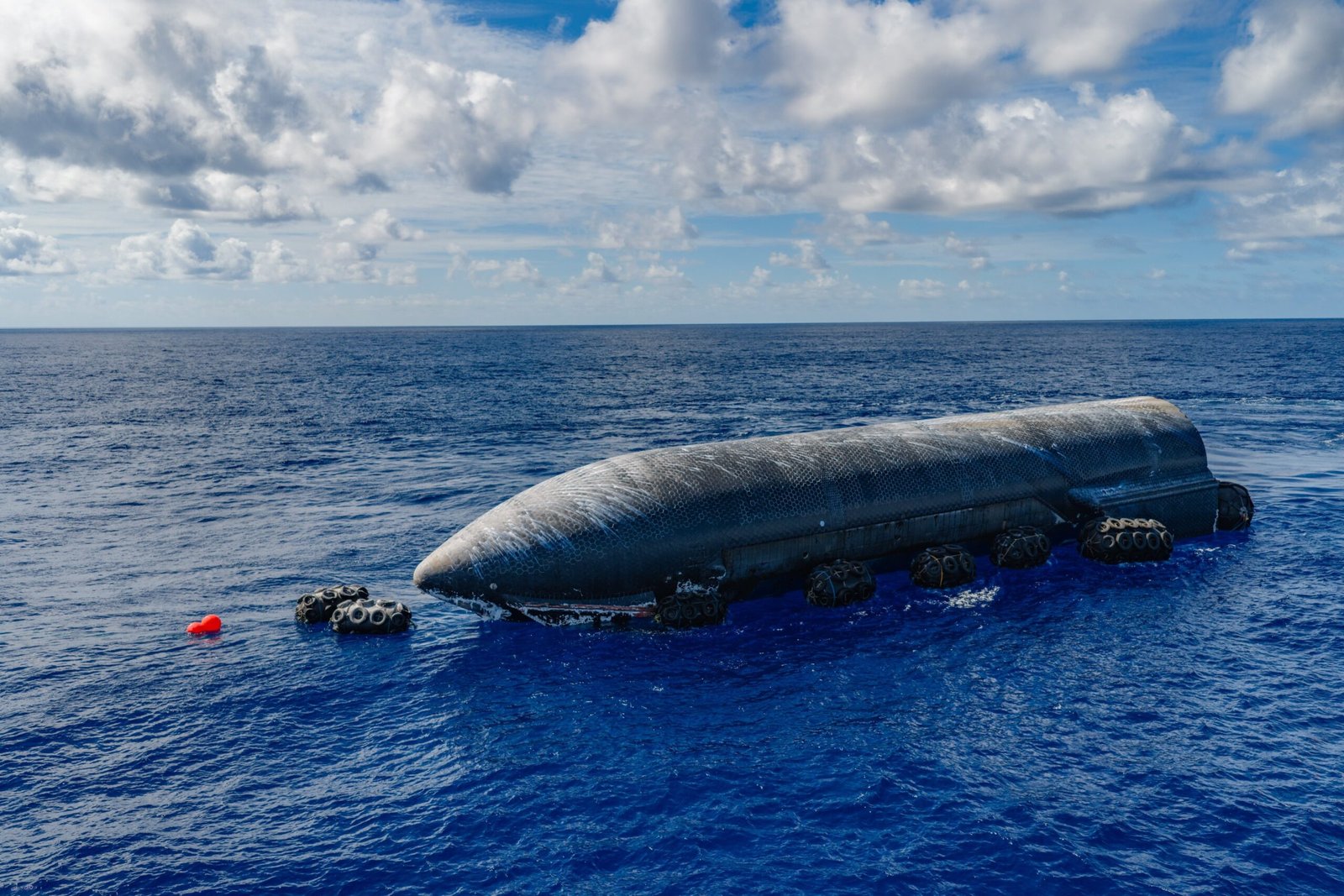
Starship is designed to survive brutal launch forces, but saltwater, heavy waves, and underwater currents present an entirely different kind of danger.
- Whether the vehicle is floating, grounded, or partially submerged.
- How much seawater has flooded its internal tanks.
- Whether its heat-shield tiles and structural rings remain intact.
Why the Ocean Changes Everything
Swells Can Turn a Lift Into a Failure
Lifting a heavy object from moving water creates extreme dynamic loading. The recovery vessel and the spacecraft move independently against ocean waves.
| Salvage challenge | Why it matters | Possible engineering response |
|---|---|---|
| Large swells | Create sudden vertical loads | Wait for weather windows; use motion-compensated cranes |
| Structural damage | Lifting points may fail | Conduct underwater ROV inspections |
| Partial flooding | Changes buoyancy and balance | Pump or isolate flooded compartments |
| Wind and current | Push vehicle away from ships | Use dynamic positioning and control lines |
Step-by-Step Recovery Operation
1. Establish a Safety Perimeter Support vessels must clear a broad perimeter to evaluate hazardous fuel residues, sharp debris, and unstable sections. One incorrect approach angle could place a crewed ship directly beneath a shifting multi-ton load.
2. Survey the Vehicle Underwater Remotely operated vehicles (ROVs) would inspect the hull using high-definition sonar and dimensional mapping to ensure safe rigging.
“The recovery plan would depend less on the vehicle’s original mission profile than on its condition when the salvage team reaches it.” — Captain Thomas Reynolds, Offshore Marine Salvage Director
The Vessels Behind the Mission
A Floating Construction Site
Managing this recovery requires a coordinated fleet of specialized marine vessels.
| Vessel or system | Primary function |
|---|---|
| Heavy-lift vessel | Supports massive cranes and rigging gear |
| Offshore tugboats | Control tow lines and maintain position |
| Dynamic-positioning ship | Holds precise coordinates without anchoring |
| ROV support vessel | Operates underwater survey robots |
Weather Is the Real Schedule
Waiting May Be the Most Important Tactic
A salvage crew cannot control the ocean, making weather windows the absolute deciding factor. High winds, dangerous swells, and unpredictable currents can halt an operation for weeks.
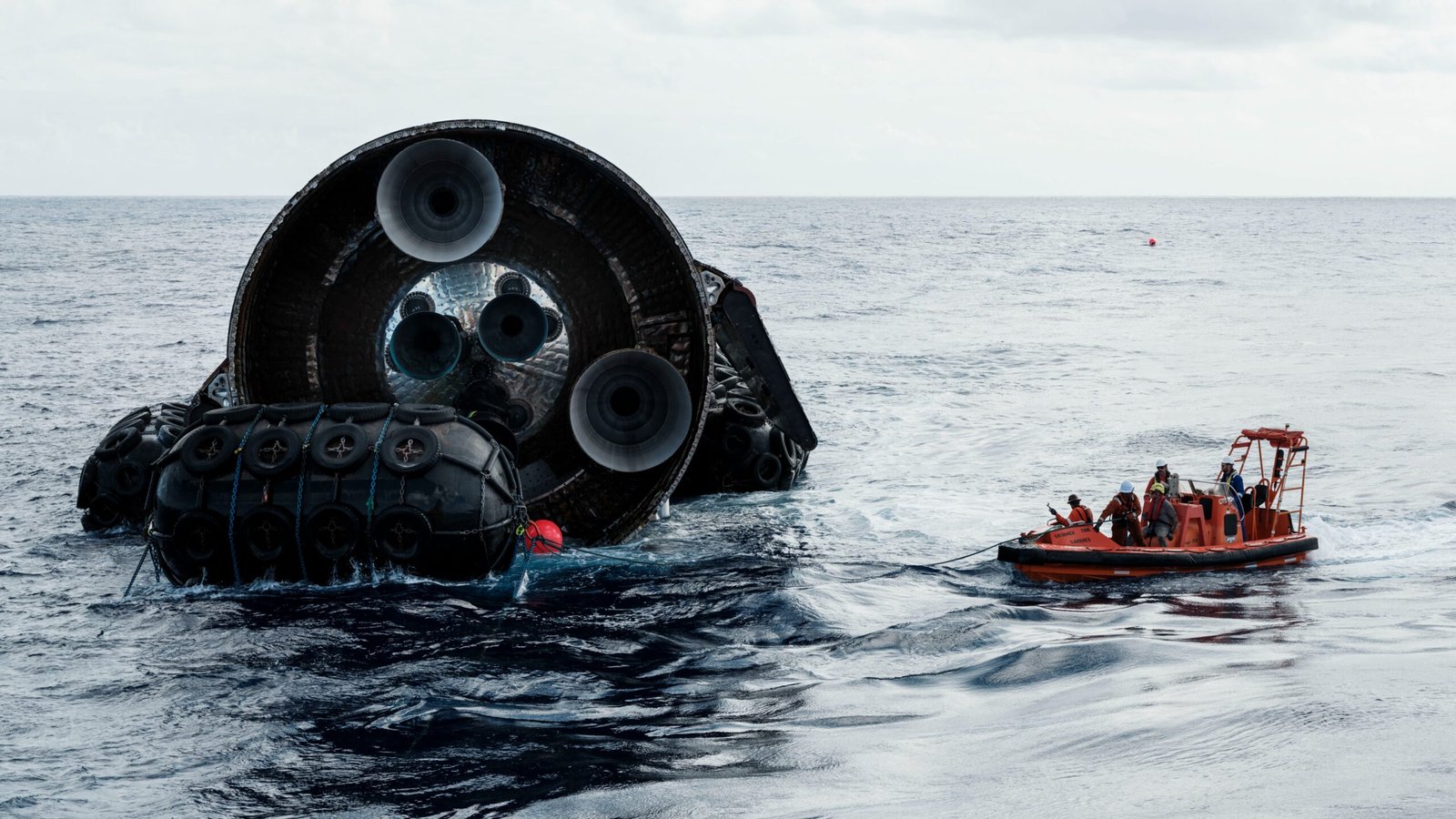
The Hardest Decision: Lift or Tow?
| Option | Major advantages | Serious risks |
|---|---|---|
| Lift offshore | Faster transfer to port | High dynamic loads; complex rigging |
| Tow while floating | Avoids heavy-lift cranes | Vehicle can roll, flood, or break apart |
| Dismantle offshore | Reduces individual load sizes | Slow, hazardous, and destructive |
What the Recovery Could Reveal
Recovering Starship from the ocean would offer aerospace engineers an invaluable case study on impact forces, thermal protection behavior, and seawater corrosion.
The SpaceX recovery team is still working to recover Flight 13’s Starship from the Indian Ocean
— Dima Zeniuk (@DimaZeniuk) August 7, 2026
What a breathtaking view! 🤩 pic.twitter.com/gKWoSz7HyR
Conclusion
Starship was built to cross the boundary between Earth and space. Recovering it from the open ocean demands an entirely different expertise centered on buoyancy, marine stability, and survival in a moving sea.
In the high-stakes race to recover a fallen spacecraft, is the greatest challenge reaching the vehicle—or knowing when the ocean is simply too powerful to fight?
Explore marine salvage standards via the International Salvage Union, review offshore engineering practices at The Maritime Executive, and track aerospace developments via SpaceNews.