
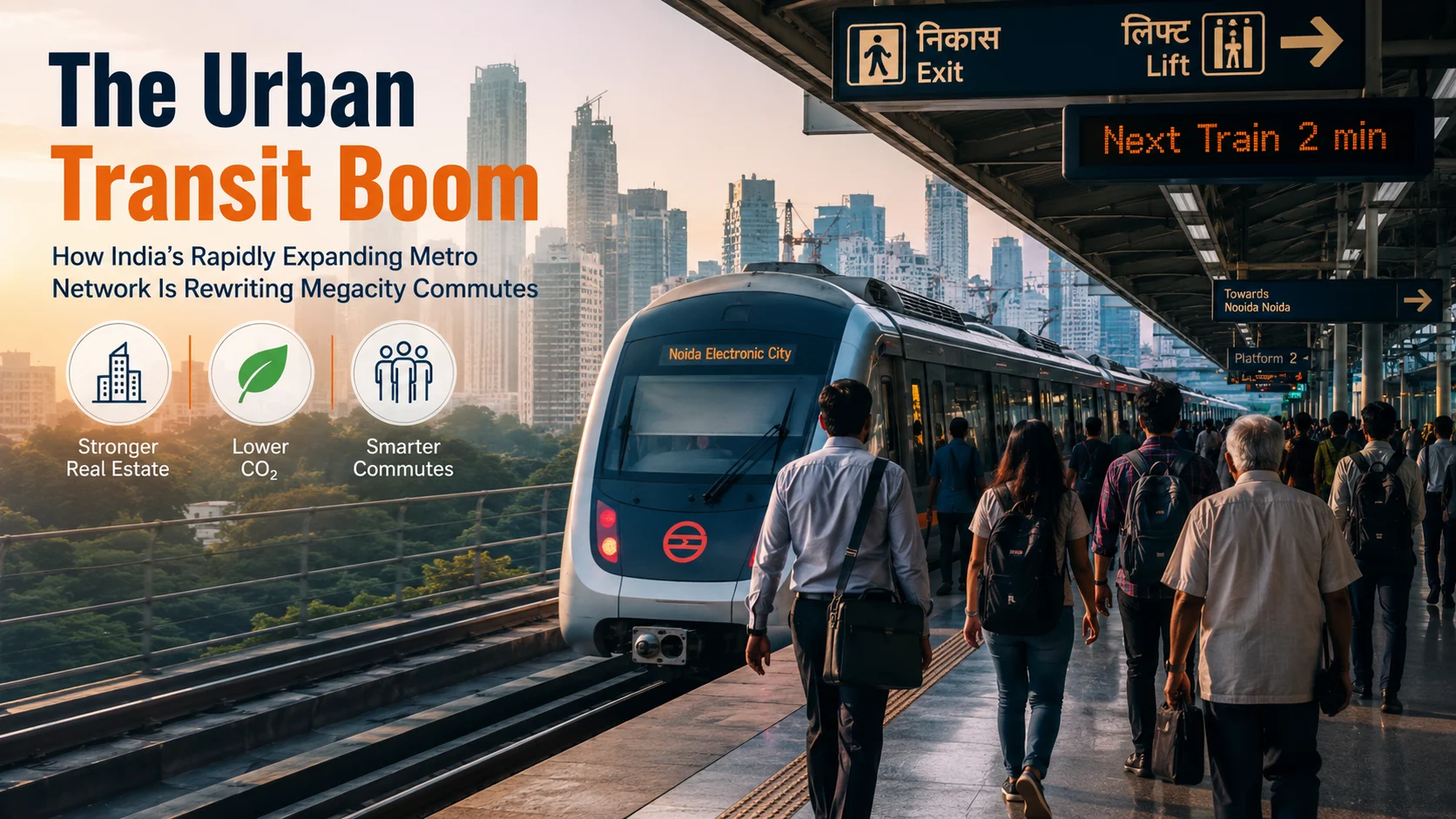
Millions are finally breathing easier — and rejoicing — as metros sweep across India. Over the past decade, India added over 900+ kilometers of operational metro lines and scaled daily ridership past 10 million commuters.
What does this rapid scale-up mean for housing, the climate, and the future of city life? The Urban Transit Boom is not just an infrastructure story — it’s an urgent social and economic transformation that demands attention now.
Over the past decade, India added more than 900 km of metro lines, handed 10 million daily rides to new commuters, and unlocked billions of rupees in transit-oriented real estate value. What happens when metros link multiple cities and suburbs at scale?
The Urban Transit Boom is reshaping property markets, cutting urban carbon footprints, and redefining daily routines for tens of millions — inspiring hope and provoking difficult questions about equity and planning. If cities don’t act fast, gains could become unequal. Here’s how the boom is rewriting commutes, neighborhoods, and possibilities.
What’s Happening Now Across Indian Metros
The transformation of Indian mobility is moving at an unprecedented pace. Urban centers that once suffered from gridlock and high particulate pollution are now stitching together multi-modal transport arteries.
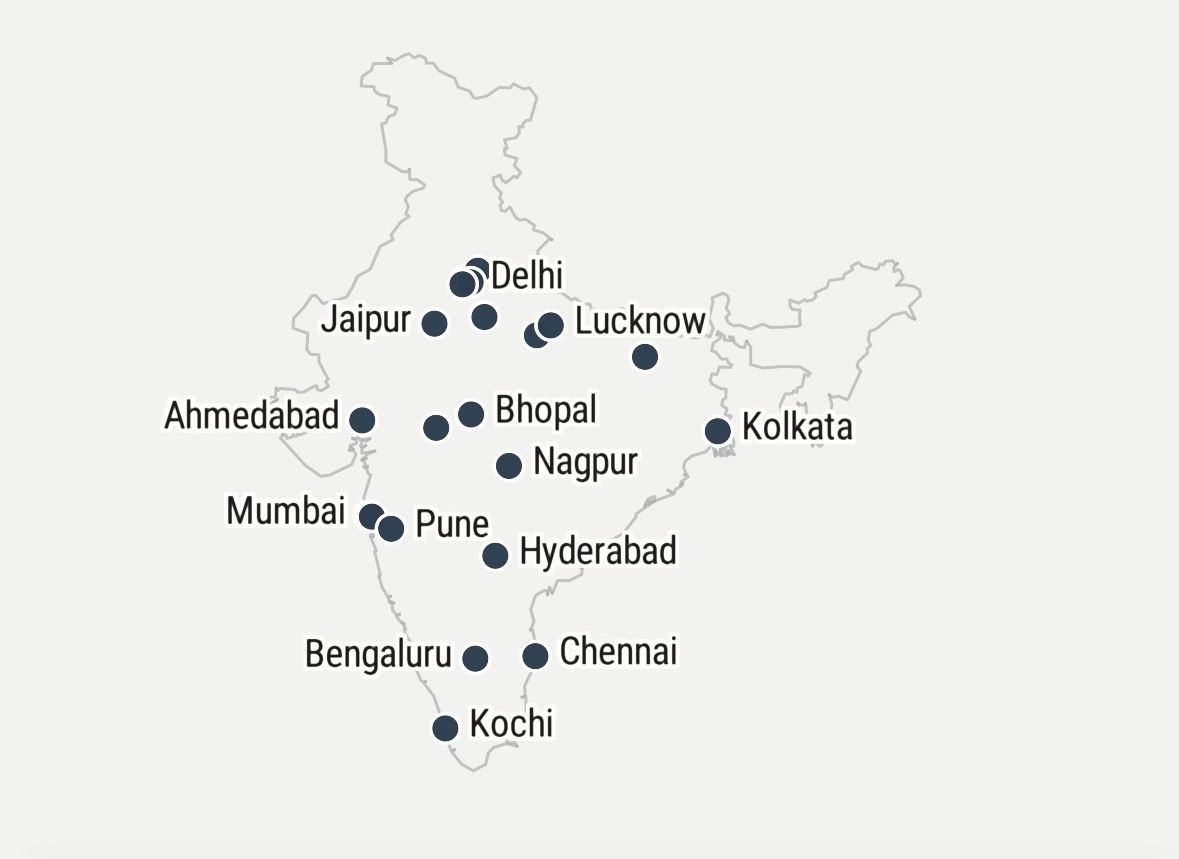
- Rapid scale-up: Over 20 cities now feature active metro networks, with thousands of kilometers under construction.
- Daily ridership: Systems in Delhi, Mumbai, Bengaluru, and Hyderabad routinely break previous commuter volume records.
- Multi-city links: Inter-city transit corridors are beginning to bridge suburban manufacturing hubs directly with urban commercial centers.
How has your commute changed recently? Would you move if a metro line opened nearby? Driven by rapid scale-up, daily ridership, and multi-city links, urban landscapes are morphing into interconnected corridors.
How Multi-City Rapid Transit Integration Works
Seamless travel requires more than just steel tracks; it demands a unified ecosystem. Modern urban planning focuses on tying disparate transport modes together under a single digital and physical roof.
Fare Integration
Unified ticketing cards and smartphone apps allow commuters to glide effortlessly from suburban rail to metro trains and electric feeder buses without buying multiple tickets.
Multimodal Hubs
Stations are increasingly designed as sprawling transit anchors where feeder auto-rickshaws, bike-share docks, and pedestrian concourses converge smoothly.
Last-Mile Solutions
Integrating micro-mobility options like electric scooters and shared e-rickshaws solves the critical gap between front-door steps and station turnstiles.
Which last-mile option matters most to you? True efficiency relies on robust fare integration, seamless interoperability, and reliable last-mile connectivity.
Real Estate and Land-Use Shifts
Proximity to a station has become the single most influential driver of property valuation in urban India. Transit-oriented development (TOD) policies are allowing cities to build denser, mixed-use commercial and residential zones vertically around transit corridors.
| City Corridor | Pre-Metro Average Price (per sq. ft.) | Post-Metro Average Price | Value Uplift (%) |
|---|---|---|---|
| Delhi Dwarka Expressway Line | ₹4,500 | ₹8,200 | +82% |
| Bengaluru Nagasandra Stretch | ₹3,800 | ₹6,900 | +81% |
| Hyderabad Ameerpet Junction | ₹5,000 | ₹9,100 | +82% |
Would you buy or rent near a new metro station? Embracing transit-oriented development (TOD) unlocks massive value uplift through dense mixed-use development.
Equity, Displacement, and Affordability
While transit expansion brings undeniable economic vitality, it also introduces stark urban challenges. Rapid property appreciation often triggers gentrification, pushing lower-income families further away from transit arteries.
- Rising rents near newly minted stations risk pricing out informal workers who rely on public transit the most.
- Inclusive zoning mandates—such as requiring affordable housing quotas within TOD zones—are critical policy counterweights.
- Subsidized transit passes protect vulnerable communities from being economically sidelined by modern infrastructure.
Who benefits most from metro expansions? Mitigating gentrification risk requires proactive, inclusive planning backed by dedicated affordable housing mandates.
Environment & Carbon Footprint
The mass migration from private cars and two-wheelers to electric-powered metro networks is yielding massive environmental dividends. According to World Bank and C40 Cities insights, a single high-capacity train can replace thousands of internal combustion engine vehicles on congested roads.
Would you shift to metro if incentives existed? The measurable shift toward modal shift, tangible carbon reductions, and immediate air quality benefits make rail transit a climate imperative.
Everyday Life & Commuter Experience
Beyond concrete and economics, metros restore something invaluable to urban citizens: time and dignity. Commuters who previously endured grueling two-hour road journeys now enjoy predictable, air-conditioned transit windows.
“Cutting my daily travel time from 90 minutes down to 25 minutes gave me back my evenings with my family.” — Mumbai Commuter Profile
What’s your most memorable commute moment? Reclaiming hours of the day yields profound time savings, incredible safety and predictability, and restored commuter dignity.
Economic Ripple Effects: Jobs, Retail, and Growth
Metros act as economic catalysts, sparking localized retail booms and stabilizing employment markets across station footprints.
- Direct jobs: Operation, maintenance, and station management create thousands of stable technical positions.
- Local economies: Underground concourses and elevated stations transform into vibrant commercial hubs hosting food courts, pharmacies, and convenience retail.
- Productivity gains: Reduced transit friction boosts regional economic output by cutting lost productivity hours in traffic.
What local business would you open near a station? Infrastructure investments generate powerful job creation, energize local economies, and drive substantial productivity gains.
Policy Levers & Best Practices
To maximize the benefits of the urban transit boom, city planners must adhere to a strict blueprint for sustainable growth:
- Mandate universal integrated ticketing across all municipal transport options.
- Enforce aggressive TOD policy frameworks that prioritize pedestrian access over private vehicle parking.
- Integrate inclusive design principles to ensure absolute accessibility for elderly and differently-abled passengers.
- Establish climate-aligned transport plans in collaboration with global urban alliances.
What policy change would help your local neighborhood? Prioritizing integrated ticketing, strict TOD policy, and thoughtful inclusive design secures long-term urban success.
City Case Studies
Delhi NCR
As the pioneer of modern Indian rapid rail, DMRC’s sprawling network handles millions daily, serving as the gold standard for regional interconnectivity and feeder bus synchronization.
Bengaluru (Namma Metro)
Namma Metro is systematically bridging India’s tech capital, connecting major IT parks directly to residential neighborhoods and significantly easing outer-ring-road congestion.
Mumbai Metro
Weaving through densely packed commercial corridors, Mumbai’s expanding lines offer a much-needed lifeline to suburban commuters battling legendary monsoon traffic jams.
#India | Bengaluru Metro airport line to be fully operational only by March 2028 – Bengaluru Blue Line fully operational by March 2028. – Pink Line elevated section by Sept 2026. – Pink Line underground section by March 2027. Read More:https://t.co/PGslq0VV9H
— Moneycontrol (@moneycontrolcom) August 23, 2026
Frequently Asked Questions
How much has India’s metro network expanded over the past decade?
India has added hundreds of operational kilometers across multiple tier-1 and tier-2 cities, pushing daily ridership past the 10 million mark.
Does living near a metro station increase property value?
Yes, transit-oriented development consistently drives significant price appreciation and commercial demand around station hubs.
Are metro networks environmentally friendly?
By encouraging a modal shift away from private automobiles, metros drastically reduce urban greenhouse gas emissions and particulate air pollution.