
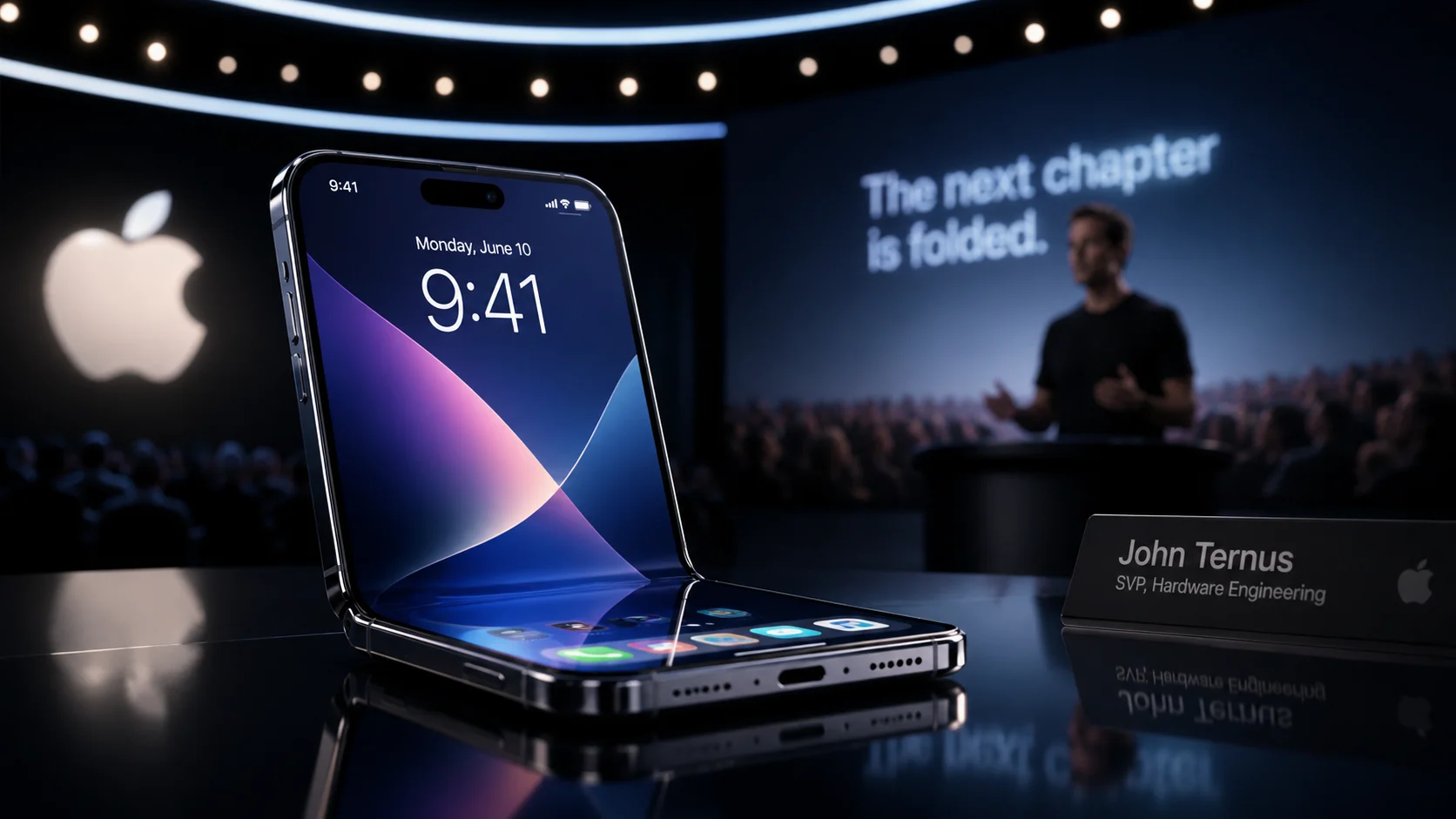
Shock ripples through Cupertino as Apple’s first foldable iPhone arrives at the exact moment John Ternus takes the CEO seat.
With the foldable market already established and premium phones getting harder to sell on incremental upgrades alone, Apple now has to prove that late can still mean legendary.
The real question is not whether Apple can build a foldable, but whether it can build demand strong enough to reset the upgrade cycle.
Quick Takeaway
- Thesis: The launch of Apple’s first foldable iPhone under incoming CEO John Ternus is a high-stakes test of whether a late entry can jump-start stagnant upgrade cycles.
- Who Benefits: Tech consumers looking for hardware innovation, enterprise ecosystem planners, and long-term Apple investors.

Why This Launch Matters Now
Apple has long mastered the art of entering product categories late, sitting back while competitors iron out early flaws before dropping a polished, category-defining device. Yet, entering the foldable smartphone market in late 2026 carries different stakes than past launches. Consumers are holding onto their devices longer than ever, looking for genuine utility rather than minor camera bumps.
Upgrade cycle fatigue is the silent enemy of modern hardware manufacturers, forcing companies to look beyond incremental spec bumps.
John Ternus and the New Apple Era
Leadership transitions define eras, and Apple’s handover is no exception. With Tim Cook shifting to executive chairman and longtime hardware chief John Ternus taking over as CEO, the company is signaling a distinct pivot back to core hardware engineering.
Key Leadership Dynamics
- Hardware-first pedigree: Ternus spent years overseeing iPhone, iPad, and Mac design lines.
- Immediate trial by fire: The first foldable iPhone serves as the premier flagship launch of his opening tenure.
- Strategic continuity: Cook remains onboard to manage global and regulatory frameworks while Ternus runs day-to-day product operations.
Executive alignment matters most when a company enters an unproven, high-risk physical category.
Why Apple Is Late to Foldables
Rivals like Samsung and various Android manufacturers spent years popularizing book-style foldables, weathering software bugs, prominent display creases, and durability complaints. Apple watched from the sidelines to let the supply chain mature. By waiting, Cupertino avoided early consumer beta-testing, but it also surrendered the narrative that it dictates form-factor trends.
Can a Foldable Restart Upgrade Cycles?
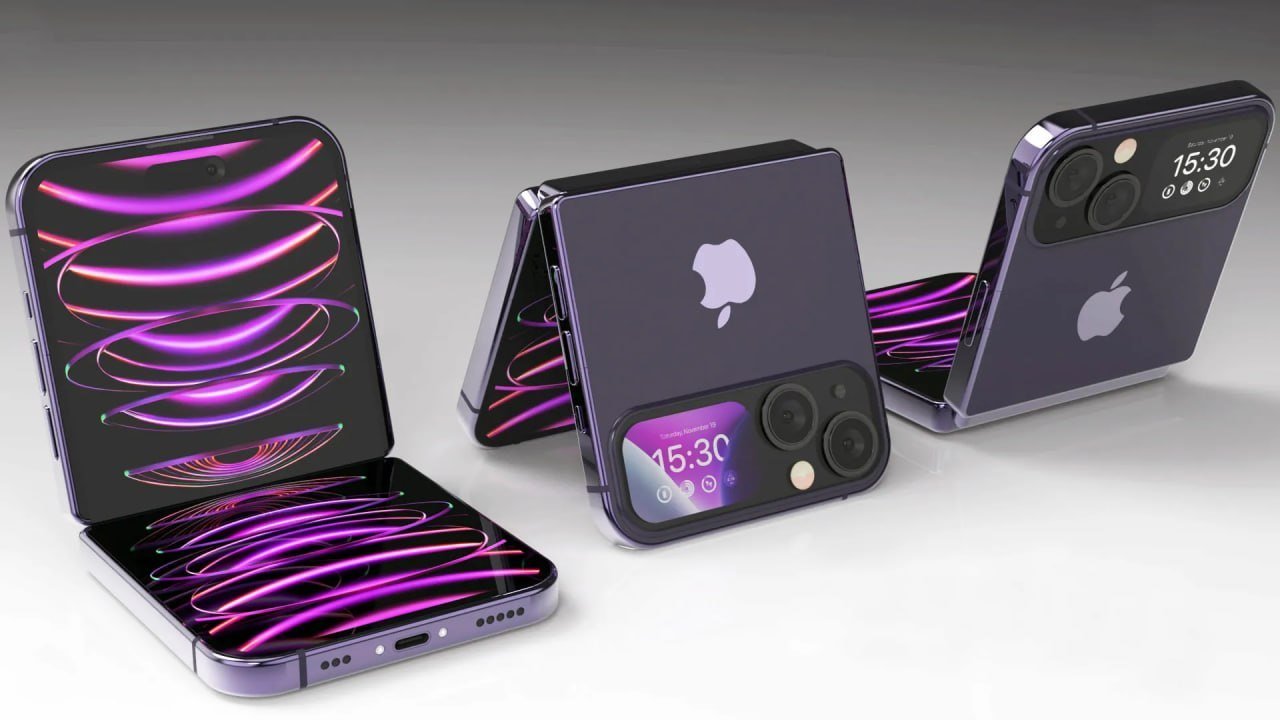
A standard slab phone no longer excites mainstream buyers the way it used to. By introducing a dual-screen device that transforms from a compact 5.5-inch outer screen into a sprawling 7.8-inch tablet inner display, Apple aims to recapture that missing magic.
Would you pay a luxury premium for a folding screen, or are you waiting for traditional phones to drop in price? Does a larger unfolding canvas solve your mobile productivity needs?
Form-factor disruption remains one of the few proven catalysts capable of accelerating mass consumer device replacements.
The Pricing and Supply Challenge
Entering the ultra-premium tier comes with steep financial hurdles. Industry reports suggest that Apple’s inaugural foldable—often tracked as the iPhone Ultra—could command a starting price well north of $2,000.
Launch Hurdles to Watch
- Supply constraints: Initial manufacturing runs are reportedly tightly controlled, limiting early international availability.
- Niche adoption: High entry costs mean it will act more as a halo product than an immediate volume driver.
- Component compromises: Achieving a paper-thin profile may require ditching traditional features like Face ID in favor of power-button Touch ID.

What Rivals Already Proved
Competitors laid down the foundational tracks for hinge mechanics, multi-window split screens, and software scaling. Apple’s advantage lies in its airtight app ecosystem and proprietary silicon integration, such as the rumored 2nm A20 Pro chip. If third-party developers seamlessly adapt apps for a wider canvas, Apple can turn late arrival into polished execution.
Also Read: Apple’s $2,000 iPhone Shock: Where the Foldable Ultra Fits in the Lineup
What Success Would Actually Look Like
For John Ternus and Cupertino, a successful rollout goes beyond selling a few million units. Success means convincing mainstream users that folding glass is a practical daily tool rather than an expensive gimmick. If the device re-energizes excitement around the annual September hardware cycle, it will validate both a major leadership handoff and a bold new chapter for the iPhone.
Incoming Apple CEO John Ternus said he plans to build on the company’s momentum in film and television, following successes like ‘F1’ and ‘Ted Lasso’ https://t.co/AdHbk5N19L pic.twitter.com/0HO0vYLpwx
— Reuters (@Reuters) July 28, 2026
Frequently Asked Questions
When is Apple expected to release its first foldable iPhone?
Apple has scheduled a major fall event for September 9, 2026, where the foldable device is expected to debut alongside the iPhone 18 Pro lineup.
How much will the foldable iPhone cost?
Current supply chain estimates place the starting price above $2,000, making it the most expensive consumer smartphone in Apple’s history.
Who is taking over as Apple CEO?
John Ternus, Apple’s former senior vice president of hardware engineering, is succeeding Tim Cook as CEO effective September 1, 2026.
Sources
- [1] Apple Newsroom & Industry Reports on CEO Succession – The Tech Revolutionist
- [2] Apple Fall Event and Product Lineup Details – ETV Bharat
- [3] Comprehensive Rumor Breakdown and Hardware Specs – MacRumors
- [4] Event Preview and Ecosystem Analysis – Nokiamob