

For a while, “we have an AI chatbot” was a selling point. Now it barely registers. Buyers have started asking harder questions: can this thing understand our data, and can it actually finish a piece of work without someone copying and pasting its answer into another system?
Prindustry’s recent launch is a good case study. The company has released its Business Platform with an AI Agent built in, and while it’s aimed at the print industry, the idea applies much more widely. The agent is wired into the platform’s data, pricing logic, workflows and permissions, rather than sitting off to the side as a generic assistant.
What Prindustry Launched
The Business Platform is built for print managers, resellers, producers and brand owners. It pulls products, pricing, customers, orders, projects, suppliers and outside integrations into one place.
The AI Agent lives inside that environment. It can calculate print prices, create quotations, start projects, build online product catalogues and help process orders, all using the product, pricing, customer, supplier and order data the platform already holds.
Prindustry doesn’t pitch this as a few AI features sprinkled on top of existing software. The agent is meant to do the work.
From Advisor to Operator
Here’s how most companies use AI today. Someone asks a chatbot a question, reads the answer, then types the result into the ERP, CRM or order system by hand. The AI talks and the human does the clicking.
Prindustry is trying to cut out that middle step. Ask the agent about a print job and it doesn’t just explain how pricing works. It uses your own machines, setup costs, paper prices and customer-specific agreements to work out the price and prepare the quote. You review it, then send it straight from the platform. Beyond quoting, it can also create product categories, products and machine records, prepare orders, and analyze sales figures.
That’s the real shift. The AI stops being something that tells you what to do and starts doing it, with you signing off.
A quick comparison:
- Generic chatbot: answers general questions, needs manual data entry, produces drafts and suggestions, sits next to your ERP, knows little about your pricing rules.
- Native agent: carries out defined business tasks, works from data already in the platform, creates real quotes, records and orders, runs inside your ERP, and uses your actual pricing rules and customer agreements.
Why General-Purpose Assistants Hit a Wall
Horizontal AI tools are impressive precisely because they can talk about anything. In a specialized industry, that breadth turns into a weakness.
A print shop can’t just “write a quote.” It has to account for press capabilities, paper types, quantities, setup costs, finishing options, customer discounts, supplier availability and production limits. None of that is general knowledge. It’s the company’s own rulebook.
Prindustry points out that generic tools tend to make users gather information from several systems and then carry the results back by hand. Its agent skips that by working directly with the data and functions already in the platform.
So the AI isn’t a new place where work happens. It’s a new way into the place where work already happens.
What “Native AI” Actually Means
Plenty of vendors now say “AI-powered,” and often they mean a chat window docked in the corner of the app. That’s not what native means here. A native agent is tied into the platform’s data model, business rules, permissions and the ability to take real actions.
In Prindustry’s case, the agent can draw on:
- Central product and pricing databases
- Machine records, paper types and pricing settings
- Customer agreements and commercial terms
- Quotes, orders, projects and product catalogues
- Supplier products and prices from the Prindustry Marketplace
Without that context, even a very fluent model can’t reliably price a job or build a valid order. Language skill is the easy part. Accurate, structured business data is what makes the output usable.
Owning the Data Is the Advantage
Vertical platforms hold something general AI vendors usually don’t: structured, domain-specific data that already describes how a business runs.
For Prindustry, that isn’t “printing” in the abstract. It’s a particular machine’s capabilities, paper stock, pricing rules, customer deals, supplier catalogs and commercial history. The company says the agent puts that existing knowledge to work so print professionals can spend more time with customers.
That’s a hard position to copy. A general model may hold a great conversation, but it can’t stand in for an ERP’s grasp of how your company actually operates.
Security: Keep the Data Inside
Ask an enterprise buyer about AI and the first question is rarely “what can it do?” It’s “where does our data go, and who controls what it does?”
Prindustry says it built its agent in-house and doesn’t rely on external AI services. Company data stays within the platform, every step shows up in the chat, and the agent asks for approval before it acts.
That points to a pattern other vendors will probably follow:
- Data stays put. Business information remains inside the platform’s security boundary.
- Actions need approval. The agent checks with you before executing anything.
- Everything is visible. You can follow each step in the chat.
- Security is designed in. It’s part of the architecture from the start, not patched on later.
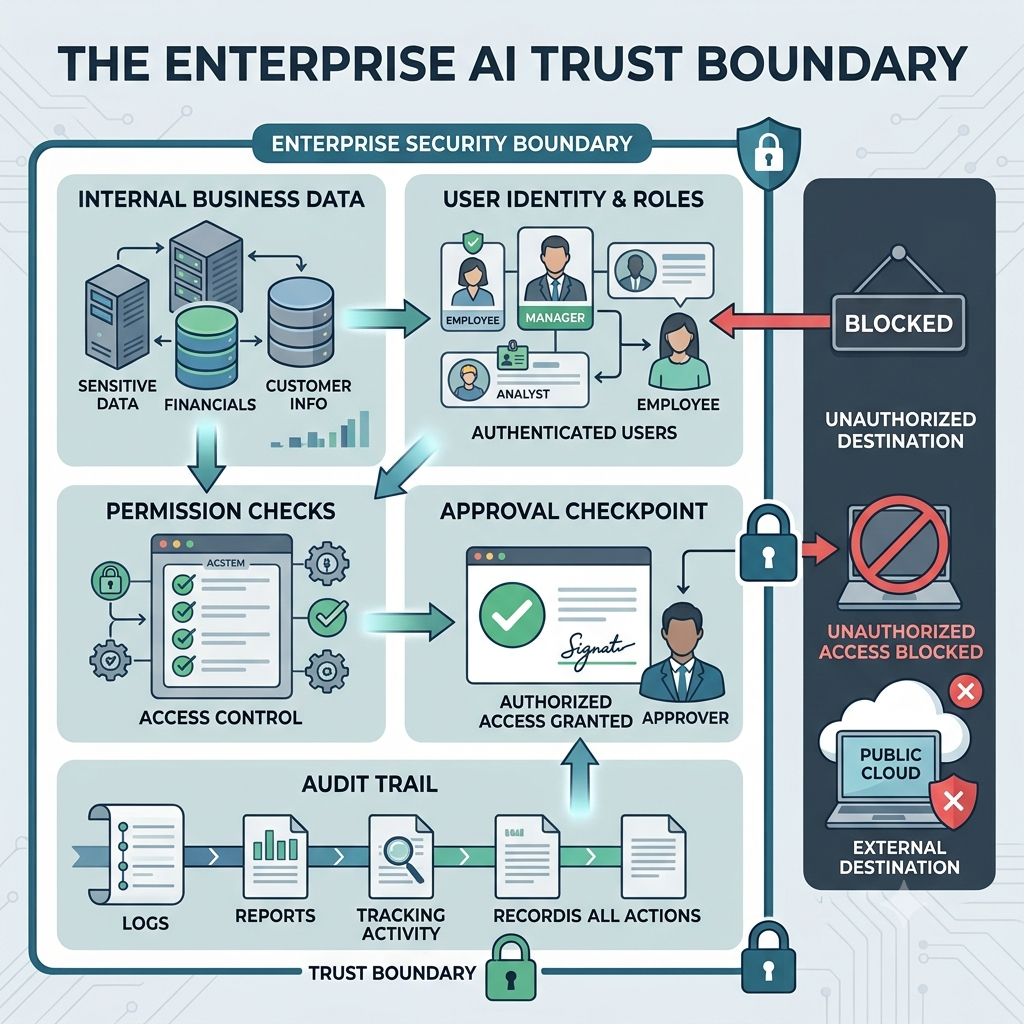
This matters because an agent with access to pricing, customers, suppliers and orders isn’t just a productivity gadget. It’s an actor inside your business, so whoever controls the data, permissions and workflow has a real edge.
AI as Plumbing, Not a Feature
The bigger takeaway is that AI is turning into part of the architecture rather than a line item on a pricing page.
Prindustry’s platform already connects product data, sales and purchase orders, catalogues, projects, an API for outside systems and the Marketplace. The agent operates inside all of that.
The company also uses AI in other places. It standardizes print-product names and specifications so buyers can compare supplier offers on price and lead time, and its Product Finder can match a customer enquiry or email to relevant products and options in the Marketplace.
AI delivers the most when it cleans up the data underneath, not just when it polishes the interface on top.
Why Vertical Platforms Have the Upper Hand
In the agent era, vertical platforms start with a lot of the hard stuff already done:
- They own the workflow. Pricing, quoting, ordering, fulfillment and supplier coordination already live in one system.
- Their data is organized. Specs, machine capabilities, customer terms and supplier catalogs are already normalized.
- Guardrails exist. Permissions and approval flows limit what an agent can do.
- They know the industry. The AI works from the real rules of the business, not just general language.
So the moat isn’t the model. It’s everything around it: the data, business logic, integrations, security controls and ownership of the workflow.
What This Means for Enterprise Software
“Does your software have AI?” is going to feel like a quaint question. The one that replaces it is tougher: can your AI understand our proprietary operating context and act on it without compromising governance, accuracy or trust?
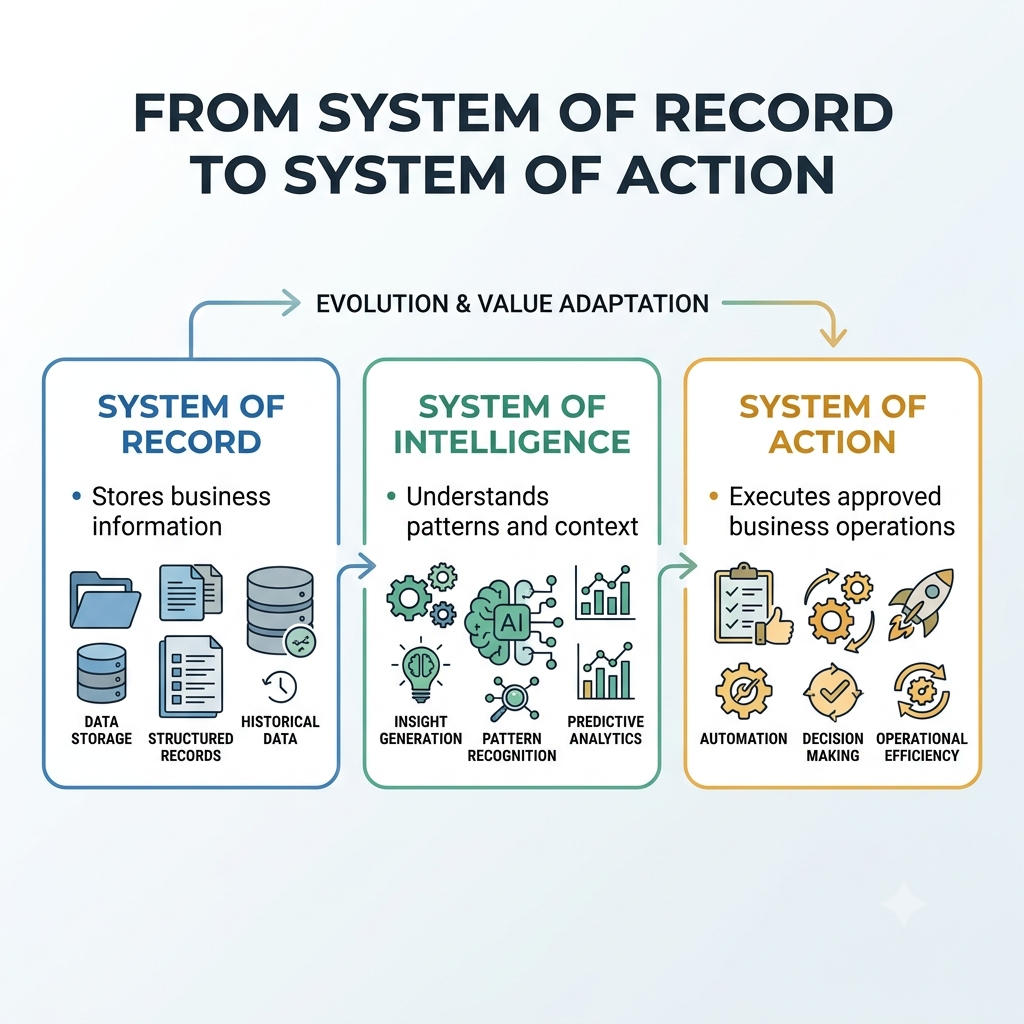
For horizontal AI companies, the opportunity may be to become infrastructure, supplying models, orchestration, retrieval, evaluation and security that vertical platforms build on. For vertical ERP and B2B providers, the opportunity is to become the system of action for their industry.
Prindustry’s launch is a concrete example. The agent doesn’t replace the ERP. It takes what the ERP already knows and puts it to work, with guardrails.
Also Read: The End of the Lone Chatbot: What Kolmena’s “Swarm” Says About Where AI Is Heading
The chatbot that knows a little about everything is giving way to agents embedded in the core of specialized business platforms. Prindustry shows what that looks like in practice: calculating prices, preparing quotes, creating records, starting projects and supporting order processing inside the platform, with user approval and with data staying put.
The winners won’t be the tools that know a bit about everything. They’ll be the platforms whose AI knows exactly how your business runs, and can be trusted to help do the work.