

On November 9, 2026, Kolmena launched an agentic AI platform that tries to replace the single chatbot with a team of specialized agents. You describe the outcome you want, and the platform lines up the agents, models, tools, and context to get there, instead of making one assistant research, reason, write, and act all by itself.
It’s easy to file this under “yet another AI assistant.” I think it’s more interesting than that. It points to a real change in how AI products are built: away from the prompt box and toward an orchestration layer where agents share memory, hand work to each other, and follow a task through to action.
One Brain, Many Agents
Kolmena’s pitch is that real work rarely needs just one kind of intelligence. A single task can involve research, analysis, judgment, communication, and tool use, and a lone chatbot has to cram all of that into one conversation. Kolmena’s slogan is “One Brain. Many Agents,” and the company borrows its inspiration from how a bee colony works.
The launch includes:
- MAYA, a bee-themed companion where you state goals and get coordinated help
- Agent Builder and Swarm Builder, for creating individual agents and arranging them into teams
- Kolmena Smart Prompt Routing (KSPR), which picks different AI models for different steps of a workflow
- Persistent memory, governance, and observability, meant to keep work connected and under control
- 1,600+ integrations with the apps, data sources, and services businesses already use
Access is invitation-only for now, with free entry and usage-based plans for individuals.
The End of the Lone Chatbot
For the last few years, generative AI has mostly meant a chat window. You ask, it answers, and you decide what happens next. That made AI easy to try, but it also quietly made you the project manager. You supplied the context, broke the goal into steps, copied results between tools, checked the facts, and updated the systems. The chatbot sped up individual tasks, but it never really owned a process.
Real operational work shows the limit quickly. A market-intelligence report, a support escalation, a sales campaign, or a regulatory review is never one prompt. It’s a chain of dependent steps: gather, assess, decide, produce, communicate, act, monitor.
Kolmena’s argument is that this is where single-agent AI hits a ceiling. Its answer is a group of specialists that share context and pull toward one objective. The chatbot was AI’s first interface. The swarm might be its first real operating model.
What Is a “Swarm” Architecture?
A swarm is a team of AI agents with defined roles, goals, communication patterns, and shared memory. It’s not just a few chatbots running side by side. The agents divide up responsibility, pass results along, and build on each other’s work.
Here’s how it compares to the lone chatbot:
- Unit of work: one prompt and one reply, versus a multi-step, multi-agent workflow
- Intelligence: one general model doing most things, versus specialists with different strengths
- Context: usually stuck inside one conversation, versus persistent memory across the whole process
- Tool use: you move outputs between apps yourself, versus agents working across connected tools
- Your role: prompt writer and project manager, versus goal-setter, reviewer, and handler of exceptions
- Value: faster drafts and answers, versus coordinated execution of recurring workflows
Think of it as hiring one very capable generalist versus putting together a small project team. The generalist can do a lot. The team can put a researcher, an analyst, a strategist, and an operator on the same problem, as long as they can talk to each other and agree on the goal.
From Prompting to Orchestration
The first wave of enterprise AI was built around the prompt. A person gave instructions, the model produced an answer, and the person dealt with everything after that. Kolmena’s model is built around orchestration instead. You give an objective, and the platform decides how agents, models, tools, and context should combine to pursue it.
You can picture that as a stack of layers:
- Goal: you set the outcome, constraints, and priorities
- Agents: specialists own pieces of the work, like research, analysis, drafting, validation, or execution
- Orchestration: the system assigns roles and moves work between agents
- Memory: earlier findings and decisions stay available for later steps
- Action: integrations let agents operate inside the tools where work actually happens
- Governance: controls and observability, which matter once agents work across systems
So the product isn’t really the agent. It’s the connective tissue that lets many agents behave like one accountable workforce.
Dynamic Model Routing: The Right Brain for Each Step
KSPR may be the most strategically interesting piece of the launch. Instead of locking you into one AI provider or model, it picks a model for each step of a workflow. That matters because “which model is best?” is becoming the wrong question. Different steps want different things:
- A fast, cheap model is fine for sorting incoming information.
- A stronger reasoning model suits tradeoffs and murky evidence.
- A long-context model helps with big documents.
- A creative model is better for drafting messages.
- A domain-tuned model can make sense for technical or regulated work.
This turns model choice from a one-time purchasing decision into something decided step by step, which lets organizations tune for both performance and cost without depending on a single vendor. It’s a real break from the early AI mindset of picking one foundation model and building everything around it. The question becomes: which model should handle this particular step?
Shared Memory: The Missing Organizational Brain
Specialists are only useful if they don’t lose the plot. Kolmena’s persistent memory keeps information, knowledge, and earlier work available across a process, so each step builds on the last. That sounds like a technical footnote, but it may be the difference between a demo and a digital workforce you can rely on.
Picture a research-to-decision workflow. A research agent gathers findings. An analysis agent needs them to weigh risks and opportunities. A synthesis agent needs that analysis to write a recommendation. An execution agent needs the recommendation to update a system or notify someone. If every agent starts from zero, you’re back to the old chatbot routine of re-explaining context and copying results by hand. Shared memory lets the workflow accumulate state rather than restart each time.
That’s what makes “AI workforce” more than a marketing phrase. Memory turns AI from something that produces one-off artifacts into something that holds working context.
How Agents Pass Work Like Human Teams
Agents in Kolmena trade context, instructions, and results, so complex work can move between specialists without you managing every prompt. Take a market-intelligence swarm:
- A market-monitor agent keeps scanning sources for new developments.
- A risk-analysis agent weighs threats, opportunities, and what they mean strategically.
- An execution agent takes the next step, like sending an alert, updating a system, or kicking off a workflow.
- A coordinator holds the shared goal and manages the handoffs.
Kolmena’s own example follows this pattern, with agents that scan markets, evaluate risks and opportunities, and carry out actions, including trades.
The handoff is the real innovation. No single agent has to be a genius at everything. Each one needs to be good at its part and able to pass a clear result to the next. Good human teams work the same way. A researcher doesn’t have to be the best lawyer, writer, and operator, but their work has to be something the next person can understand, trust, and act on.
Also Read: The 92-Trillion-Token Drain: How DeepSeek’s 1.54 Million Agent Users Are Rewriting Data Center Math
What This Means for Business Automation
Until now, most automation has targeted single tasks, like drafting an email or summarizing a document. Swarms open the door to automating a chain of dependent decisions and actions. Kolmena positions its platform as infrastructure for this kind of AI teamwork, with agents, skills, integrations, and tools in one place.
Where it could show up:
- Regulatory intelligence: tracking approvals, spotting opportunities, and organizing findings for business-development decisions. Kolmena says a workflow at Celnova Pharma cut time spent on regulatory research by 85%.
- Customer support: pulling the right information, drafting replies, and keeping conversations moving across channels.
- Sales and outreach: researching prospects, personalizing messages, following up, and keeping the CRM in sync.
- Financial workflows: following markets, analyzing signals, and combining sources for better-informed decisions.
- Operations and project management: watching tasks, flagging blockers, summarizing risks, and routing follow-ups across tools.
The bigger point is that the unit of value shifts. It’s no longer the individual chat session. It’s the recurring workflow.
Swarms Are Harder Than Chatbots
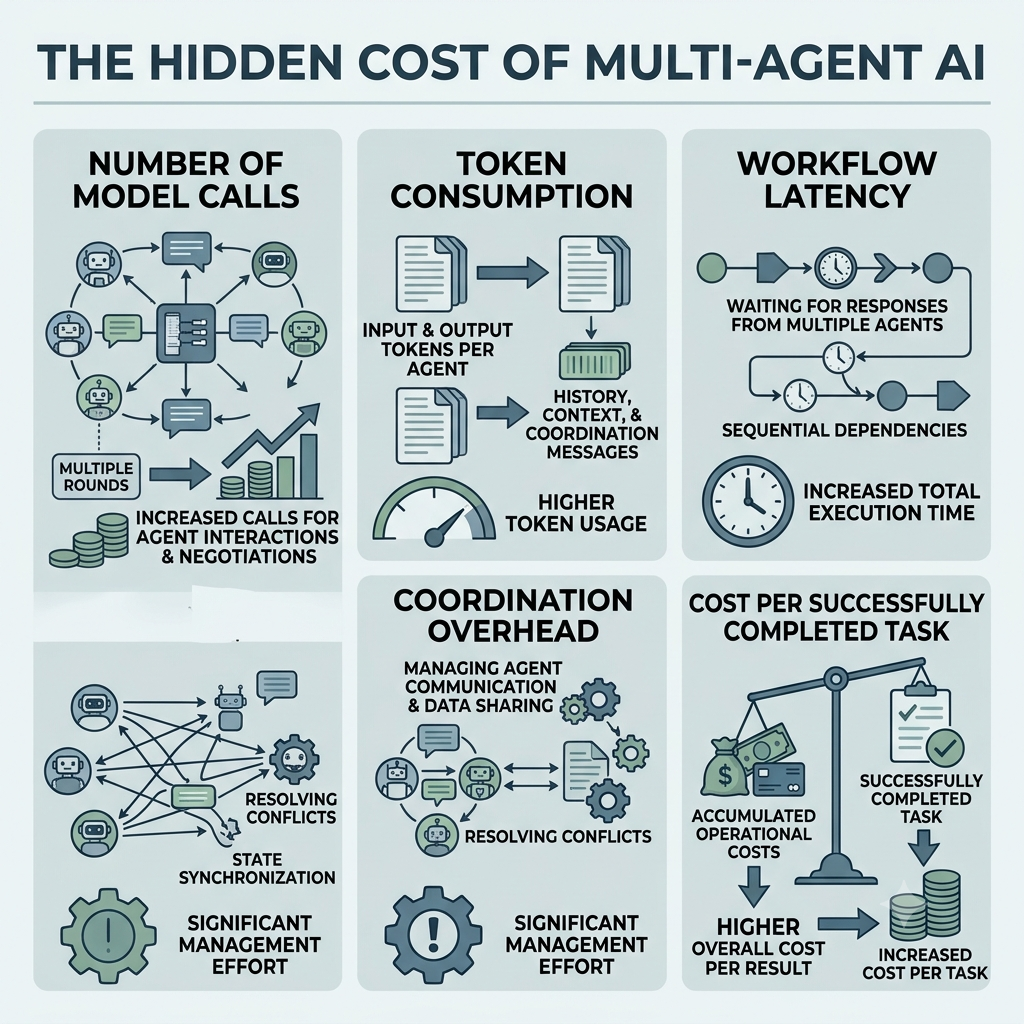
The promise is real, but so are the stakes. When several agents feed into one process, a mistake in one step can spread into everything downstream. A few problems any organization will have to deal with:
- Error propagation: one weak research result can taint the analysis, the recommendation, and the action.
- Accountability: when many agents contribute to a decision, you need audit trails and clear ownership.
- Context quality: shared memory only helps if the data, permissions, and knowledge behind it are accurate and current.
- Tool reliability: integrations give power, but broken APIs, changed schemas, and permission errors can stall a whole workflow.
- Cost: multi-agent systems can burn more compute and API calls than a single model would.
- Human oversight: payments, legal commitments, medical decisions, and customer communications need approval gates and escalation paths.
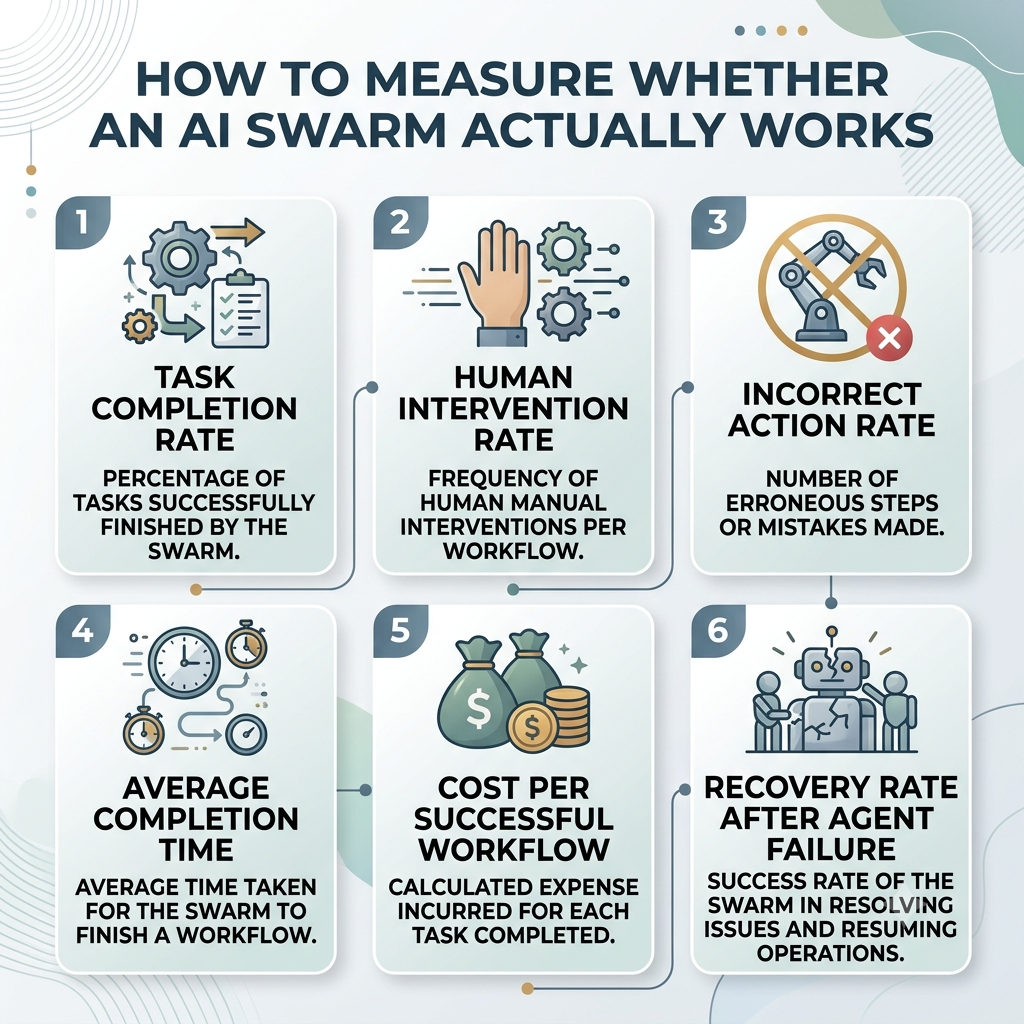
To its credit, Kolmena ships governance and observability alongside its agent tools, which is an acknowledgment that enterprise use needs controls as well as autonomy.
The Strategic Shift
Kolmena’s launch is best read as a bet on where enterprise AI goes next: from conversational assistant to organizational capability. A lone chatbot helps one person finish a task. A coordinated swarm could help a whole company run a process, if it can keep context, choose the right intelligence for each step, connect to real tools, and keep humans in the loop.
Kolmena calls itself an “operating system for AI.” Whether or not the label sticks, the direction seems clear. The next competitive edge may not go to whoever has the smartest single model. It may go to whoever can organize many models, agents, tools, and memories into a workforce that reliably gets things done.