
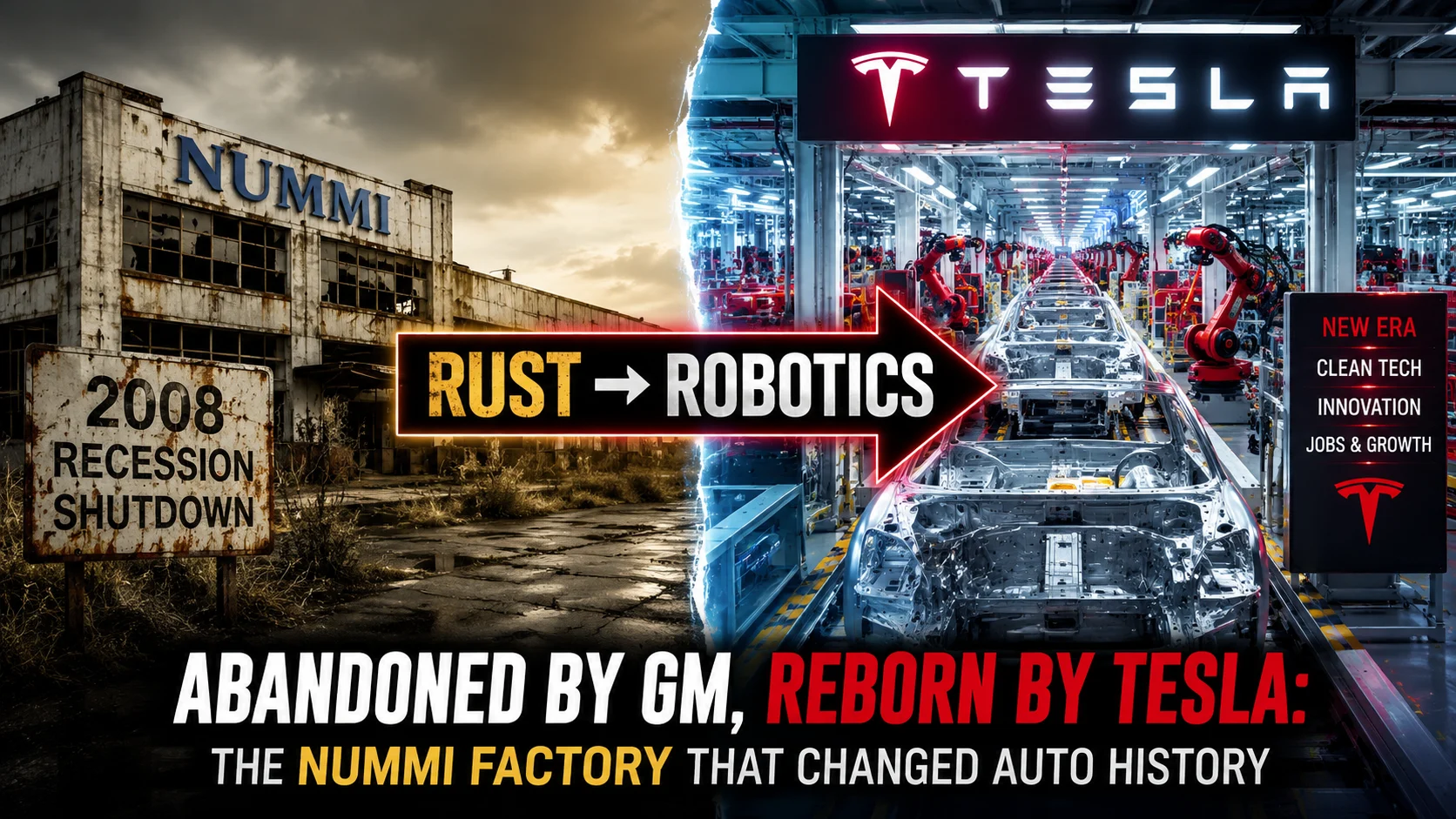
Tesla didn’t just buy an abandoned factory—it violently disrupted global auto manufacturing inside its walls. Bought for $42 million after GM’s 2008-era bankruptcy, the former NUMMI site in Fremont was written off as a relic of American industrial decline.
Today, the site powers a global production network driving toward 10 million vehicles delivered, proving how software-first automation can completely revolutionize legacy manufacturing. How did a plant left for dead become the engine of the electric vehicle revolution?
Why NUMMI Was America’s Most Famous Factory
Before Tesla moved in, the Fremont facility was the New United Motor Manufacturing, Inc. (NUMMI)—a high-stakes joint venture between General Motors and Toyota created in 1984.
- The Vision: GM wanted to learn Japanese lean manufacturing (the Toyota Production System), while Toyota wanted a footprint inside the US.
- The Collapse: During the 2008 financial crisis, GM filed for bankruptcy, pulled out of the deal, and the plant was shut down in 2010.
- The Fire Sale: Tesla stepped in to acquire the 5.3-million-square-foot facility for a fraction of its original value.
How did a failed factory become the place where the future of auto manufacturing was rebuilt?
Tesla’s Transformation Playbook
Tesla didn’t just clean up the assembly lines; it erased old auto-industry assumptions.
- Vertical Integration: Instead of outsourcing 80% of parts like legacy automakers, Tesla built batteries, seats, and software in-house.
- High-Density Automation: Thousands of industrial robots were packed into tight footprints to automate welding and body stamping.
- Gigacasting Breakthroughs: Massive aluminum die-casting machines replaced hundreds of stamped and welded sheet-metal parts with single castings.
- Iterative Engineering: Software updates and hardware revisions were deployed directly to the assembly floor without waiting for model years.
This was not a renovation. It was an industrial reinvention.
The NUMMI Transformation in Numbers
The sheer contrast between old-school assembly and Tesla’s modern output reveals why the Fremont site became legendary:
| Metric | GM-Toyota NUMMI Era | Tesla Fremont & Global Network |
|---|---|---|
| Peak Annual Output | ~428,000 vehicles (2006) | Over 550,000+ vehicles/year (Fremont alone) |
| Manufacturing Footprint | Traditional regional assembly | Global Gigafactory blueprint |
| Underlying Stack | Outsourced supplier chains | In-house software, robotics & castings |
| Site Purchase Price | $200M+ early investment | $42 million industrial bargain (2010) |
Can legacy Detroit automakers ever match software-led factory density?
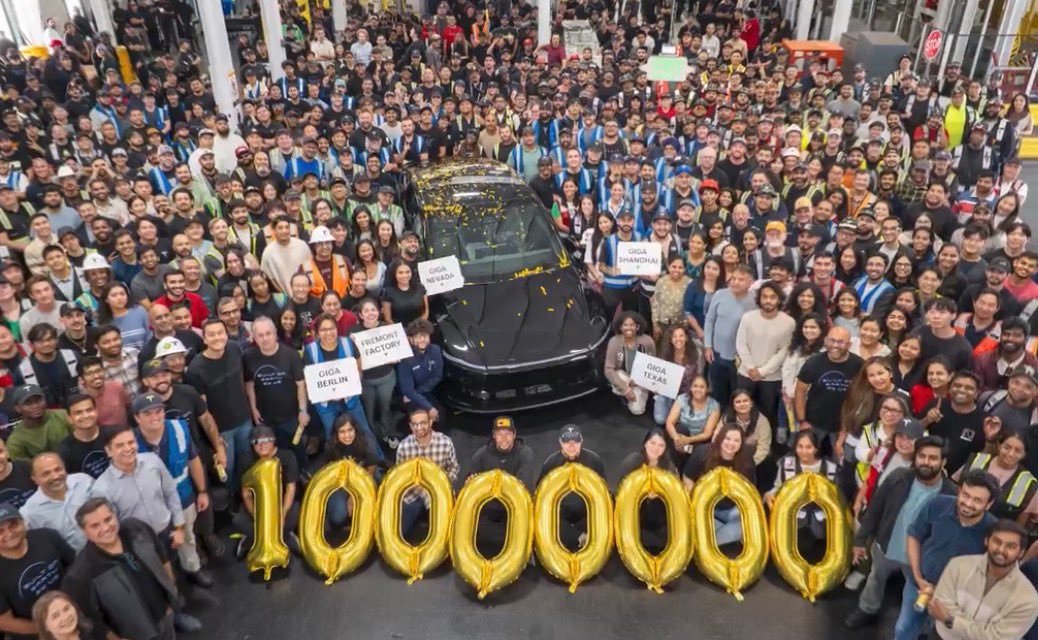
Produced our 10 millionth Tesla globally at Fremont Factory this week!
— Tesla (@Tesla) July 30, 2026
Only 6 years ago, Fremont Factory made our 1 millionth vehicle pic.twitter.com/ps4H6tFgUQ
The Bigger Industry Twist
When Tesla took over NUMMI, traditional auto executives laughed off the idea of a Silicon Valley startup running a massive manufacturing plant.
However, the Fremont facility became the blueprint for Tesla’s worldwide Gigafactories in Texas, Shanghai, and Berlin. It forced legacy Detroit brands to rush their own EV pivots and spend billions attempting to digitize their legacy assembly floors.
“Tesla’s real edge was never just electric propulsion—it was treating the factory itself as a product that could be engineered, automated, and iterated at high speed.” — Automotive Manufacturing Analysis
If Tesla could turn a failed plant into an EV engine, what else in the auto industry is waiting to be reinvented?
Full historical context and factory production records can be reviewed on the NUMMI Joint Venture Archive, Business History Conference: Reinventing Fremont, and Tesla Official Fremont Factory Portal.