
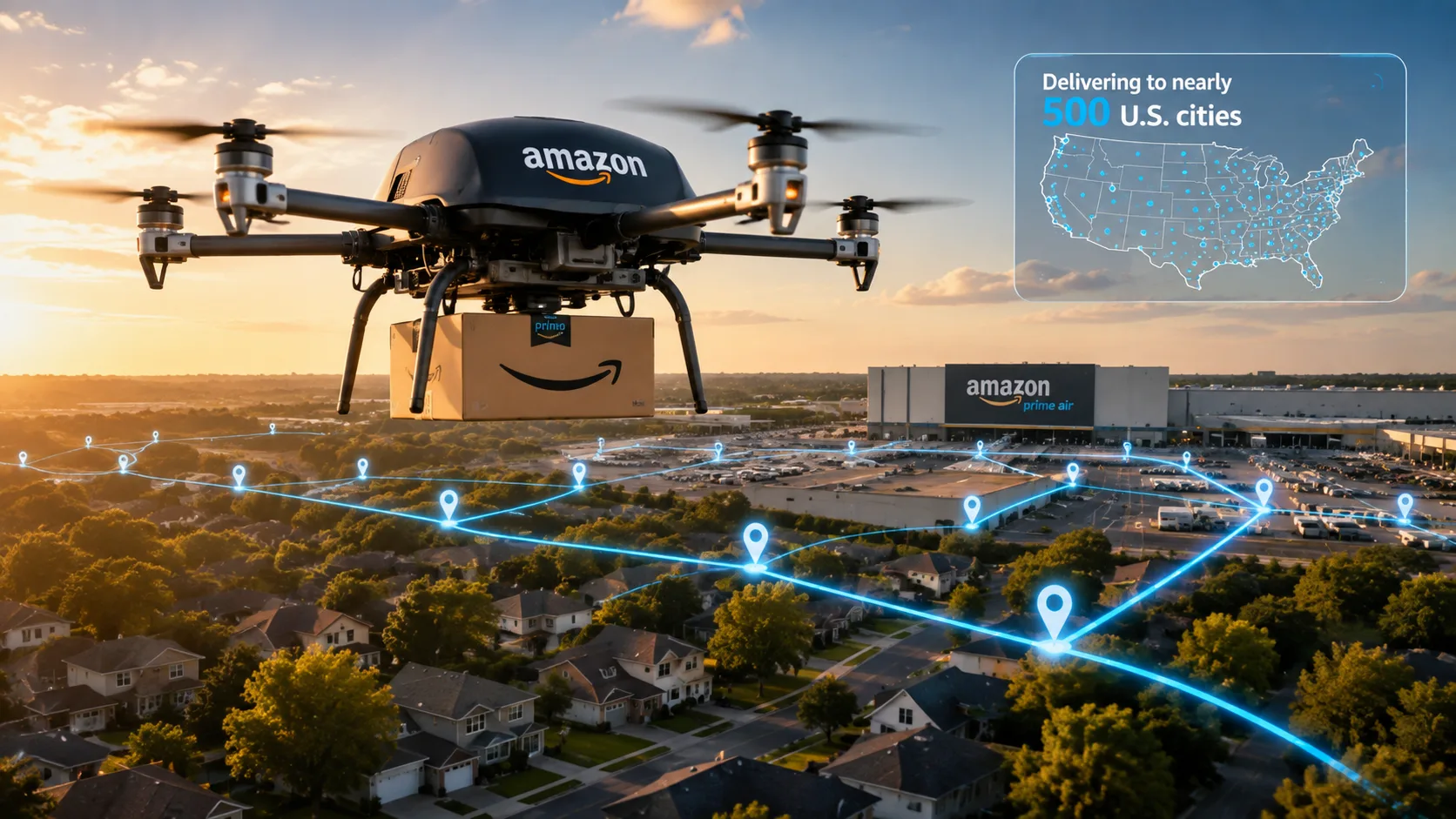
Amazon’s drone delivery ambitions are suddenly taking off—and the scale is startling. Prime Air plans to reach nearly 500 U.S. cities and towns by the end of 2026, a sixfold expansion from its current footprint. Amazon says its drones can deliver eligible orders in as little as 30 minutes, while the company is targeting 1 million drone deliveries this year, according to CNBC.
But how can a flying robot move a package from an Amazon facility to a customer’s backyard safely? And will drone delivery become the new standard for same-day shipping—or remain a fast option for only certain neighborhoods?
The answer could reshape the final mile of e-commerce, where speed, traffic, labor costs, and customer expectations collide.
Amazon’s Drone Delivery Expansion at a Glance
| Detail | Current or planned figure |
|---|---|
| Planned coverage by end of 2026 | Nearly 500 cities and towns |
| Current operating locations | 11 sites |
| Current metro areas | 10 metro areas |
| Typical delivery promise | As fast as 30 minutes |
| Eligible package weight | Generally 5 pounds or less |
| Approximate service radius | About 7.5 miles |
| Current operating states | Seven states |
Amazon says Prime Air currently operates from 11 U.S. locations across 10 metro areas and plans to serve nearly 500 communities by the end of 2026. FAA documents describe the MK30’s service radius as approximately 7.5 miles, with a maximum payload of about 5 pounds.
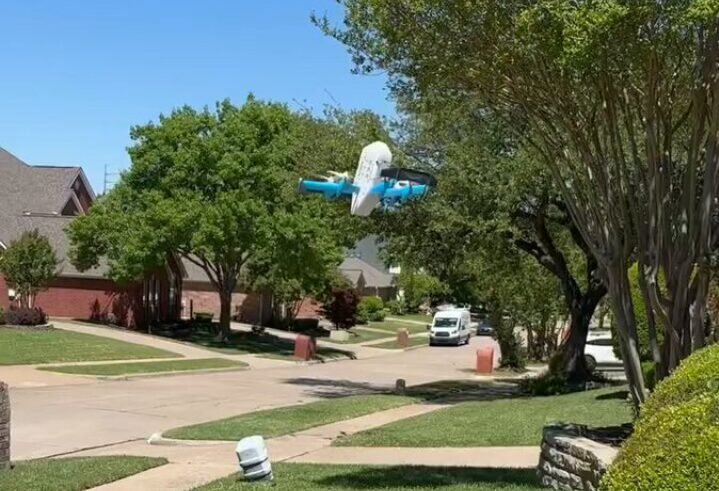
How Amazon Drone Delivery Works
Step 1: Customers Choose an Eligible Item
Amazon integrates Prime Air into its standard shopping experience, so customers use the same same Amazon checkout, app, customer service, and returns system. Shoppers in eligible ZIP codes can browse products available via the Prime Air delivery option.
Step 2: The Package Is Prepared at a Local Hub
The order is packed at a specialized Prime Air site near the customer. Most eligible items weigh 5 pounds or less and fit inside a large shoebox; Amazon says this represents more than 60% of the items customers frequently purchase.
Step 3: The Drone Flies Autonomously
The drone takes off from the delivery site and travels through a predefined service area. Amazon’s Detect-and-Avoid system monitors the surrounding airspace and helps the aircraft respond to unexpected obstacles or changing conditions.
Step 4: The Drone Checks the Drop-Off Area
The customer confirms a preferred delivery point, such as a backyard or driveway. Before lowering the package, the drone checks that people, pets, vehicles, and other obstacles are not blocking the landing area.
Step 5: The Package Is Lowered to the Ground
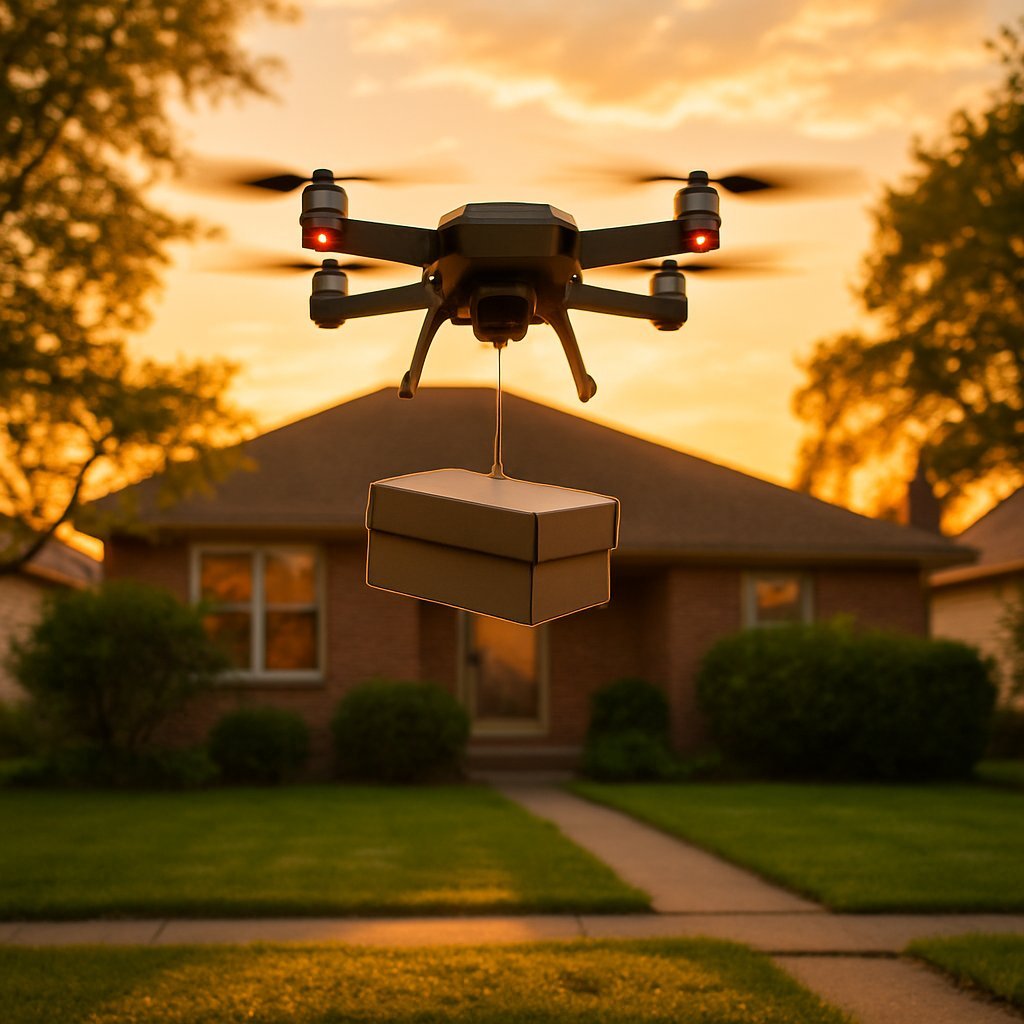
Rather than landing on a customer’s property, the drone hovers and lowers the parcel. The drone then flies away, leaving the package at the confirmed delivery point.
Where Amazon Prime Air Is Available Now
Amazon Prime Air currently serves customers in seven states: Arizona, Florida, Kansas, Louisiana, Michigan, Nebraska, and Texas.
| Metro Area | Current Delivery Site |
|---|---|
| Phoenix, Arizona | Tolleson |
| Tampa, Florida | Ruskin |
| Kansas City, Kansas | Kansas City |
| Omaha, Nebraska | Papillion |
| Baton Rouge, Louisiana | Baton Rouge |
| Detroit, Michigan | Hazel Park and Pontiac |
| Houston, Texas | Richmond |
| Dallas, Texas | Richardson |
| San Antonio, Texas | San Antonio |
| Waco, Texas | Waco |
A key point for readers: “500 cities” does not mean 500 drone warehouses. One hub can serve several surrounding towns within roughly a 7.5-mile radius, meaning the expansion refers to communities covered by the network rather than individual launch facilities.
Which Cities Are Getting Drone Delivery First?
Amazon has identified several metro areas for near-term expansion, including:
- Chicago, Illinois
- Atlanta, Georgia
- Cleveland, Ohio
- Syracuse, New York
- Boise, Idaho
Suburban markets are particularly suitable because they offer more open space, larger private yards, shorter distances between fulfillment hubs and homes, less dense airspace, and strong demand for fast delivery without urban traffic congestion.
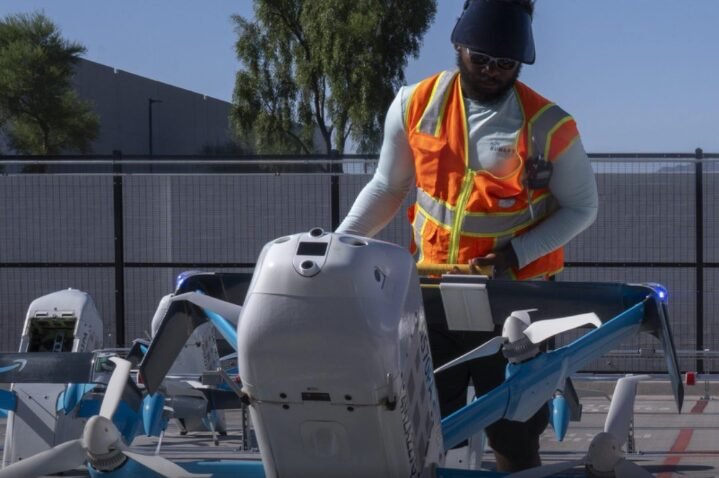
What Packages Can Drones Deliver?
Prime Air focuses on small, lightweight products that can be moved quickly. Eligible categories include:
- Groceries and everyday household essentials
- Over-the-counter medications and health products
- Cosmetics and personal care items
- Mobile phones, accessories, and small electronics
- Smart-home gadgets and small tools
Nearly all items weighing 5 pounds or less and fitting inside a large shoebox may qualify, though availability depends on weather, inventory, and local operational conditions. Heavy appliances, large furniture, and multi-box orders will continue to rely on traditional delivery vans and networks.
How Safe Are Amazon’s Delivery Drones?
Safety is a primary consideration for residential drone logistics. Amazon notes that Prime Air holds FAA Part 135 certification, the regulatory standard required for commercial air carriers.
Key Safety and Navigation Features
- Detect-and-Avoid Technology: Identifies aircraft, structures, and unexpected airborne obstacles.
- Onboard Sensors and Cameras: Process navigation data locally without tracking individuals or recording personal movements.
- Automated Decision-Making: Allows the aircraft to dynamically respond to sudden changes in weather or obstacles.
- Controlled Flight Corridors: Restricts operations to pre-approved routes and designated drop-off zones.
An Amazon customer in Texas was not enthused when her first drone-delivered order was dropped into her swimming pool. After hearing the loud buzzing of the drone arriving, she ran outside to record the delivery, and to her surprise, it landed in her pool. pic.twitter.com/6TIcrJIVAR
— ABC7 News (@abc7newsbayarea) August 19, 2026
FAQs
Is Amazon drone delivery available everywhere? No. Prime Air is limited to selected delivery zones around operating sites. Availability depends on your ZIP code, product eligibility, weather, and operational constraints as the network expands toward 500 cities.
How much can an Amazon drone carry? The MK30 drone is engineered for packages weighing approximately 5 pounds or less and fitting inside a large shoebox.
How quickly does Prime Air deliver? Amazon advertises delivery times as fast as 30 minutes for eligible items, with most orders typically arriving within an hour of checkout.
Will Amazon drones replace delivery drivers? Unlikely. Drones are designed to complement existing logistics by handling lightweight, urgent packages over short radii, while vans and trucks continue to manage heavy, bulky, and long-distance deliveries.