
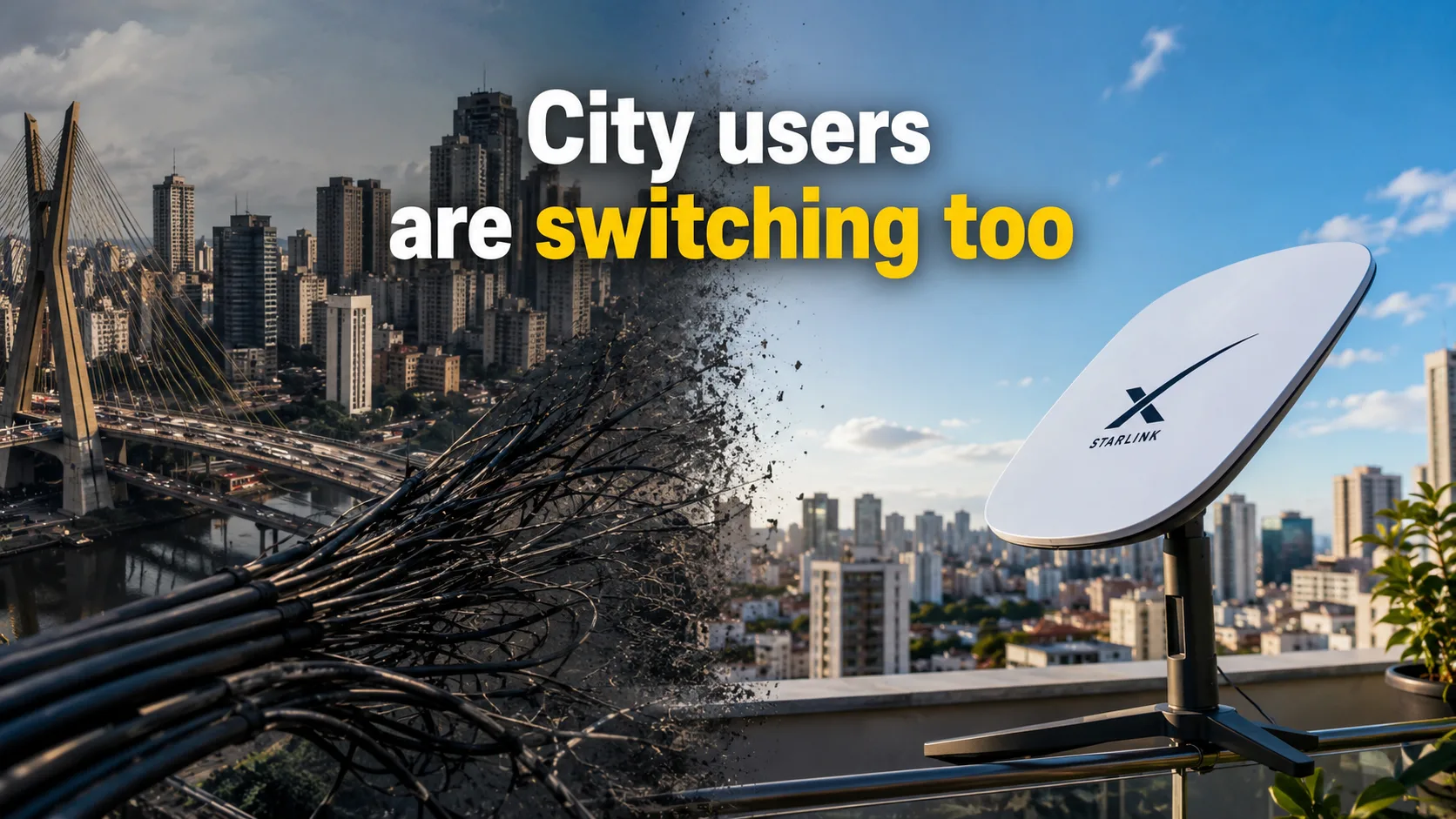
Starlink is quietly shattering expectations in Brazil’s biggest cities. Official Anatel data reveals over 347,000 Starlink subscribers now live in highly urbanized Brazilian centers, making up more than 44% of its 791,000-strong national user base.
So why are city dwellers abandoning traditional wired options and embracing satellite hardware despite fiber coverage?
The Urban Surprise
Satellite broadband was supposed to be a lifeline reserved exclusively for the Amazon rainforest and isolated farms. Yet, major metropolitan hubs like São Paulo, Rio de Janeiro, and Brasília are driving significant subscriber growth.
Why would city residents pay for satellite internet when fiber already exists? The shift reveals that urban consumers no longer evaluate connectivity solely on maximum speed.

Why Fiber Isn’t Enough
While fiber optic cables offer fast raw speeds, physical infrastructure remains vulnerable to frequent urban disruptions.
- Zero Trenching Delays: Plug-and-play hardware avoids landlord permissions, street digging, or technician scheduling.
- Instant Power Independence: Pairs seamlessly with portable battery stations during municipal power grid failures.
- True Redundancy: Provides a completely separate physical network path when underground fiber lines get cut.
The Backup Internet Trend
For remote workers, financial traders, and small business owners, an internet outage means immediate financial loss.
| Factor | Fiber Optic | Starlink Satellite |
|---|---|---|
| Installation Speed | Slower (Technician required) | Faster (Plug-and-play) |
| Grid Power Dependence | High | Moderate (Battery compatible) |
| Backup Redundancy Value | Limited | Strong (Independent path) |
| Hardware Portability | Low (Tethered to street) | High (Roam enabled) |
Is Starlink becoming a backup plan — or a total replacement? Over 12% of Brazilian Starlink subscribers actively use their dish across multiple geographic locations.

What City Users Want Now
Urban subscribers prioritize reliable uptime and mobility over theoretical gigabit speed limits.
- Freelancers & Remote Workers: Demand uninterrupted connections during video calls and cloud uploads.
- Short-Term Renters: Avoid rigid 12-month telecom contracts that charge heavy cancellation fees.
- Multi-Property Owners: Move single subscriptions between urban apartments and weekend beach houses.
“Urban satellite adoption is no longer about replacing fiber — it’s about adding resilience.” — Telecom Infrastructure Analyst
BREAKING: Starlink completely dominated fixed broadband subscription growth in Brazil. 🇧🇷 Starlink: +20.51% TIM: +4.04% Vivo: +3.14% It grew more than 5X faster than its closest competitor. pic.twitter.com/rccFGVE7Yc
— DogeDesigner (@cb_doge) July 29, 2026
What This Means for Brazil’s Telecoms
Traditional internet service providers like Vivo and Claro face a changing competitive dynamic. While fiber still leads on top speeds, Starlink has established itself as Brazil’s 13th-largest broadband provider.
- Smarter Bundling: Telecoms are forced to offer cheaper failover cellular backup routers.
- Flexible Contracts: Pressure mounts on legacy ISPs to drop mandatory long-term commitment clauses.
- Focus on Reliability: Speed marketing is losing ground to guaranteed uptime SLA promises.
Could urban satellite broadband become the next big global telecom shift?
Official Anatel subscription data and technical audits are published on Ookla Speedtest: Performance Audit of Starlink in Brazil and TelecomLead: Starlink Subscriber Analysis.