
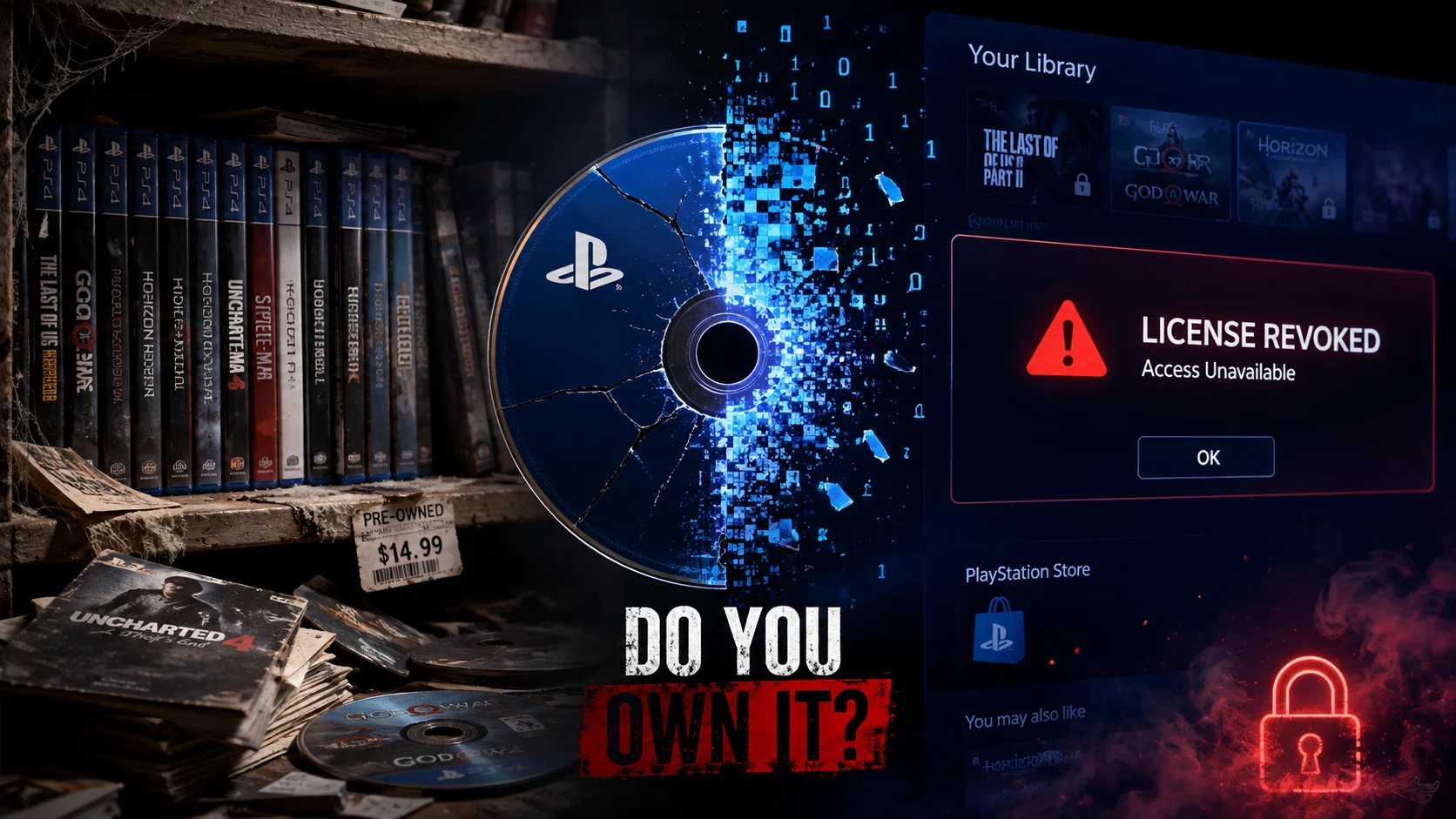
You paid for the game, trusted the platform, and built a library—but one revoked license, closed store, or suspended account could turn that collection into a locked screen.
Sony’s software end-user license agreement states that games are “licensed to you, not sold,” while Sony has announced that physical disc production for new PlayStation games will stop in January 2028. The #PSBlackout protest runs from August 23 to August 30, 2026, but the deeper question is much larger: do players own digital games, or only receive permission to use them?
Delisting, account restrictions, store closures, and server shutdowns can affect long-term access, proving that when your entire library depends on a company continuing to recognize your access, true ownership becomes an illusion.
What Is the PlayStation Blackout?
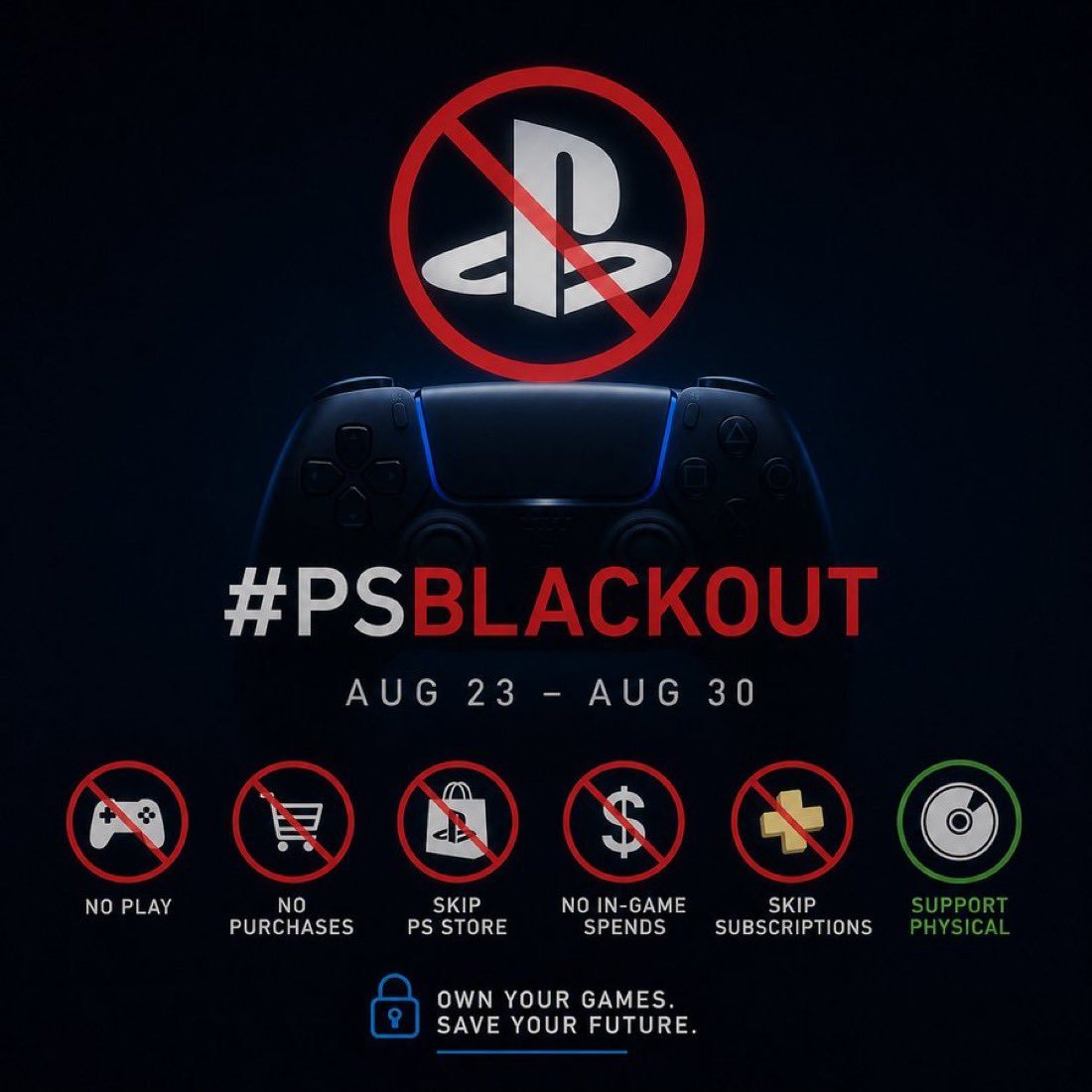
The #PSBlackout campaign was organized by game-preservation advocates to protest Sony’s move away from physical game discs. Participants were encouraged to stay logged out of the PlayStation Network, avoid playing games, and stop making purchases during the seven-day action.
The protest is important because it turns an abstract licensing debate into a visible consumer action. Players are not only objecting to a missing disc; they are challenging who controls access after the checkout is complete.
| Protest Concern | Why Players Care |
|---|---|
| No physical discs for new games | Fewer opportunities to resell, lend, collect, or preserve games |
| Download codes in retail boxes | The box may provide presentation without an independent copy |
| Digital licensing | Access can depend on an account and platform rules |
| Store closures | Future downloads, patches, or re-downloads may become uncertain |
| Online dependency | Server shutdowns can remove multiplayer or other features |
- Would you join a gaming boycott over the loss of physical discs?
- Is a box with a download code genuinely “physical ownership”?
Digital Game Ownership Is Actually a License
PlayStation’s EULA states that software is licensed rather than sold and grants a limited, non-exclusive, personal right to use software for private purposes. That wording means the customer receives permission to use the game under specified conditions, but does not receive full ownership of the underlying software or intellectual property.
The distinction is easy to miss because the buying experience looks like a normal purchase. You pay money, download the game, see it in your library, and may use it for years—but legally and technically, the platform still controls the license layer.
| Traditional Ownership | Digital License |
|---|---|
| You possess a physical object | You receive permission to access software |
| You may be able to resell or lend it | Transfer may be prohibited |
| The item can remain usable without a storefront | Access may depend on accounts, servers, or authentication |
| Condition affects value | Platform rules can affect access |
How Access Can Be Lost
Can Sony or a publisher actually remove your games? The PlayStation EULA allows Sony to end online and network features and states that offline modes are not guaranteed; it also clarifies that software may be supported or discontinued at the company’s discretion.
The Main Risks
- Account suspension or termination: If access is tied to an account, a dispute can affect your entire library.
- Store delisting: A game may disappear from sale, preventing new customers from purchasing it.
- Publisher licensing disputes: Music, sports, cars, or branded content can force a game’s removal.
- Server shutdowns: Multiplayer, cloud features, and live-service content may stop working.
- Compatibility changes: A future console or operating system update may drop support for older titles.
Delisted does not always mean deleted. A game may remain playable for people who previously downloaded it, but that is not a permanent guarantee across every account or platform generation.
Why Physical Discs Still Matter
Physical media gives consumers options that digital licenses often remove. A disc can be resold, lent, collected, traded, and preserved independently of a storefront.
The Benefits of Physical Games
- Resale value: Players can recover part of the purchase price.
- Lending: A disc can be shared without transferring an account.
- Preservation: Collectors can retain a tangible copy.
- Price competition: Retailers and second-hand markets can lower prices.
Note: Physical media does not automatically mean perfect; many modern discs still require day-one downloads, patches, or online activation to function properly.

Could Physical Games Make a Comeback?
The decline of physical media may create a backlash that helps it survive as a premium product. Collectors, preservationists, parents, and players with limited internet access continue to value physical releases.
The comeback may not look like a return to mass-market disc dominance. Instead, it could involve collector editions, limited print runs, preservation-focused releases, and cartridges or discs containing complete games as a form of risk management.
What the PlayStation Shift Means for Gamers
Sony says the move responds to changing consumer preferences and the wider shift toward digital entertainment. That may be commercially rational, but it does not eliminate legitimate concerns about preservation and consumer rights.
Practical Buying Checklist
Before purchasing a digital game, check:
- Whether the game has a playable offline mode.
- Whether it requires a persistent internet connection.
- Whether the publisher has announced server shutdowns.
- Whether the game is tied to a subscription.
PlayStation players are organizing a seven-day boycott to protest the end of physical discs in 2028. From August 23 to August 30, part of the community is doing a complete blackout. The plan is simple: turn off your console, log out, and do not buy anything to make your voice… pic.twitter.com/SdVLQrP6EH
— Anonymous (@YourAnonOne) August 24, 2026
Frequently Asked Questions
Do I own a digital PlayStation game?
Usually, you receive a license to use the software rather than ownership of the software itself. PlayStation’s EULA explicitly describes its software as licensed, not sold.
Can a digital game be removed from my library?
Availability can depend on platform terms, account status, online services, and the individual game’s design. Delisting may stop new purchases without necessarily removing previous downloads.
Are physical games guaranteed to work forever?
No. A physical disc may require patches, activation, online servers, or compatible hardware. However, it provides more independent access than an account-based digital license.
Will all PlayStation games become digital in 2028?
Sony announced that physical disc production for new PlayStation games will be discontinued starting in January 2028, while games already released or scheduled for disc release before that date are not affected.
Also Read: The 18% Reality, Why PlayStation Discs Are Becoming Collector-Only Items
The Bottom Line
The PlayStation blackout may last only seven days, but the ownership debate will last much longer.
The issue is whether paying for a game should provide a reasonable expectation of long-term access—or whether every digital purchase should be understood as a revocable permission controlled by a platform.