
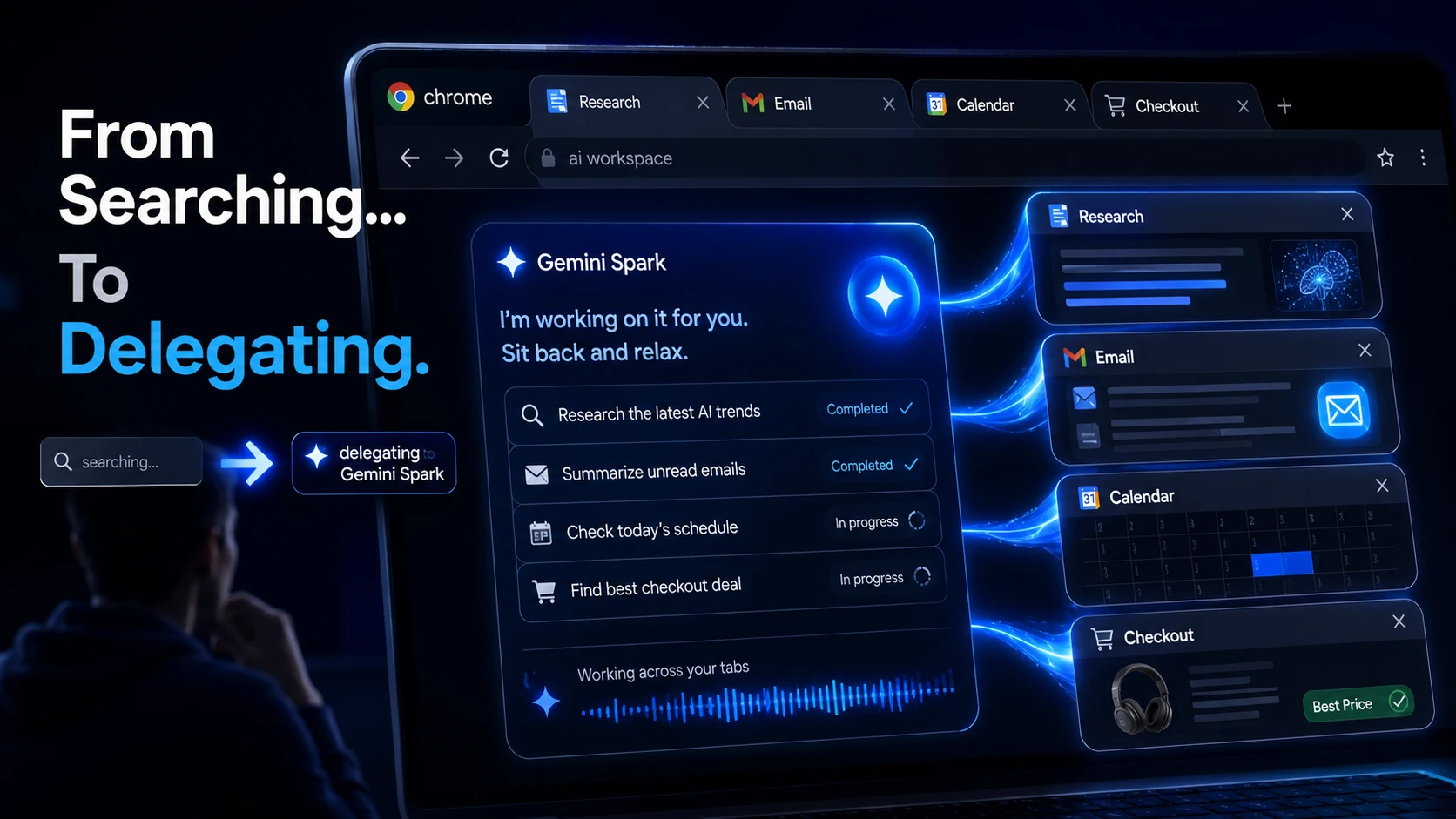
Chrome just shattered the limits of traditional web browsing. Over 3.4 billion users spend up to 6 hours daily managing browser tabs across work and personal tasks.
What happens when those tabs start executing complex workflows on their own? Gemini Spark officially transforms Chrome from a passive search tool into an autonomous workstation capable of taking direct action inside open web pages.
The Next Act for Google Chrome
Chrome just rewired the way we think about browsing. Gemini Spark is turning open tabs into an autonomous workstation, where AI can help manage tasks instead of simply answering search queries. Millions of users already depend on browsers for research, communication, shopping, and work—so what happens when those tabs start doing the heavy lifting?
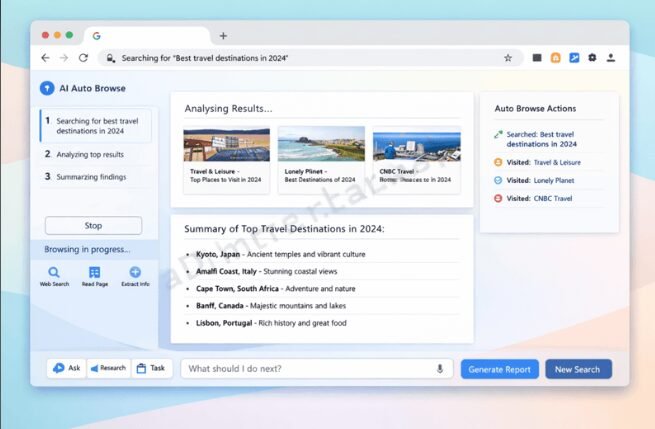
The shift is bigger than a chatbot in a sidebar. It signals a move from passive browsing to active browser automation, and that could overhaul everyday productivity far faster than most people expect.
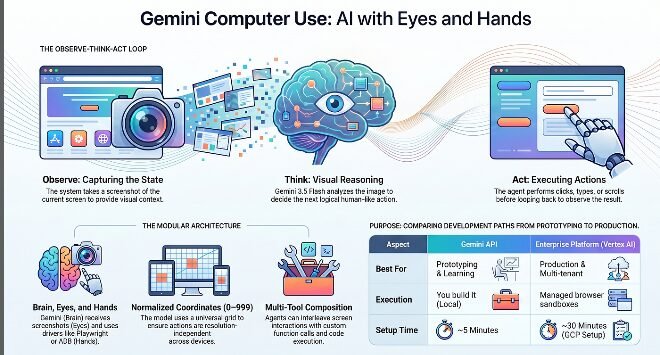
Google’s rollout of Gemini in Chrome Auto-Browse connects AI directly to active browser sessions. Instead of generating plain text, the agent interacts with web forms, schedules events, and navigates complex web pages.
And this may be only the first step toward hands-free web navigation.
“The real shift is not smarter search. It’s turning the browser into a place where tasks can be completed, not just discovered.” — Enterprise Technology & Automation Analyst
Why Tab Automation Matters
Over 70% of digital knowledge work occurs directly within web browsers. Switching between dozens of disconnected web apps drains focused attention and slows productivity. Could browser-native task execution finally eliminate tab sprawl?
Here is why this workflow evolution changes daily web habits:
- It reduces repetitive manual tasks like form fills and routine copy-pasting.
- It rewires tab management by allowing AI to organize, cross-reference, and compare dynamic pages in real time.
- It pushes web browsers closer to full-fledged operating system behavior.
The Workflow Shift: Old vs. New Model
The transition from manual clicking to delegated execution is fundamentally changing user expectations. According to official details on Gemini Spark Workflow Management, AI agents now handle ongoing schedules across connected apps.
| Traditional Browsing | Gemini Spark-Style Browsing |
|---|---|
| Search, open dozens of tabs, compare details manually | AI analyzes and cross-references multiple tabs automatically |
| Copy and paste data across separate web applications | Browser handles native multi-step execution across pages |
| User performs every click, form fill, and reservation step | User delegates the goal while AI assists execution |
Will manual browser tab toggling become obsolete sooner than expected?
5 Real-World Use Cases
How does this play out in everyday scenarios? Here are five practical ways autonomous browsing changes daily digital tasks:
- In-Depth Topic Research: Gemini Spark gathers key insights across multiple web sources and compiles a structured summary without requiring manual tab toggling.
- Automated Form Completion: The agent fills out repetitive booking, registration, or submission forms based on verified user profile context.
- Cross-Site Product Comparison: Spark analyzes pricing, specs, and reviews across competing online stores to surface the best choices.
- Contextual Communication: It drafts contextual emails or responses directly inside open web app tabs using live page data.
- Multi-App Task Coordination: The system orchestrates calendars, Google Docs, and web services in one unified step.
Gemini Spark 🤝 @GoogleChrome
— Google Gemini (@GeminiApp) July 30, 2026
Gemini Spark is now integrated with auto browse in Google Chrome. With your permission, Spark can handle web tasks for you right in your Chrome browser, like scheduling apartment viewings or auto-filling flight info.
Security Risks & Critical Questions
Granting AI autonomous control over web browser sessions introduces important safety considerations. Security research detailed in Chrome Enterprise Gemini Policies emphasizes the necessity of strict management controls.
- Access Boundaries: How much permission should an autonomous agent have inside authenticated accounts?
- Tab Privacy: What safeguards protect sensitive personal data displayed inside open tabs?
- Action Trust: Can users reliably verify multi-step agent actions before execution?
- Site Compatibility: Will autonomous actions function smoothly across non-standard website layouts?
What Comes Next
We are witnessing the early stages of true browser-native AI workflows. Tech companies are no longer competing solely on search accuracy, but on who can convert human intent into completed actions fastest. As agentic intelligence matures, the humble web browser may soon become our most powerful personal co-pilot.