
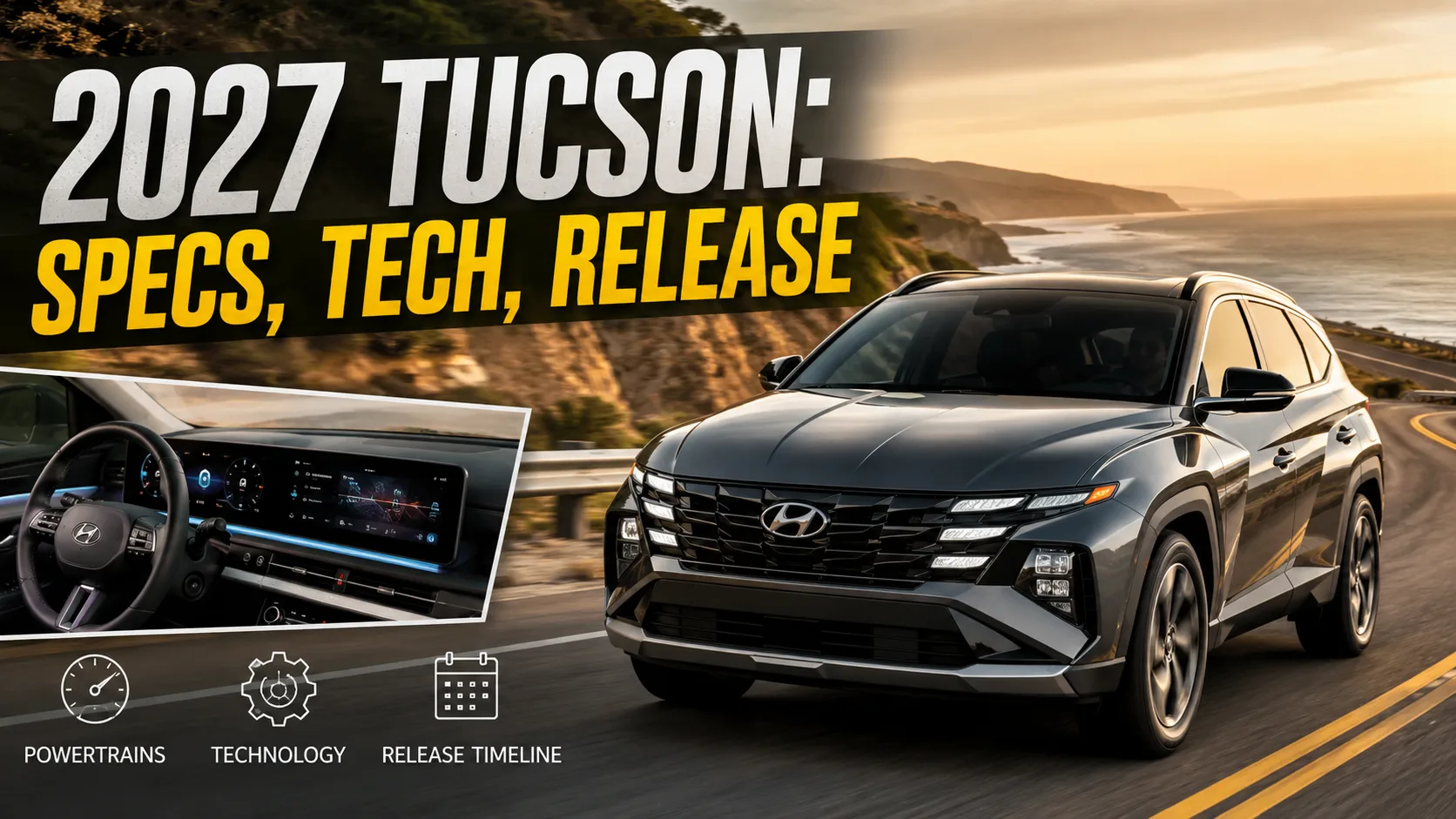
Surprisingly bold, the 2027 Tucson demands attention — and it may make you rethink your next SUV upgrade. Compact SUV sales climbed roughly 12% year-over-year in early North American market reports, and Hyundai aims to capture more of that momentum with a refreshed Tucson packed with tech, efficiency, and sharper styling.
Will the new powertrain choices and upgraded cabin be enough to beat fierce market rivals? Read on — early trims could move fast if dealer allocation is as tight as industry insiders predict.
Blending refined ergonomics with a cutting-edge digital ecosystem, this upcoming model year is shaping up to be one of the brand’s most critical releases. Let’s break down the expected 2027 Hyundai Tucson specs, interior improvements, and the upcoming buying timeline.
Quick snapshot
For buyers tracking data on the go, here is a fast facts breakdown of what to expect from the upcoming model cycle:
- Engine Options: 2.0L naturally aspirated, 1.6L turbocharged hybrid, and Plug-in Hybrid (PHEV) variant.
- Estimated Power Range: ~150 to 250 horsepower depending on the configuration.
- Fuel Economy Targets: Hybrid models aiming for 40+ mpg combined, with the PHEV targeting an estimated 30–40 miles of pure electric range.
- Drivetrain: Front-Wheel Drive (FWD) and H-TRAC All-Wheel Drive (AWD).
- Trim Tiers: Base, SEL, N Line, and Limited (market dependent).
This compact SUV balances versatile cargo utility with advanced hybrid efficiency, establishing a strong baseline for the segment.
Redesign changes — exterior and chassis updates
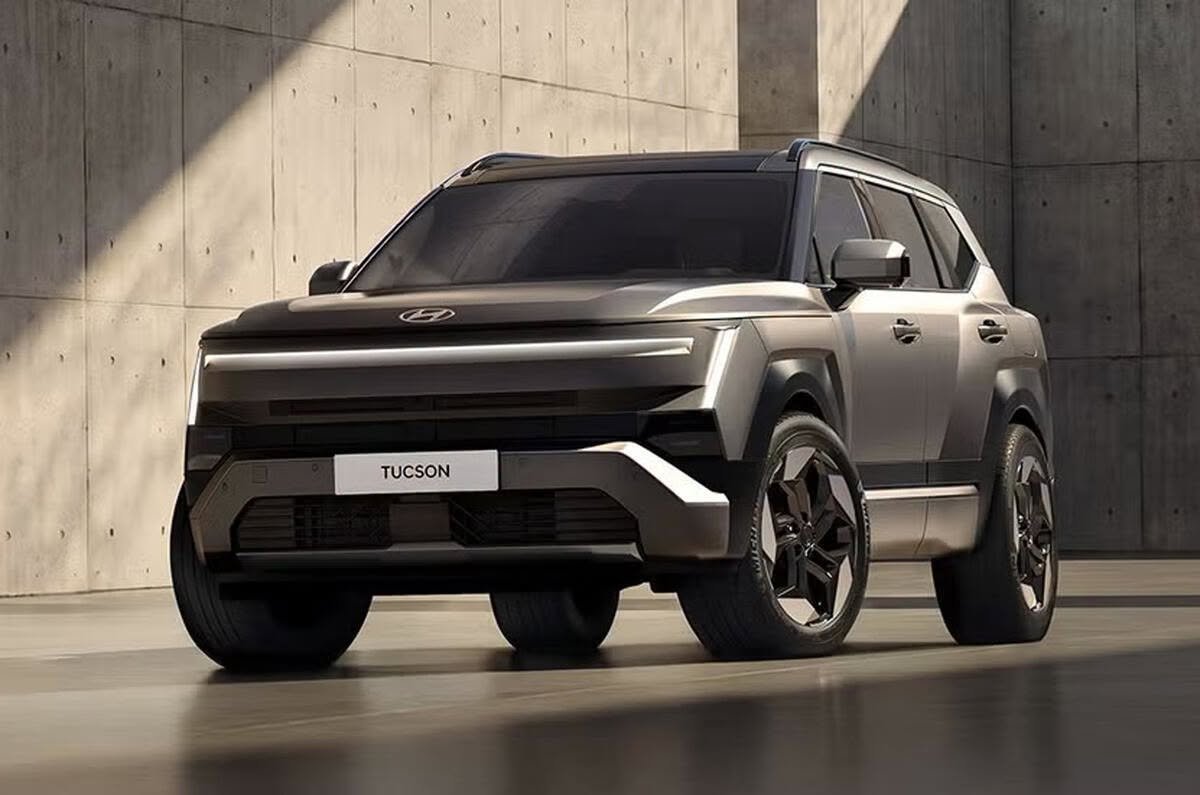
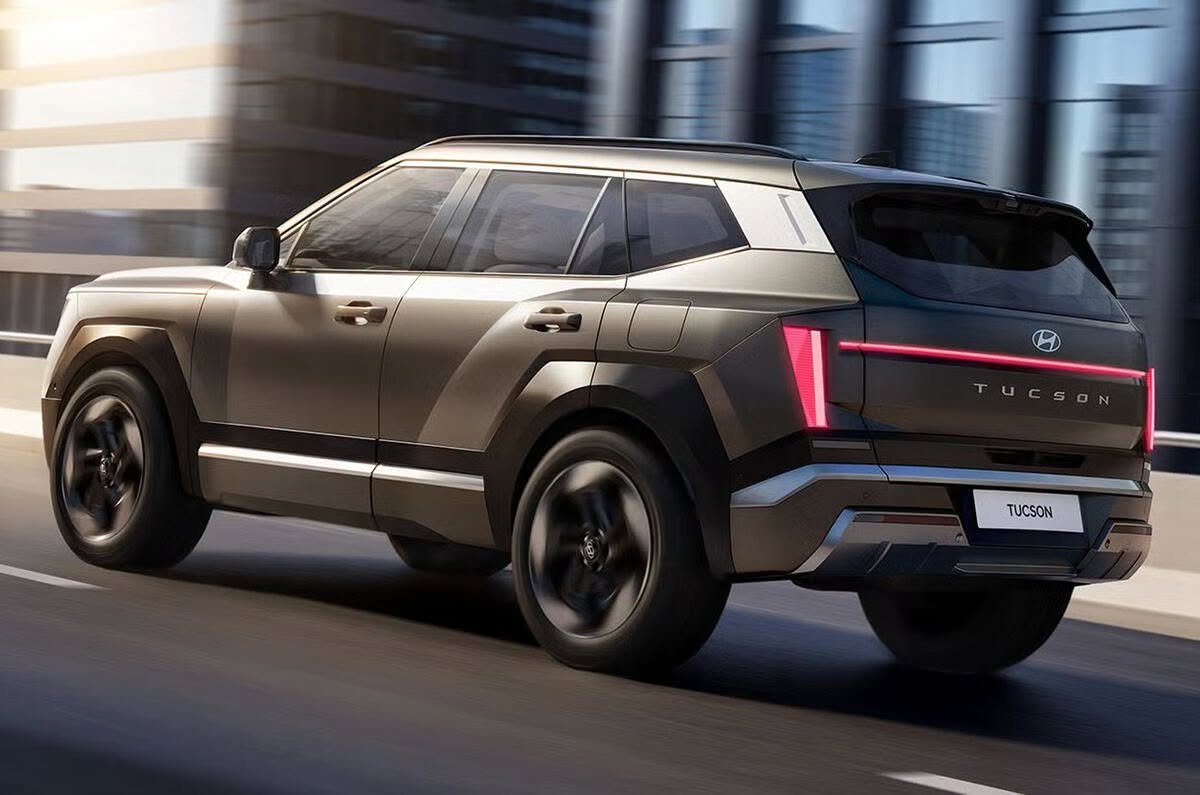
The exterior receives a more aggressive visual stance, led by a sharper front fascia, a redesigned parametric grille, and an integrated new lighting signature. The updated design lowers the optical center of gravity while maintaining generous ground clearance.
Aerodynamic tweaks across the body panels reduce cabin wind noise at highway speeds. Beneath the sheet metal, Hyundai engineers have retuned the suspension springs and dampers to deliver a more compliant ride quality without sacrificing body control during cornering.
Powertrain choices explained
Gasoline options — what to expect
The entry-level gasoline models rely on a refined internal combustion engine paired with a smooth-shifting automatic transmission. Designed for everyday commuting, it prioritizes linear throttle response and dependable low-end torque.
Hybrid and PHEV — why they matter
The Tucson hybrid and Tucson PHEV variants form the core of Hyundai’s efficiency strategy. Expected battery packs support Level 2 home charging, while regenerative braking systems capture energy seamlessly during urban stop-and-go driving.
Performance variant (N Line)
For drivers seeking sportier dynamics, the Tucson N Line delivers an aggressive cosmetic package coupled with a stiffer suspension setup. It features unique seat stitching, dark chrome exterior accents, and distinct wheel choices.
Powertrain Comparison Guide
| Engine Variant | Est. Horsepower | Est. Torque | Est. Fuel Economy / Range | Drivetrain |
|---|---|---|---|---|
| 2.5L Gas Engine | ~187 hp | 178 lb-ft | ~25–28 mpg combined | FWD / AWD |
| 1.6L Turbo Hybrid | ~226 hp | 258 lb-ft | ~38–40 mpg combined | FWD / AWD |
| 1.6L Turbo PHEV | ~261 hp | 258 lb-ft | ~35 miles EV + 35+ mpg | Standard AWD |
Interior cabin tech and comfort features
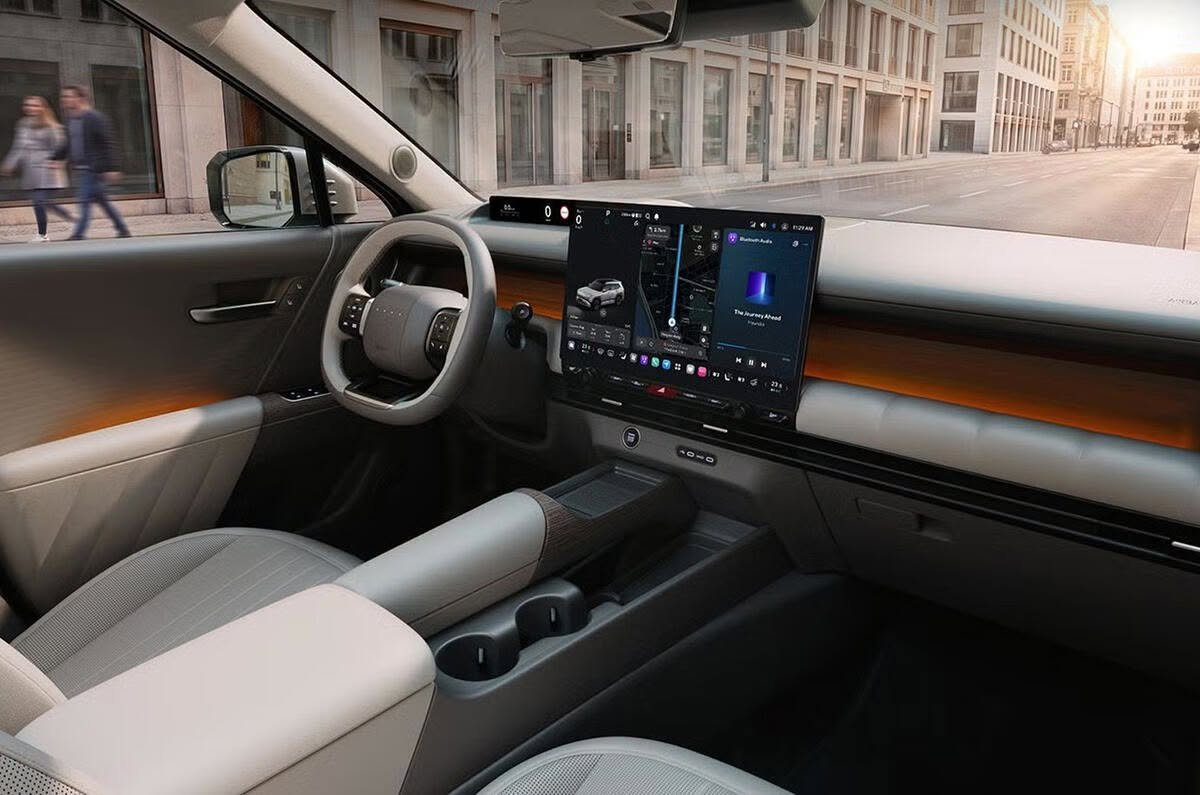
Step inside, and the digital cockpit immediately draws the eye with dual seamless panoramic displays running next-generation infotainment software. Wireless Apple CarPlay and Android Auto come standard across all trim levels, cutting down on messy cable clutter.
Climate controls integrate physical touch-points where safety demands it, while capacitive sliders handle secondary adjustments. Premium audio options from Bose deliver crystal-clear sound, complemented by multi-zone ambient lighting and ventilated front seats on higher trims.
Safety, driver assistance, and ratings
Hyundai’s SmartSense suite gets an upgrade, introducing more responsive lane-centering and predictive adaptive cruise control.
- Blind-spot view monitors stream live video directly into the gauge cluster.
- Automatic emergency braking now includes expanded pedestrian and cross-traffic detection.
- Safe exit warnings prevent doors from opening into oncoming traffic.
Independent safety bodies like the IIHS and NHTSA are scheduled to put production models through crash testing shortly after manufacturing begins.
Pricing expectations and trim breakdown
While official MSRP figures arrive closer to the launch date, industry analysts project starting prices to hover across a competitive spectrum:
- Base & SEL Trims: $28,500 – $32,000 (Estimated)
- N Line & Hybrid Trims: $34,000 – $38,000 (Estimated)
- Limited & PHEV Trims: $40,000 – $44,000 (Estimated)
“Would you choose the hybrid for mileage or the turbo for performance?” Most analysts recommend the mid-tier hybrid trims as the sweet spot for long-term value and fuel savings.
Release timeline and buying advice
Securing one of the first allocations requires understanding the anticipated regional rollout schedule:
- Global Reveal: Late 2026 via digital broadcast.
- North American Market Launch: Spring 2027 model year arrival at dealerships.
- Europe & Global Markets: Staggered regional rollout through mid-2027.
“Which interior upgrade would make you trade in today?” If you plan to buy, pre-registering with local volume dealerships can secure your spot ahead of the initial delivery wave.
What reviewers and first buyers will check first
When initial review units hit test tracks, automotive journalists will focus heavily on real-world efficiency and software stability:
- Real-world MPG versus EPA laboratory estimates.
- Actual electric-only driving range in cold weather for the PHEV variant.
- Infotainment processing speed and touchscreen responsiveness under heavy usage.
- Ride harshness over broken pavement with larger wheel options.
Pros, cons, and who should buy the 2027 Tucson
Pros
- Comprehensive hybrid efficiency options with strong power delivery.
- Striking, modern exterior redesign that stands out in parking lots.
- Class-leading infotainment and digital dashboard technology.
Cons
- Expected minor price increases over previous model years.
- High-demand trims may experience initial dealer markup pressure.
Ideal Buyer: Tech-forward families and commuters seeking a spacious, efficient compact SUV with modern safety systems.
Hyundai is making the Tucson tougher.
— Tech Ultimatum (@TechieUltimatum) August 19, 2026
The 5th-gen Hyundai Tucson grows to 4,700 mm long and 1,905 mm wide, bringing more cabin space and a longer wheelbase.
🔥 New highlights:
• Rugged XRT variant
• New Pleos infotainment
• Large central touchscreen
• AI assistant “Gleo”
•… pic.twitter.com/ifQte53XLN
FAQs
When will the 2027 Hyundai Tucson be released?
Official dealership arrivals are anticipated in spring 2027.
What powertrains will the 2027 Tucson offer?
It will offer standard gas, traditional hybrid, and plug-in hybrid (PHEV) configurations.
How far will the PHEV Tucson go on electric power?
Target estimates project between 30 and 40 miles of pure electric range.
What new interior tech does the 2027 Tucson have?
It features upgraded panoramic dual displays, faster OTA software updates, and enhanced driver assistance suites.
How much will the 2027 Tucson cost?
Estimated pricing spans roughly $28,500 to $44,000 depending on the selected powertrain and trim level.