
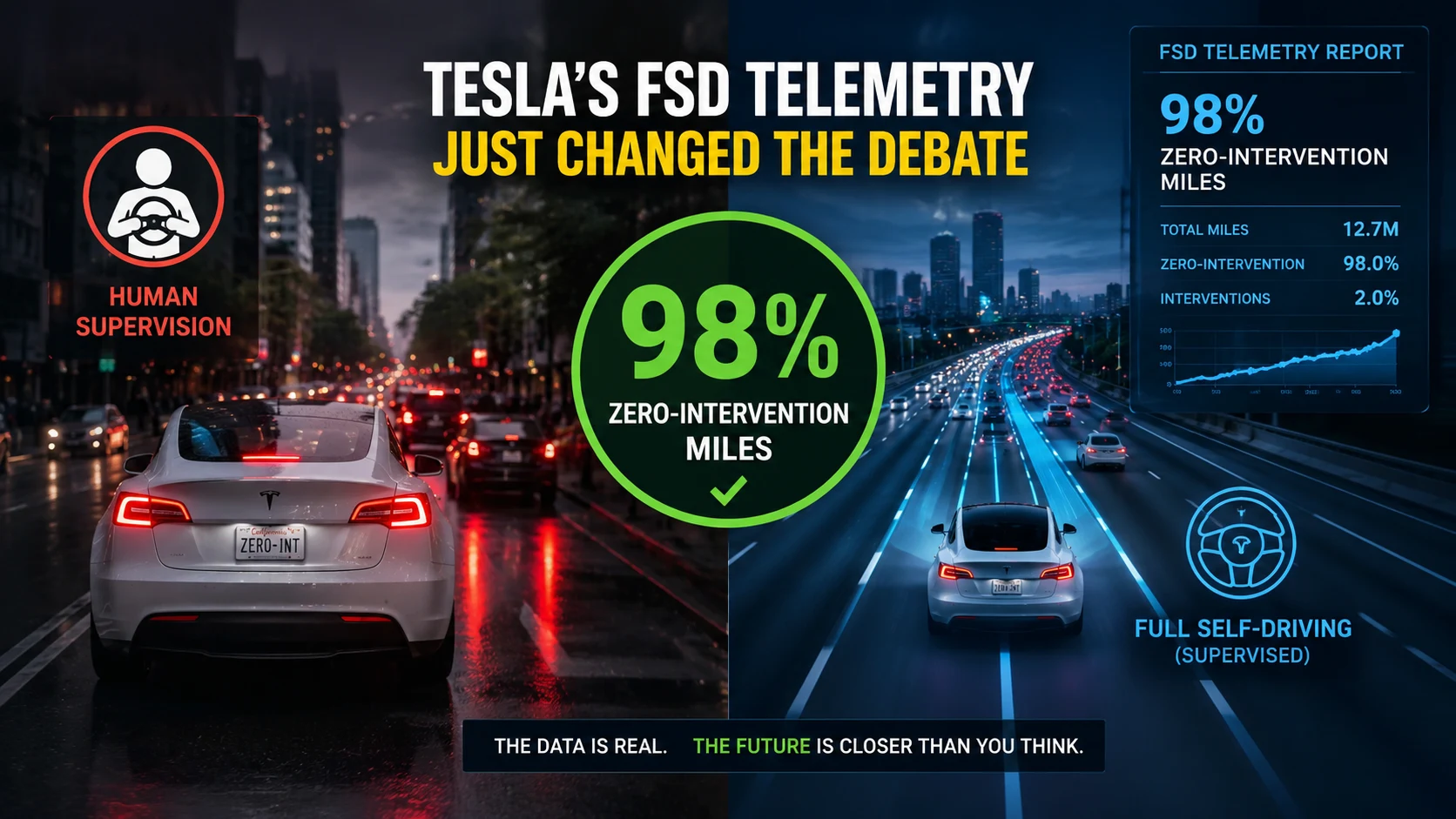
Tesla just stunned critics with a new FSD telemetry story: 98% zero-intervention miles, stronger highway stability, and improving urban performance.
But does that mean everyday autonomous driving is finally becoming practical? The numbers suggest a system that can handle, adapt, and recover far better than earlier versions, especially on predictable roads across over 1 billion accumulated FSD miles.
Yet the real test is tougher: city traffic, bad weather, and messy human driving still push autonomy to its limits. That gap is where the story gets interesting.

What the Telemetry Says
Tesla’s latest performance metrics paint a clearer picture of where full self-driving excels and where human drivers still need to step in.
| Metric | Measured Level | What It Suggests |
|---|---|---|
| Zero-Intervention Miles | 98% | Overall system reliability across routine routes |
| Highway Disengagement | 1 per 500+ miles | High stability during lane keeping and merges |
| Urban Intervention | Higher frequency | Complex handling of intersections and pedestrians |
| Adverse Weather Reliability | Reduced capability | Camera vision limitations under heavy rain or fog |
Here’s the catch. While a 98% success rate sounds incredible, that remaining 2% represents complex edge cases where accidents can happen without supervision.
Urban Driving Challenges
Navigating busy city streets remains the ultimate test for end-to-end neural networks.
- Traffic Light & Sign Compliance: Smooth lane discipline and stop line recognition in dense traffic.
- Unprotected Left Turns: Stronger behavior in predictable traffic, though hesitation remains common.
- Pedestrian & Construction Zones: Still cautious at complex intersections with erratic human movement.
So where does it still fail? Tight construction zones, double-parked delivery vans, and aggressive merging traffic continue to trigger human takeovers.
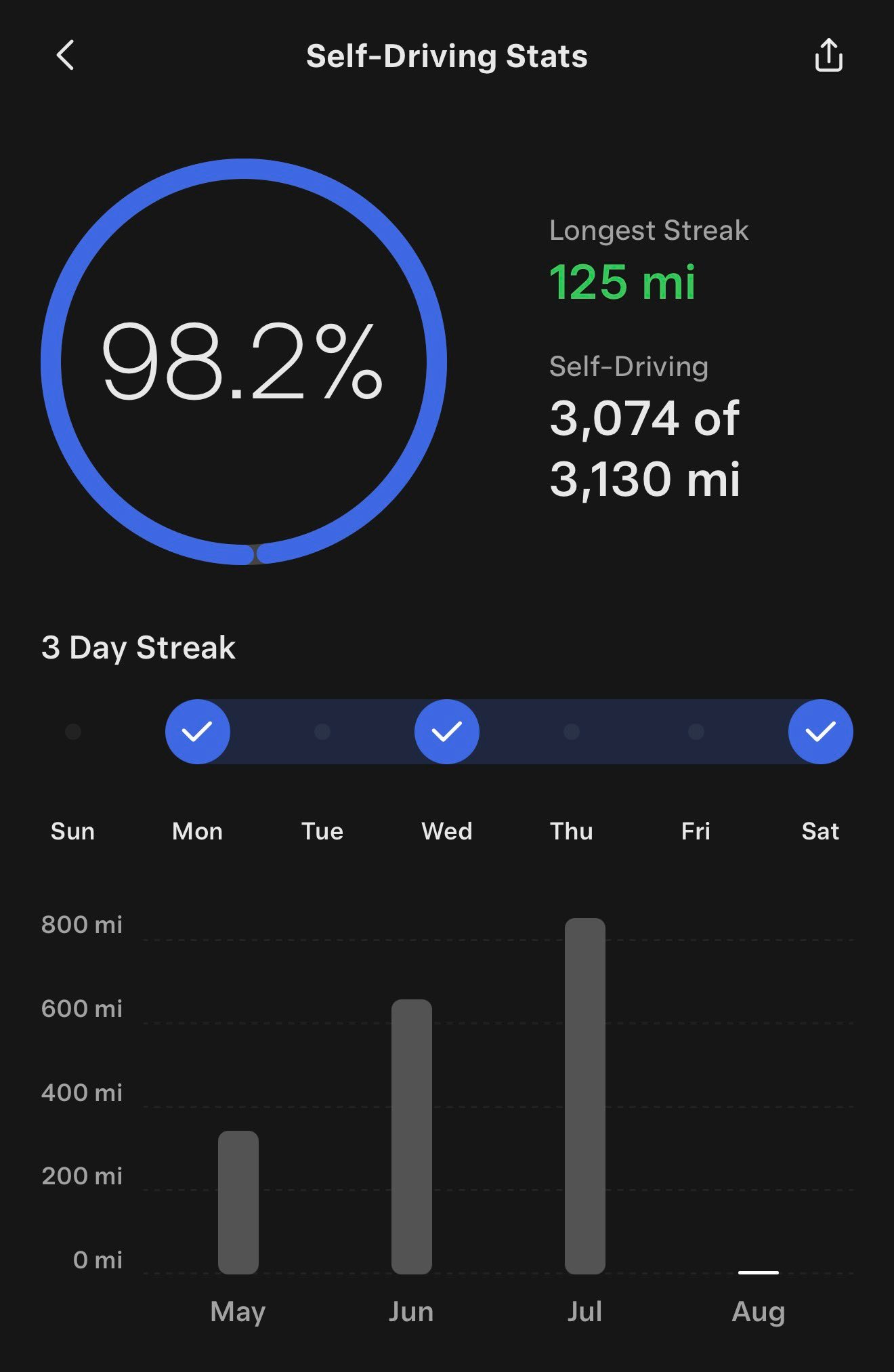
Highway Performance
Highways offer structured lanes, clear markings, and predictable vehicle paths, making them FSD’s strongest environment.
- On/Off Ramp Navigation: Seamless transition between highway interchanges and city arterial roads.
- Speed & Distance Control: Dynamic adjustment behind slow-moving trucks and sudden slowdowns.
- Automated Lane Changes: Proactive overtaking of slow traffic with high confidence.
Is highway driving where FSD looks most mature? Data indicates highway disengagements have dropped to multi-hundred-mile intervals under clear weather conditions.
Adverse Weather Behavior
Rain, fog, and nighttime glare test the limits of Tesla’s vision-only approach.
- Camera Visibility: Heavy rain can blur optical sensors, triggering mandatory driver prompts.
- Low Contrast Scenarios: Reflective wet asphalt at night challenges lane line detection.
- Cautionary Speed Caps: System automatically reduces max speed under poor road conditions.
“The real breakthrough is not perfect autonomy — it’s consistent performance in the messy middle of everyday driving.” — EV Safety Analyst
Does the system stay composed when the road stops being ideal? When camera vision degrades, FSD shifts into high-alert modes, requiring immediate human readiness.
FSD Supervised keeps you 7x safer on the road for about $3.33 a day Less than the avg cost of a coffee in the US pic.twitter.com/K5OtNBDCM1
— Tesla (@Tesla) August 1, 2026
What the Numbers Mean
Evaluating telemetry requires looking beyond raw percentages to real-world context:
| Environment | Primary Strength | Main Weakness |
|---|---|---|
| Urban | Rule-following in grid layouts | Chaotic edge cases & jaywalkers |
| Highway | High-speed steady lane keeping | Unexpected debris & abrupt construction |
| Weather | Cautious fallback behavior | Sensitivity to low visual contrast |
And that changes the debate. Rather than asking if FSD works, industry experts now focus on how quickly edge-case disengagements can be engineered away.
Official Reports & Technical Coverage: • Tesla Official Vehicle Safety Report • Tesla Fleet API & Telemetry Notes • Consumer Reports Automotive Testing
Is this the beginning of reliable everyday autonomy, or just a highly polished supervised system? As Tesla processes billions of real-world miles, the boundary between assistance and autonomy narrows every single day.