
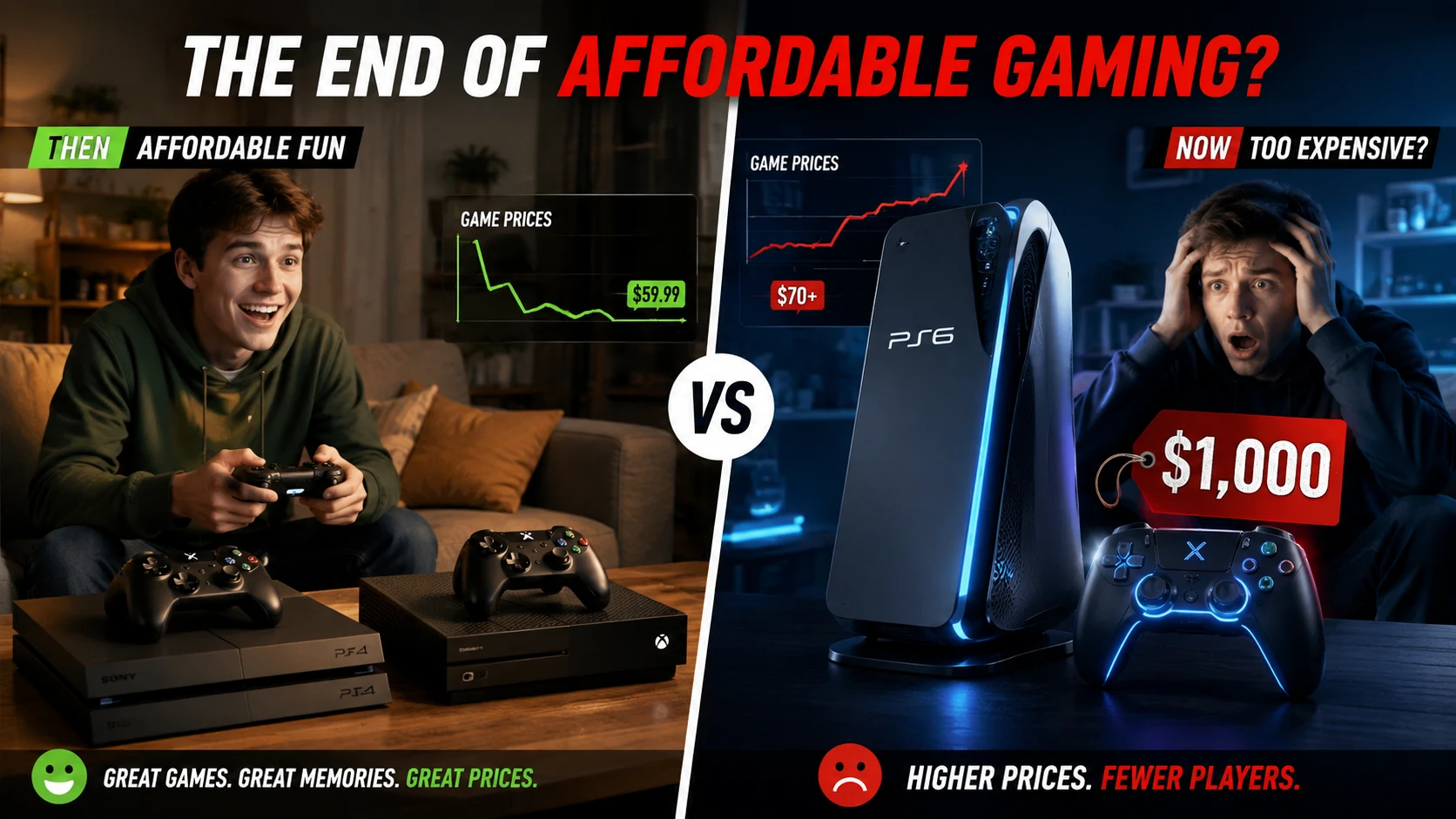
Gamers are furious — and worried — as rumors swell that next-generation consoles like the anticipated PS6 and Xbox Helix could cost $1,000 at launch. Component costs have surged by up to 30–40% in recent years, production bottlenecks persist, and chip foundries are completely booked out.
Would you pay smartphone prices for a living-room console? Time is running out for affordable hardware options. If gaming hardware genuinely shifts into luxury territory, the entire ecosystem — from game subscriptions to trade-in markets — will feel the shockwave.
Quick Snapshot: The $1,000 Console Thesis
The era of the universally affordable $499 launch console is rapidly coming to a close. Component cost inflation, fierce competition for semiconductor foundry capacity, and the rising baseline of consumer electronics have made the $1,000 console an increasingly plausible reality for flagship hardware.
- Component Surge: Raw bill-of-materials estimates for next-gen silicon have climbed past historical baselines.
- Historical Escalation: Moving from the PS4 ($399) and PS5 ($499) to mid-gen refreshes like the PS5 Pro ($899) establishes a steep ladder toward a thousand-dollar flagship.
- Margin Pressures: Platform holders are facing intense consumer resistance while trying to avoid absorbing crushing manufacturing losses.
What’s Driving Prices Up? Component and Supply-Chain Breakdown
CPU/GPU Costs and the Role of Nvidia, AMD, and TSMC
Advanced silicon is the single most expensive element in modern hardware. With cutting-edge nodes at TSMC capacity constraints commanding record prices, wafer manufacturing costs have climbed significantly. AI data centers are aggressively bidding for the same advanced nodes, driving up prices for consumer gaming silicon.
Memory, SSDs, and Premium Controllers
The transition to advanced memory configurations, such as high-density GDDR7 modules and ultra-fast PCIe Gen 5 storage, has introduced severe cost bottlenecks.
- Silicon Wafers: Advanced node fabrication at foundries like TSMC and Samsung.
- High-Bandwidth Memory: Upgraded memory sub-systems required to feed next-gen GPUs.
- Assembly & Packaging: Advanced chip-stacking and cooling architecture.
- Logistics & Freight: Global shipping volatility and regional import tariffs.
- Software & Licensing: Ongoing developer ecosystem overhead.

Economic Forecasts and Pricing Scenarios
Platform holders face difficult choices as they plan their upcoming product lifecycles.
| Scenario | Target MSRP | Focus / Strategy | Projected Impact on Unit Sales |
|---|---|---|---|
| Conservative | $699 | Subsidized entry model | Moderate volume retention |
| Mid-Tier | $899 | Digital-only / balanced specs | Noticeable dip among casual buyers |
| Premium Flagship | $1,000+ | Uncompromised silicon & margins | Steep sales contraction price elasticity tested |
As economic pressures mount, extreme price elasticity will likely trigger a sharp unit sales drop among casual demographics, pushing consoles further into luxury territory.
Will Gamers Pay Smartphone Prices? Consumer Willingness-to-Pay Analysis
Modern consumers readily spend $1,000+ on premium smartphones because communication and mobile tech are daily essentials. Applying that same logic to a dedicated gaming box is a tougher sell.
- Hardcore vs. Casual: Dedicated enthusiasts may stretch their budgets for peak performance, but casual families and younger audiences are getting priced out.
- Ecosystem Lock-in: Factors influencing the decision include exclusive game lineups, flexible financing plans, and aggressive trade-in incentives.

How This Could Reshape the Market
- Extended Console Lifecycles: Generations will stretch past the traditional 7-year window as hardware remains viable longer.
- Cloud Gaming Acceleration: High upfront hardware costs will push more players toward subscription-based streaming alternatives.
- Booming Trade-In Markets: Second-hand hardware and aggressive retailer trade-in programs will become vital for consumer adoption.
Manufacturer Strategies to Soften the Blow
To mitigate sticker shock, manufacturers are expected to deploy diversified product strategies:
- Split SKUs: Offering a streamlined digital-only model alongside a maxed-out flagship.
- Financial Engineering: Deeply integrated payment plans and aggressive trade-in programs to lower the barrier to entry.
- Localized Pricing: Tailoring regional configurations to protect adoption rates in price-sensitive markets.
Recommendations for Gamers and Retailers
- For Gamers: Adopt a wait-and-see approach, time your hardware trade-ins strategically, and evaluate whether mid-gen refreshes satisfy your needs.
- For Retailers: Roll out early promotional trade-in values, flexible financing, and bundled subscription incentives to ease consumer hesitation.
Counterarguments and Unknowns
While a $1,000 price point looks increasingly real on paper, major risks remain. Alienating mainstream market share could cede the floor to mobile gaming and budget PC alternatives. Final launch specs, competitor pricing strategies, and unexpected improvements in chip manufacturing yields could still shift the needle before official pre-orders open.
What to Watch and Buy Signals
Keep a close eye on upcoming semiconductor capacity updates from TSMC, official MSRP filings, and initial SKU reveals.
A new analysis says a $1,000 launch price for the PS6 and Xbox Project Helix could seriously hurt sales.
— Pirat_Nation 🔴 (@Pirat_Nation) August 20, 2026
Ampere Analysis estimates that if both consoles launch at $1,000 in 2028, they could sell nearly 40% fewer units over their first five years compared with the PS5 and Xbox… pic.twitter.com/ySKdQ8OxNi