
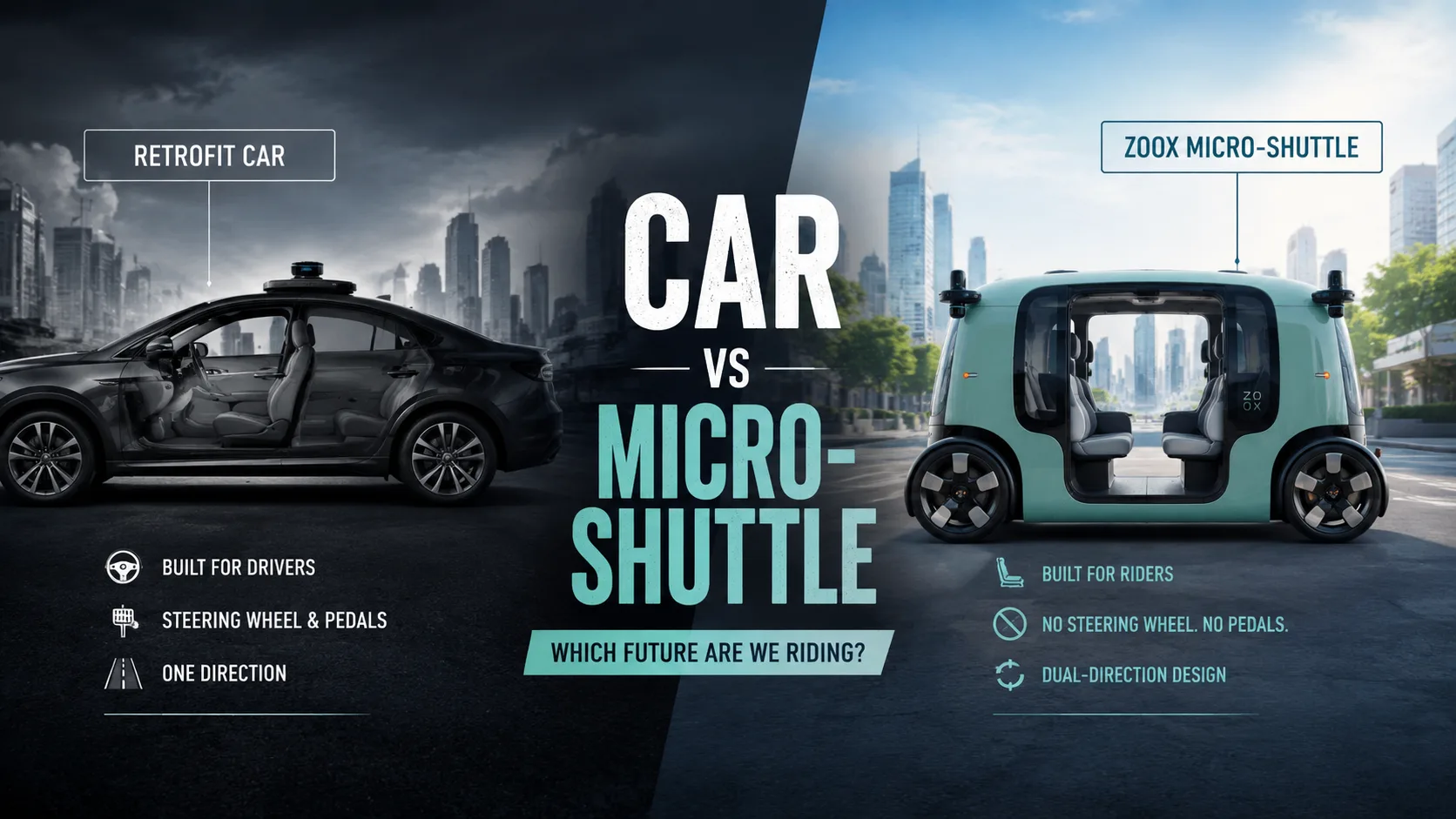
Zoox just blew up the self-driving car conversation. Federal regulators have granted Amazon’s Zoox a landmark exemption to commercially deploy 2,500 purpose-built robotaxis annually with zero steering wheels and zero pedals.
So is the future of robotaxis still a car, or is it becoming a purpose-built micro-shuttle? With a 75 mph top speed, inward-facing seating for four, and dual-direction driving capabilities, military-grade safety systems and commercial autonomous mobility are rapidly converging.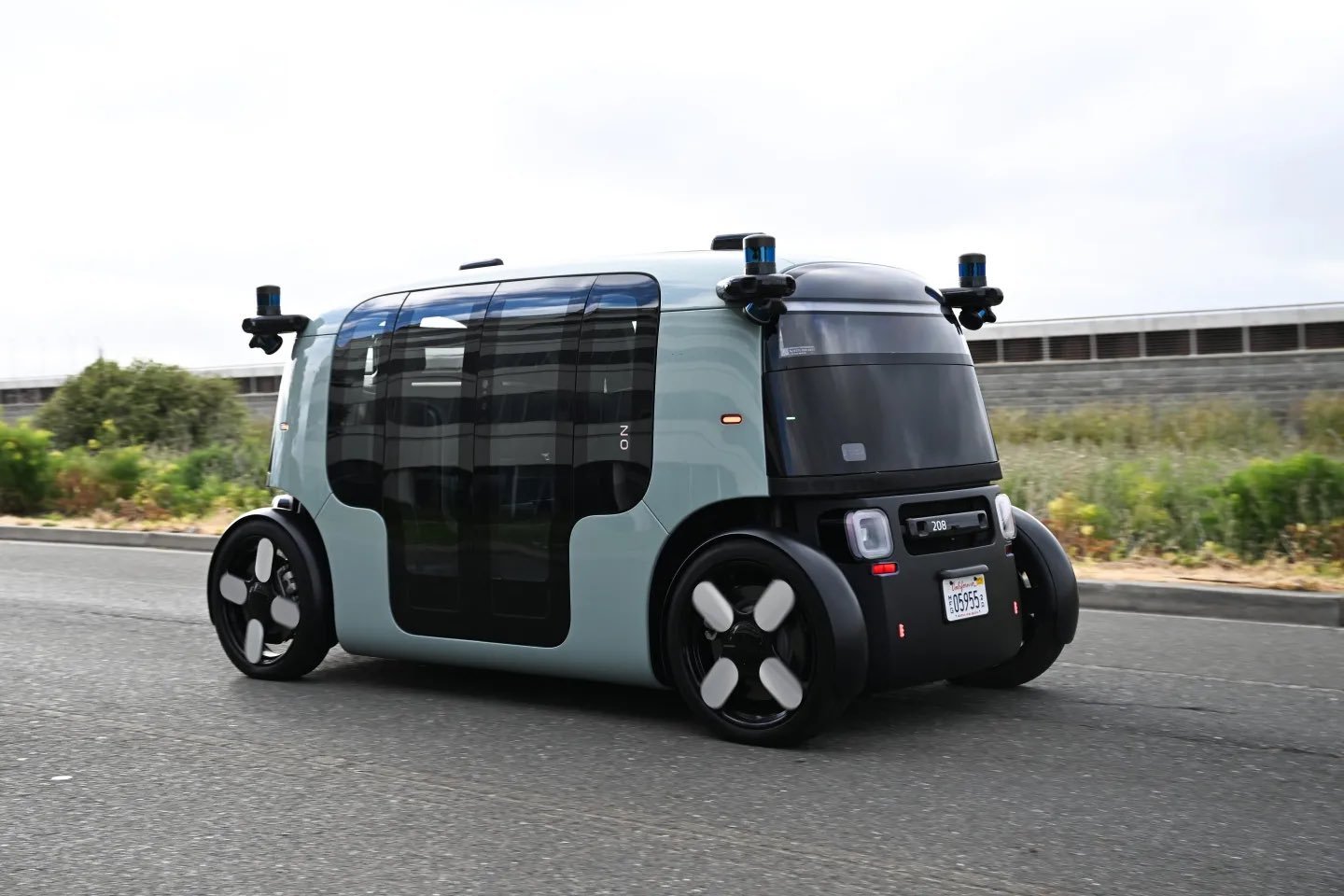
What Zoox Actually Won
The National Highway Traffic Safety Administration (NHTSA) waived eight traditional Federal Motor Vehicle Safety Standards to allow commercial paid rides.
| Detail | Zoox | Traditional AV Approach |
|---|---|---|
| Vehicle Design | Purpose-built carriage pod | Retrofit passenger car |
| Driver Controls | No pedals, no steering wheel | Retains pedals and steering wheel |
| Cabin Layout | Bi-directional, inward-facing seats | Forward-facing traditional cabin |
| Deployment Scale | 2,500 units / year commercial cap | Fleet testing & retrofits |
That sounds small — until you realize what it changes. This regulatory milestone shifts the industry focus away from automating traditional driver seats toward designing purpose-built passenger spaces.
Why This Breaks the Old Playbook
Most autonomous vehicle developers historically relied on existing production platforms, adding sensors and compute modules to standard passenger cars.
- Waymo Strategy: Optimizes sensor suites and software stack integrated into familiar Jaguar I-PACE platforms.
- Tesla Strategy: Bets on full self-driving vision software layered directly onto mass-market consumer vehicles.
- Zoox Strategy: Reimagines the vehicle from scratch around symmetrical bi-directional movement.
But here’s the part most people miss. Removing human controls frees up substantial cabin volume, turning the robotaxi into a private lounge rather than a modified taxi.
The Real Business Shift
Designing a ground-up autonomous platform unlocks operational efficiencies that retrofitted sedans cannot match.
- Higher Passenger Density: Inward-facing seating maximizes legroom within a compact urban footprint.
- Simplified Maneuvering: Bi-directional drive eliminates tight U-turns in crowded city alleys.
- Optimized Fleet Service: Purpose-built electric drivetrains reduce wear-and-tear during continuous urban routes.
- Distinct Brand Identity: Purpose-built pods stand out immediately from personal consumer vehicles.
- Enhanced Passenger Safety: Custom airbag systems envelop riders regardless of travel direction.
“This is less about one vehicle and more about whether regulators are ready to approve autonomy as a new, distinct vehicle category.” — Autonomous Transportation Analyst
And that’s where the real shift begins.
The Regulatory Signal
Federal approvals demonstrate growing agency comfort with non-traditional vehicle form factors that lack human controls.
- NHTSA Framework Expansion: The ruling establishes a precedent for testing and deploying fully autonomous platforms.
- Strict Safety Mandates: Approval requires real-time incident reporting and U.S.-based tele-operation monitoring.
- State Level Clearances: Commercial rollouts begin in Las Vegas and San Francisco pending local ride-hailing permits.
If regulators accept a car without driver controls, how many other design assumptions are about to collapse?
$AMZN Zoox secured the first U.S. approval to commercially deploy purpose-built robotaxis without steering wheels or pedals.
— Shay Boloor (@StockSavvyShay) July 30, 2026
The exemption allows up to 2,500 vehicles annually for two years and clears the way for paid rides pending local approval. pic.twitter.com/UXgh00doHd
What Happens Next
The commercial exemption clears the path for paid fare deployment in Las Vegas and California markets.
- Competitive Pressure: Forces rival AV operators to accelerate their own ground-up platform designs.
- Capital Realignment: Investors shift focus toward purpose-built efficiency over retrofit software packages.
- Public Perception Shift: Riders experience autonomous mobility as a custom service rather than an empty driver’s seat.
The bigger story may not be Zoox’s exemption. It may be the moment the industry stops asking how to automate cars and starts asking how to redesign the ride.
Official regulatory information and platform specifications are available on the NHTSA Federal Register Filing and Zoox Engineering Journal.