
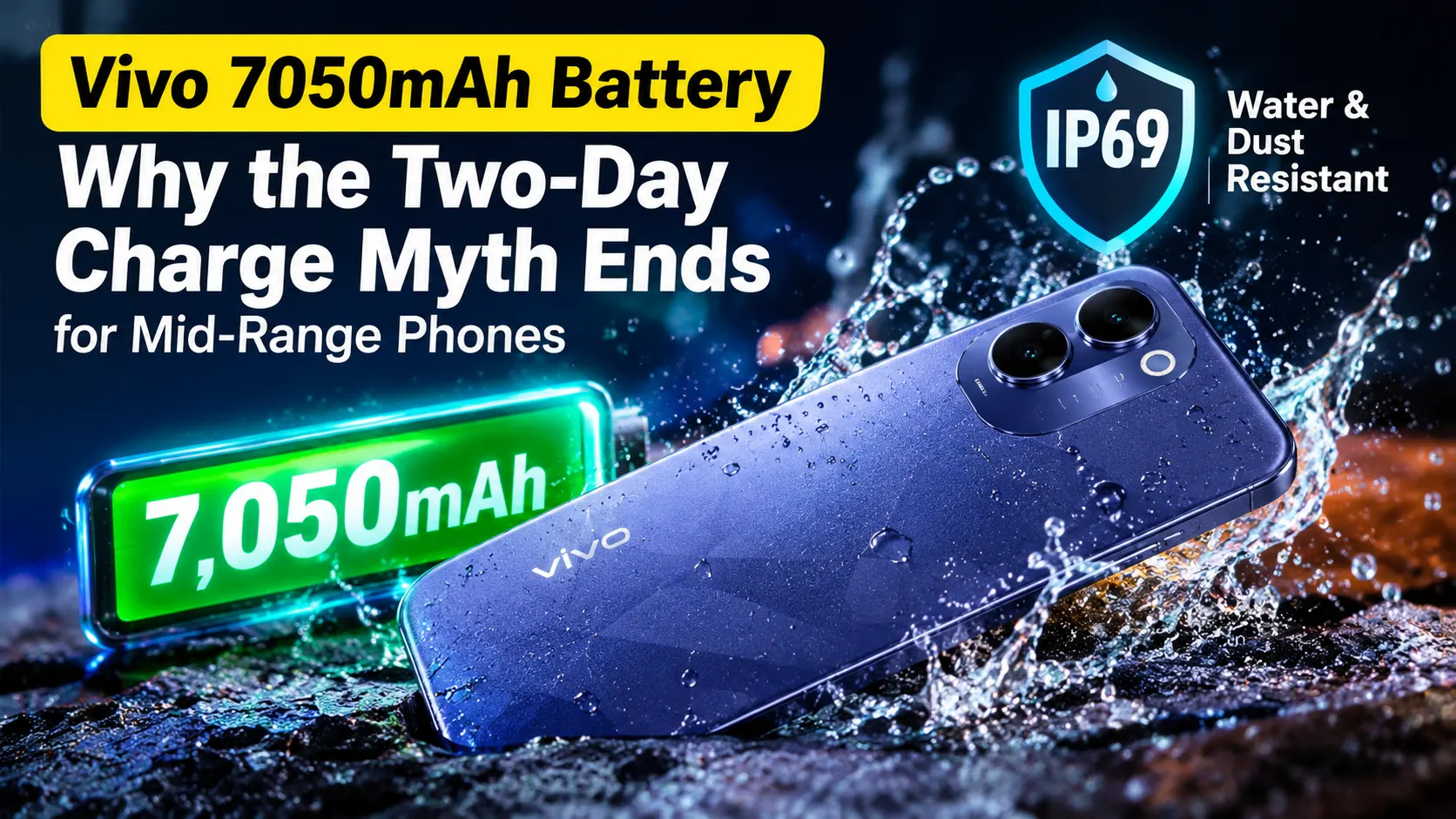
A staggering 7,050mAh battery now fits inside a mid-range phone, claiming up to 72 hours of mixed-use, 48 hours of heavy use, and 150 hours of standby. Can other manufacturers still prioritize paper-thin profiles over real-world endurance?
The industry may be about to shift and recalibrate priorities. With an IP69 rating and a chassis under 9mm, Vivo’s approach challenges the trade-offs we accepted for years: thinness versus longevity, style versus substance.
What’s in the numbers? Real-world battery expectations
When a phone launches with a massive power cell, the immediate question is whether the daily user experience matches the spec sheet. Real-world runtime testing proves that 7,050mAh delivers a transformative leap for users tired of mid-day anxiety.
| Usage Type | Advertised / Lab Estimate | Expected Real-World Results |
|---|---|---|
| Mixed Daily Use | Up to 72 Hours | Comfortably 2.5 to 3 full days |
| Heavy Gaming & Streaming | 12 to 14 Hours | Easily handles a full day of severe stress |
| Idle Standby | Up to 150 Hours | Minimal overnight drain |
How many days would this last your routine? If your current handset barely survives a commute, this leap changes the entire paradigm of mobile connectivity.
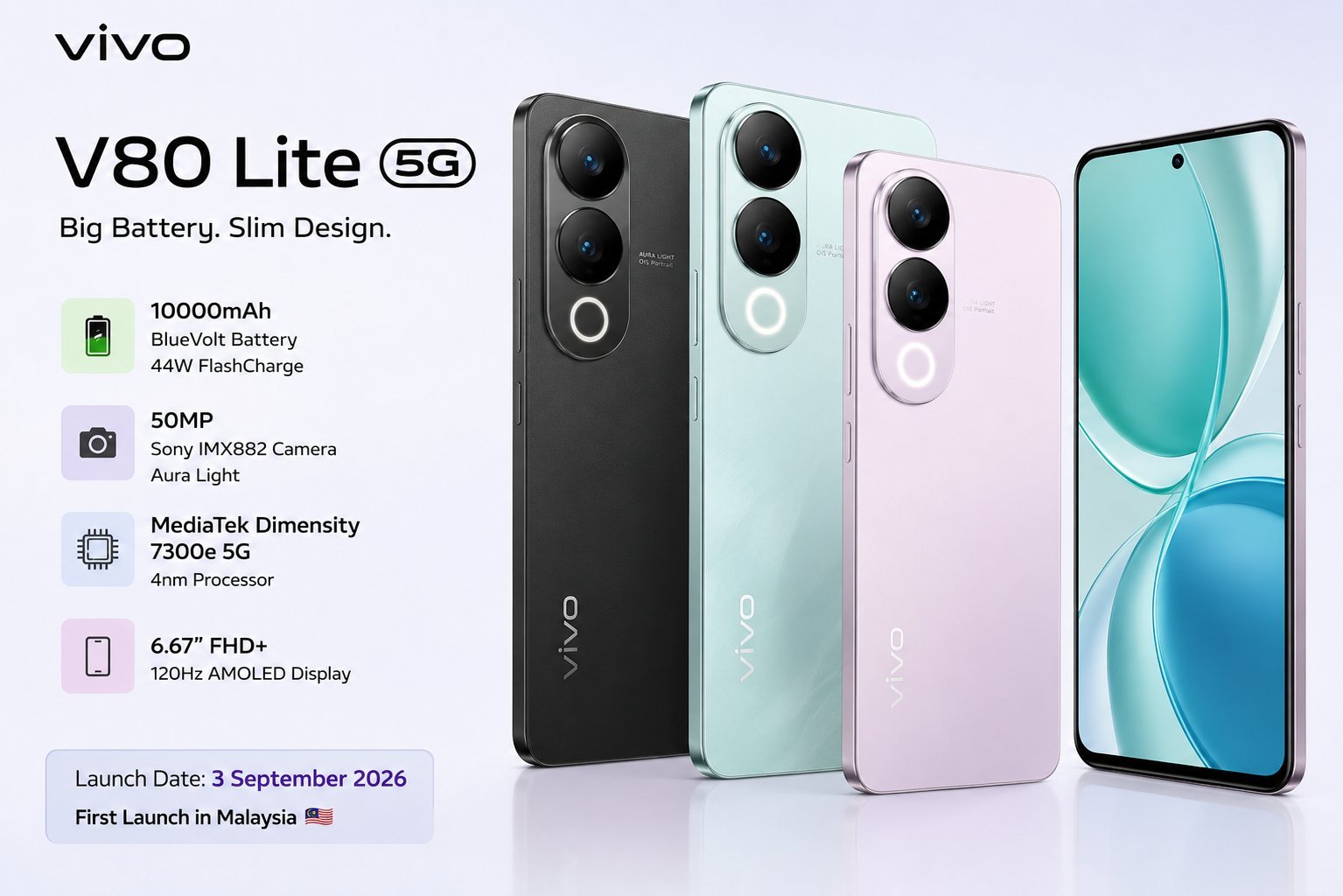
How Vivo squeezed 7,050mAh into a slim body
Engineering trade-offs and materials
Achieving this capacity without turning the phone into a brick required revolutionary breakthroughs. Manufacturers rely on high battery density, stacked cell architectures, and custom PCB miniaturization to maximize every cubic millimeter.
- High-density cells: Packing more energy into a smaller volume.
- Component layout: Reshaping internal logic boards to carve out space.
- Thermal design: Dissipating heat efficiently without bulky cooling blocks.
Charging and power-management
A massive power cell is only as good as its refueling speed and longevity safeguards. Advanced software works alongside modern chipsets to optimize power draw dynamically.
IP69 and durability — why it matters beyond drops
Traditional flagship phones focus on glass fragility, but field workers and active users need true environmental armor. An IP69 rating takes water and dust protection far beyond standard submersion tests.
- Dust resistance: Complete sealing against fine particles.
- High-pressure washdowns: Tested against high-temperature, high-pressure liquid jets.
- Sanitization resistance: Designed to withstand heavy chemical cleaning without failing.
Market impact — are thin phones doomed?
The traditional obsession with paper-thin designs has forced heavy compromises on consumer longevity. When users experience multi-day endurance, thinness suddenly feels like an empty vanity metric.
- Adopt larger batteries: Competitors will scramble to integrate similar high-capacity cells.
- Optimize SoC efficiency: Processors must do more with less juice to match the new benchmark.
- Pivot marketing strategies: Brands will shift from talking about thickness to emphasizing all-day reliability.
| Device Tier | Average Thickness | Typical Battery Size | Durability Baseline |
|---|---|---|---|
| Old Mid-Range | 7.5mm – 8.0mm | 4,500mAh – 5,000mAh | IP64 / IP67 |
| The New Standard | Under 9.0mm | 7,050mAh | IP69 |
Would you give up 0.5mm of thinness for two extra days of charge? For most consumers, the math is simple.
Who wins and who loses — consumer segments and OEM strategies
Different user groups benefit immensely from this design philosophy. Commuters no longer need power banks, while field workers gain rugged reliability without carrying a bulky industrial brick.
Gamers and media creators also find massive value in uninterrupted performance. Legacy brands that refuse to adapt risk losing these practical, endurance-focused buyers entirely.
Benchmarks, tests, and what reviewers should measure
True authority comes from verifiable testing methodologies rather than marketing claims. Independent testers evaluating high-capacity devices must look beyond simple spec sheets.
- Mixed-use day tests: Simulating navigation, social media, and camera usage continuously.
- Looped video playback: Measuring baseline efficiency under continuous media load.
- Thermal throttling: Ensuring sustained performance doesn’t drain the cell abnormally.
- Long-term health: Tracking degradation curves over a full calendar year of charge cycles.
Buying guide — practical tips for consumers
Shopping for an endurance-focused smartphone requires looking closely at real-world ecosystem factors. Use this checklist before making your next upgrade purchase:
- Verify independent lab reviews for actual screen-on time.
- Check the bundled charging brick wattage and fast-charging compatibility.
- Confirm warranty coverage terms regarding battery health degradation.
- Evaluate whether the added structural integrity matches your daily environment.
What’s your daily battery drain like? Take a look at your screen time stats today and consider how a multi-day cell would change your workflow.
Final take — does this end the two-day charge myth?
The arrival of massive, high-density cells paired with rugged builds proves that consumers no longer need to compromise. Style and substance can finally coexist in a single, reliable package.
Tried a heavy-battery phone? Tell us your real-world runtimes in the comments below.
📱 vivo V80 Lite 5G
— Ahmed Mobile Shop TMP (@AN09091581) August 24, 2026
✨ Easy Grip Curved Display
⚡ Dimensity 7360 Turbo
📸 32MP Group Selfie Camera
🔋 7050mAh All Day Battery
💾 8GB + 128GB | 8GB + 256GB#VivoV80Lite5G #VivoPakistan #AhmedMobileShop #Smartphone #TarandaMuhammadPanah pic.twitter.com/fPf2t5Vxh8
Frequently Asked Questions
Is a bigger battery always better?
Not always. While sheer capacity helps, overall endurance relies heavily on software optimization, chipset power efficiency, and thermal management.
How reliable is IP69 in consumer phones?
IP69 provides exceptional protection against high-pressure, high-temperature water jets and dust, making it far more rugged than standard consumer ratings.
Will this make phones significantly heavier?
Thanks to advanced cell chemistry and modern chassis engineering, weight increases are minimal and easily offset by the convenience of multi-day endurance.
Also Read: Three-Day Battery Life Is Finally Here: How Vivo Fit a 10,000mAh Battery Into a Slim Phone
Sources
- Vivo Official Product Portal: Vivo Official Website
- GSMArena Device Specifications and Testing: GSMArena
- Counterpoint Research Market Intelligence: Counterpoint Research
- IEC Standards Overview on Ingress Protection: IEC Standard 60529