
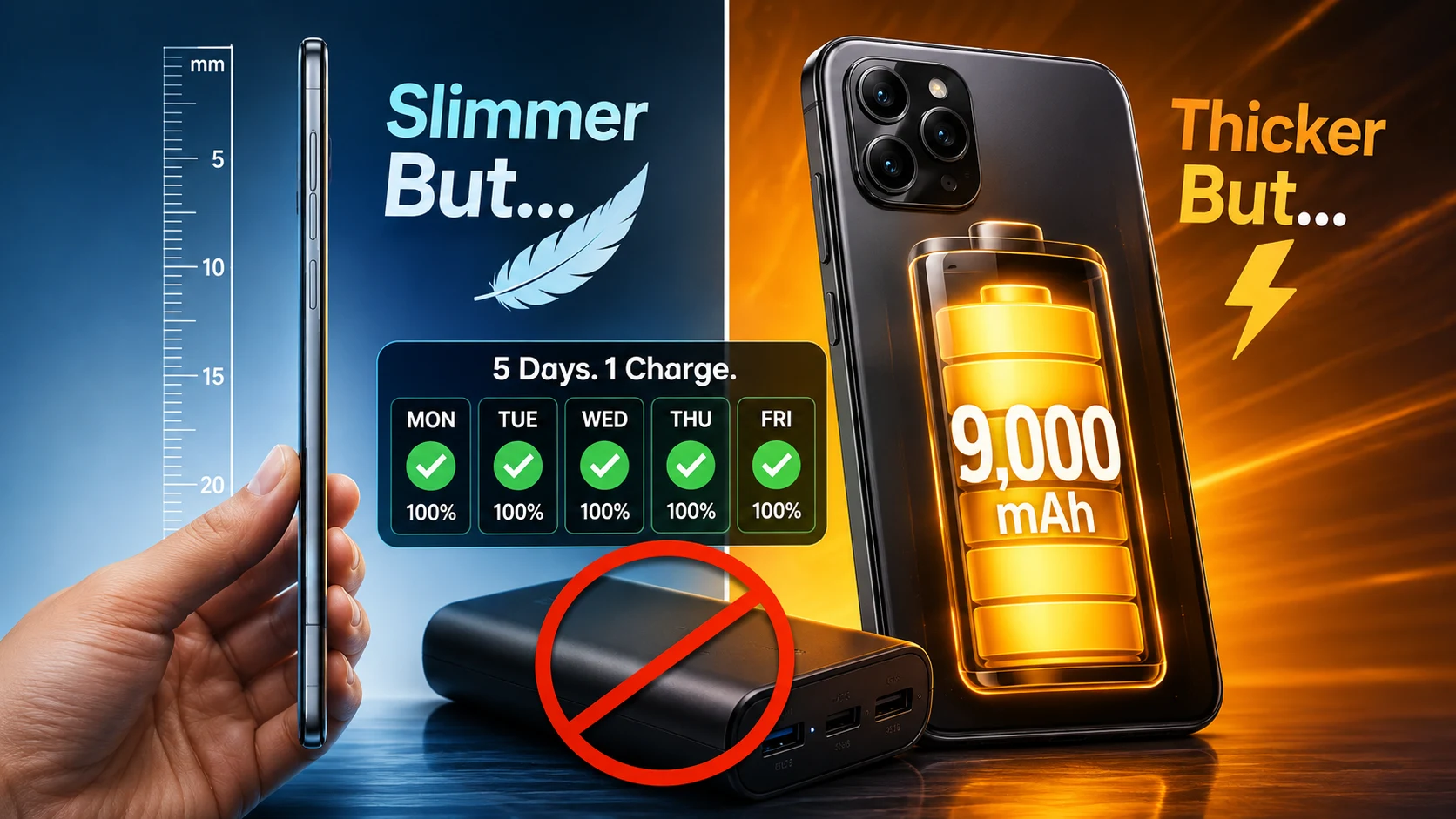
Mid-range smartphones are moving toward battery capacities once associated with tablets and powerbanks. But as manufacturers push toward 9,000mAh cells, users may face a difficult choice: accept a heavier phone or keep charging every night.
The Battery Shock
Powerbanks may be facing their biggest threat yet. Mid-range smartphones are increasingly approaching 9,000mAh, a capacity far beyond the roughly 4,000–5,000mAh batteries that dominated the category for years. Some manufacturers are also pairing larger cells with faster charging and more efficient processors.
But can one phone battery really last through a full working week—and what happens to the slim smartphone design users have spent years demanding? The answer exposes a major engineering trade-off that could reshape the next generation of affordable phones.
Why Batteries Are Suddenly Getting Bigger
The move toward larger batteries is not happening in isolation. Smartphone makers now have access to higher-density battery technologies, while mid-range phones increasingly include brighter displays, faster processors, 5G connectivity, and camera systems that consume more energy.
A larger battery can compensate for those demands without forcing users to carry a separate powerbank. It also gives brands a simple marketing message: more capacity, fewer charging worries.
The forces behind the shift
- Higher battery density: More energy can potentially fit into a similar physical space, depending on the technology and design.
- Longer screen time: Streaming, gaming, navigation, and social media place sustained demands on the battery.
- 5G connectivity: Constantly switching between network conditions can increase power consumption.
- Mid-range competition: Battery capacity is an easy specification for brands to promote.
- Powerbank fatigue: Users increasingly want phones that survive travel, workdays, and weekends without accessories.
The Engineering Trade-Off
A 9,000mAh battery does not simply mean “twice the battery life.” Runtime depends on the display, processor, modem, software optimization, signal strength, camera use, gaming, and background activity.
The battery itself also has to fit inside the phone alongside cooling hardware, cameras, speakers, wireless components, and structural protection. That creates a three-way design challenge:
| Priority | Benefit | Likely compromise |
|---|---|---|
| Larger battery | Longer endurance | More weight or thickness |
| Slim chassis | Better portability | Less internal battery space |
| Powerful hardware | Better performance | Higher energy consumption |
| Fast charging | Shorter charging breaks | Heat, component stress, and cost |
| Durable construction | Greater protection | Additional mass |
The most important question is not whether a phone has 9,000mAh, but how efficiently it converts that capacity into useful screen time.
Are Slim Phones Finally Losing?
For years, thinness was treated as a premium design advantage. Manufacturers competed to shave millimetres from their devices, even when that meant smaller batteries or prominent camera bumps.
The emerging battery trend challenges that assumption. A slightly thicker phone may offer fewer charging interruptions, better sustained performance, and more flexibility for users who work outdoors, travel frequently, or spend long periods away from outlets.
What users may gain
- Longer endurance during travel and commuting.
- Less dependence on powerbanks and wall chargers.
- More confidence when using 5G, GPS, cameras, and mobile hotspots.
- Better battery longevity if users charge less frequently.
- A stronger option for gaming and outdoor work.
What users may sacrifice
- A heavier device in pockets and bags.
- Greater hand fatigue during extended use.
- A thicker profile and potentially larger camera module.
- More difficult one-handed use.
- Less resemblance to ultra-thin flagship phones.
Can It Really Last a Week?
The phrase “full working week” needs careful definition. A phone used lightly for calls, messages, reading, and occasional browsing may last several days. A user who streams video, records 4K footage, plays demanding games, or uses navigation continuously will drain the same battery far faster.
A credible article should distinguish between:
| Usage pattern | Likely result to investigate |
|---|---|
| Light use | Standby and basic use over multiple days |
| Mixed use | Work apps, messaging, browsing, camera, and streaming |
| Heavy use | Gaming, hotspot, GPS, high brightness, and video |
| Continuous video | Laboratory-style playback endurance |
| 5G-heavy use | Battery impact under active cellular connectivity |
The Charging Question
Large batteries solve one problem while creating another: they take longer to fill unless charging speeds also increase. A phone with a huge battery may still be frustrating if it requires several hours to recharge.
Fast charging can reduce that inconvenience, but it introduces additional engineering requirements. Manufacturers must manage heat, charging curves, battery protection, charger compatibility, and long-term degradation.
Questions worth investigating
- Does the phone include a fast charger, or must buyers purchase one separately?
- How long does it take to charge from 0% to 50% and 100%?
- Does fast charging slow significantly near full capacity?
- How does sustained charging affect temperature?
- Does the manufacturer provide a battery-health or replacement policy?
The strongest phones in this category will not merely offer a large cell. They will combine high capacity, efficient hardware, sensible weight, and fast but controlled charging.
What This Means for Buyers
A large battery is especially valuable for people whose daily routine makes charging difficult. It may be less attractive to buyers who prioritize a light phone, compact design, or premium materials.
Best suited for
- Frequent travelers.
- Outdoor workers.
- Students with long days away from outlets.
- Mobile gamers.
- Users in areas with unreliable electricity.
- People who rely on hotspot, GPS, or video calls.
Less suited for
- Users who prefer compact phones.
- People who already charge at a desk or bedside.
- Buyers sensitive to hand and pocket weight.
- Those who prioritize camera quality or thin design above endurance.
- Users expecting a 9,000mAh phone to feel like a conventional slim handset.
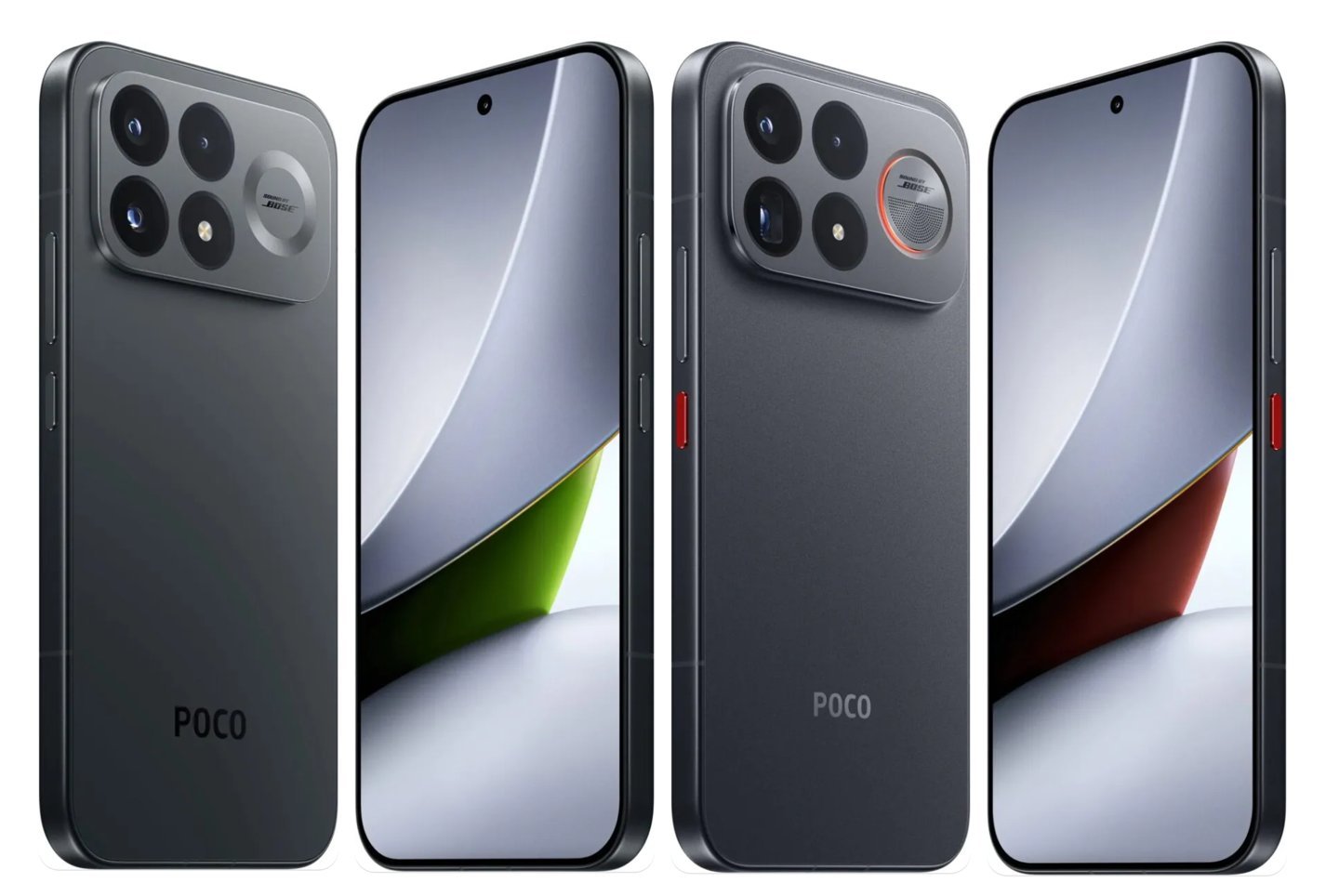
Your day doesn’t exactly believe in taking it easy.
— POCO India (@IndiaPOCO) August 22, 2026
From endless scrolling and gaming to clicking every random moment worth remembering, its 7900mAh battery is ready to keep going.
Check it out!
Sale Live from 27th August, only on Flipkart#POCOIndia #POCO #POCOM8x pic.twitter.com/RbnMFnnzdb
The Bigger Smartphone Shift
The rise of huge batteries could signal a broader change in what mid-range phones are expected to deliver. Instead of competing only on cameras, displays, and processor benchmarks, brands may compete on how long the device can disappear from the charger.
This could also influence accessories, cases, travel chargers, and even phone ergonomics. If consumers reward endurance over thinness, manufacturers may stop treating extra thickness as a failure and begin presenting it as a practical advantage.
But the market will decide whether battery capacity is a genuine breakthrough or merely a specification race. Would buyers rather have a 9,000mAh phone that weighs more, or a slimmer phone that charges every evening?