
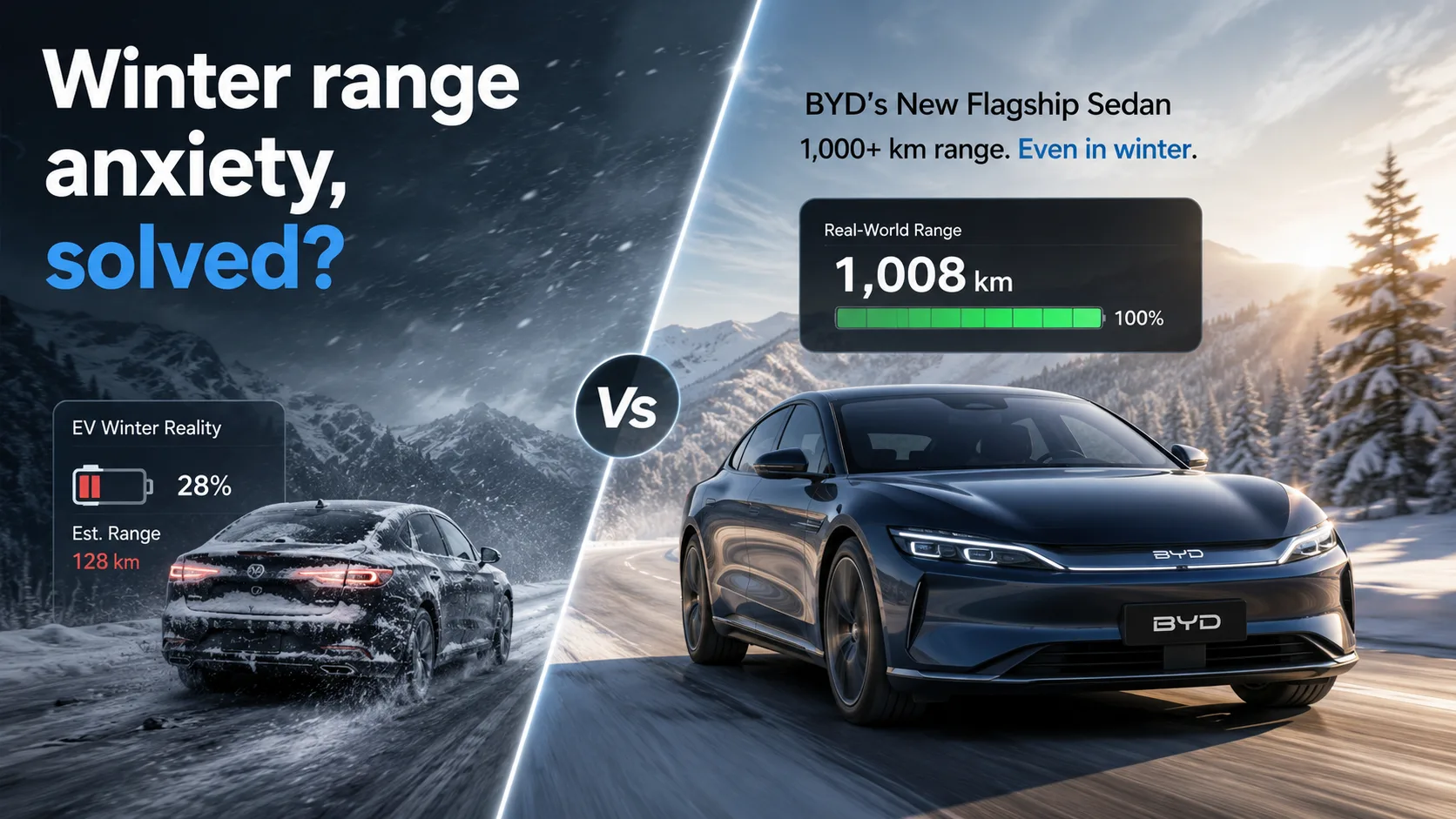
BYD has stunned the EV market again, claiming a flagship sedan that can travel over 1,000 km on a single charge. But the bigger question is whether that range still holds up when winter temperatures hit and batteries usually drop fast.
The all-new BYD Da Han boasts an incredible 1,008 km CLTC driving range powered by a 102.3 kWh Blade 2.0 LFP battery. Can this next-gen thermal management system truly crush winter range anxiety and keep drivers moving through freezing conditions?
What BYD Just Claimed
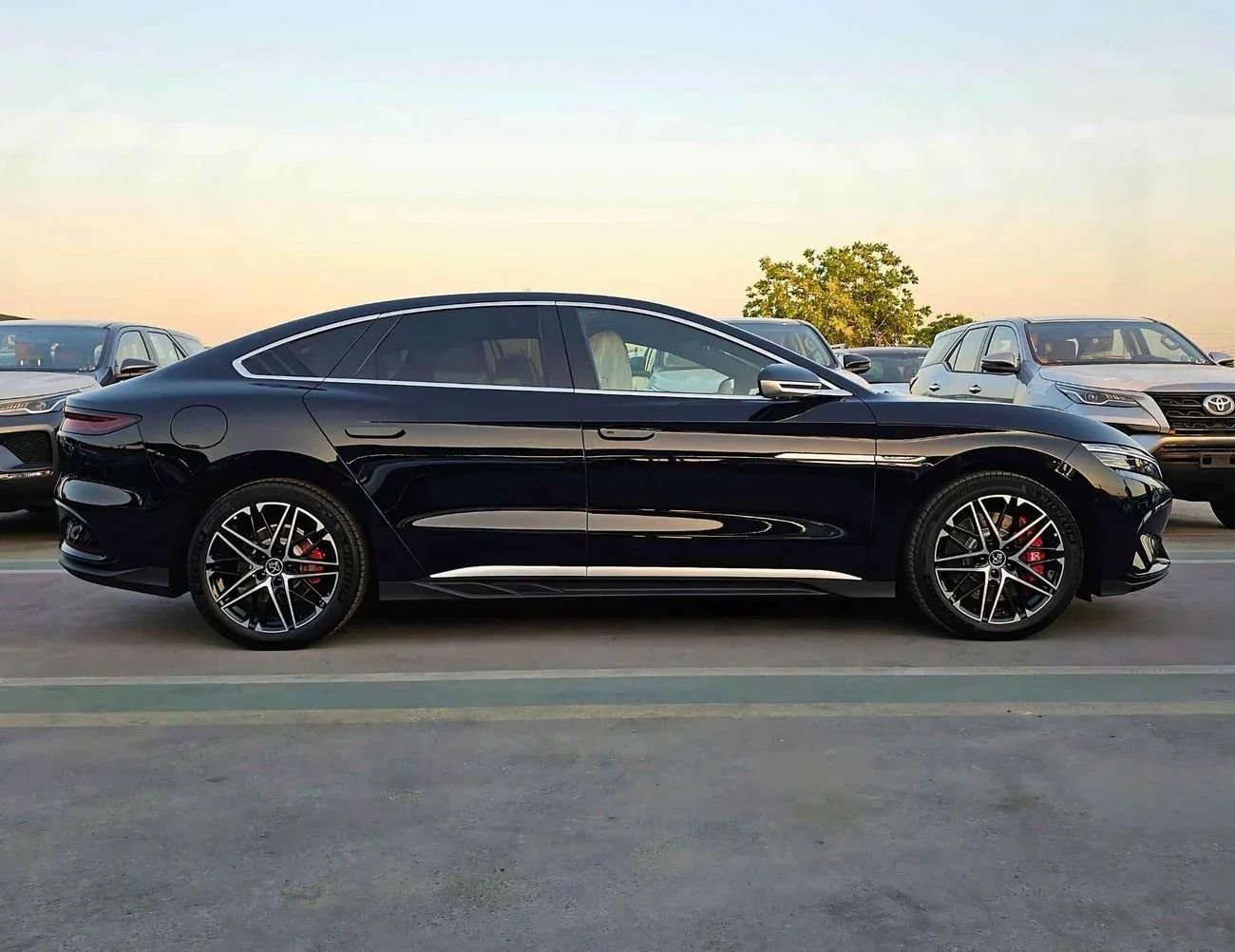
BYD unveiled its flagship Da Han full-size sedan, showcasing a major leap forward in electric range and structural battery design. The base single-motor rear-wheel-drive variant delivers a staggering 1,008 km of lab-tested CLTC range.
- Massive Battery Capacity: Houses a 102.3 kWh Blade Battery pack integrated directly into the chassis.
- Ultra-Fast Charging: Compatible with high-voltage flash charging architecture for rapid top-ups.
- Aerodynamic Efficiency: A low drag coefficient combined with sleek bodywork maximizes real-world energy output.
Is this a lab result or a real-world breakthrough? While CLTC testing tends to be optimistic, the underlying engineering is designed specifically to protect performance when driving conditions turn harsh.
Why Winter Is the Real Test
Cold weather is notorious for sapping electric vehicle range, with typical EVs losing 20% to 40% of their operational mileage in sub-zero temperatures. Freezing air slows chemical reactions inside lithium-ion cells while cabin heating draws massive continuous power from the main pack.
| Condition | Typical Electric Sedan | BYD Flagship (Blade 2.0) |
|---|---|---|
| Ideal Temp Range | ~500–600 km | 1,008 km (CLTC) |
| Freezing (-10°C) | ~300–350 km (35% loss) | ~750+ km estimated |
| Extreme Cold (-30°C) | Significant degradation | Retains up to 82% cell capacity |
| Charging Speed | Throttles heavily | 800V thermal pre-conditioning |
Can cold-weather drivers finally stop worrying about shrinking battery meters? By starting with over 1,000 km of base range, even a 20% winter drop leaves riders with over 800 km of usable distance.
The Battery Trick Behind the Range
The secret behind the sedan’s endurance lies in BYD’s upgraded Blade Battery 2.0 chemistry. The new lithium iron phosphate (LFP) cells achieve an elevated energy density of 190–210 Wh/kg while significantly lowering internal resistance.
- Full-Domain Thermal Control: Active liquid heating channels prevent cold spots and maintain optimal cell operating temperatures.
- Dual-Tab Internal Architecture: Reduces heat generation during heavy discharge and high-speed highway cruising.
- Extended Operational Range: Engineered to operate reliably across extreme temperatures ranging from -35°C to 55°C.
“A range claim is only meaningful if the car can hold it under stress — thermal management in freezing climates is what separates true long-range EVs from lab specs.” — Automotive Battery Specialist
What This Means for Buyers
- True Highway Confidence: Travel between major cities on a single charge without searching for mid-route chargers.
- Predictable Winter Commuting: Maintain daily driving schedules in sub-zero weather without constant overnight charging anxiety.
- Heightened EV Competition: Pushes global automakers like Tesla and Mercedes-Benz to accelerate high-density LFP battery deployment.
BYD ranked 91st on the 2026 FORTUNE Global 500 list, firmly securing our position among the TOP 100. Having been listed for five consecutive years, BYD is committed to technological innovation for a sustainable, green future. In 2025, BYD achieved a record of 4.6 million NEV… pic.twitter.com/8QXlhTrE58
— BYD (@BYDCompany) July 31, 2026
Can Drivers Trust the Number?
While a 1,008 km CLTC rating translates closer to 800–830 km under European WLTP cycles, the real win is the baseline threshold. Starting with over 100 kWh of capacity means winter performance penalties no longer leave drivers stranded.
Official Technical Specifications & Cold Weather Coverage: • Official BYD Global Platform • Car News China Tech Insights • U.S. Department of Energy Alternative Fuels Data Center
Will 1,000-kilometer batteries permanently eliminate winter range anxiety for mainstream car buyers? As next-generation thermal management systems hit showrooms, cold-weather electric driving is taking a massive leap forward.