
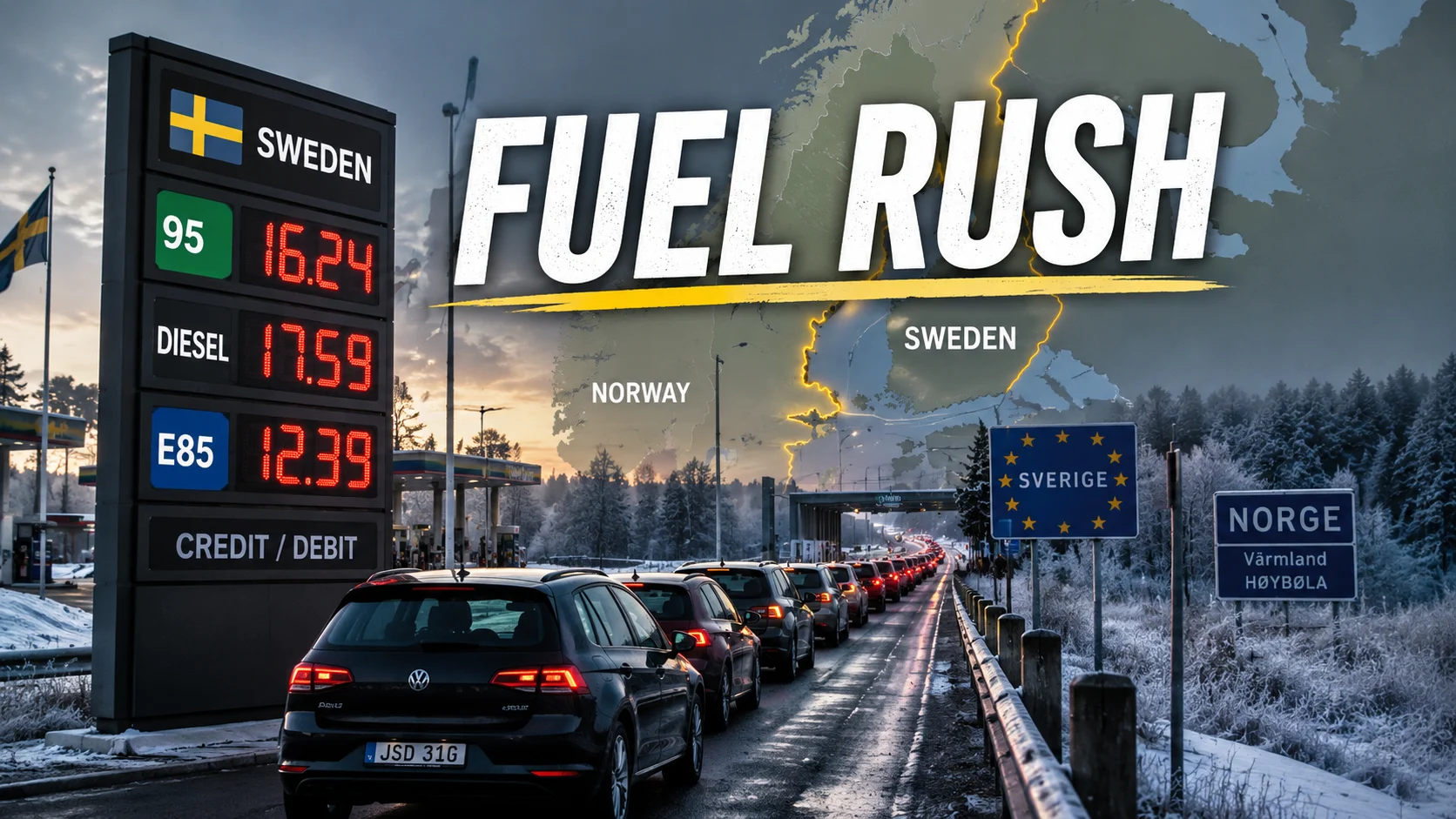
Drivers are flooding across Sweden’s borders as a widening tax gap triggers an unprecedented cross-border fuel boom. With recent national carbon tax cuts pushing Swedish petrol down by SEK 3 per liter to roughly 13 SEK/L (€1.12–1.41/L), pump prices have dropped to their lowest relative level in decades.
How did Sweden suddenly become Europe’s second-cheapest country for gasoline while neighboring Norway sits at nearly €1.99/L and Denmark hits €2.35/L? As long queues strain local gas stations and reshape traffic patterns along border highways, drivers are rushing to lock in massive savings before policy windows shift.
What Changed in Sweden
Sweden’s government introduced a SEK 7.7 billion support package that temporarily slashes carbon dioxide taxes on fossil fuels alongside an earlier EU-minimum energy tax reduction. Over the past five years, cumulative policy changes lowered Sweden’s petrol tax burden from SEK 8.58 down to SEK 1.96 per liter.
- Tax Relief Package: Slashes petrol and diesel prices by an effective 3 kronor per liter at the pump including VAT.
- European Leader: Moves Sweden from a high-tax regime to the second cheapest gasoline market among 35 European nations.
- Biofuel Mandate Adjustments: Eased blend obligations further reduce wholesale fuel costs for Swedish suppliers.
Why are drivers crossing borders just to fill their tanks? A single 50-liter fill-up across the Swedish border can save Norwegian and Danish drivers €25 to €45 per trip, making short detours instantly profitable.
Why Border Drivers Noticed
The price difference creates a stark economic divide across Scandinavian border crossings.
| Country | Approx Petrol Price (€/L) | Primary Price Driver |
|---|---|---|
| Sweden | €1.12 – €1.41 | Temporary tax cuts & lowered mandates |
| Norway | €1.99 | High carbon tax baseline |
| Denmark | €2.35 | Unaltered fuel tax structure |
That changes the buying math dramatically for regional logistics fleets and daily commuters.
“You have our neighbours in the Nordic countries who are coming over, of course. That has an impact on daily volume,” noted David Sällh, Head of Preparedness at industry organization Drivkraft Sverige.
What Border Towns Are Seeing
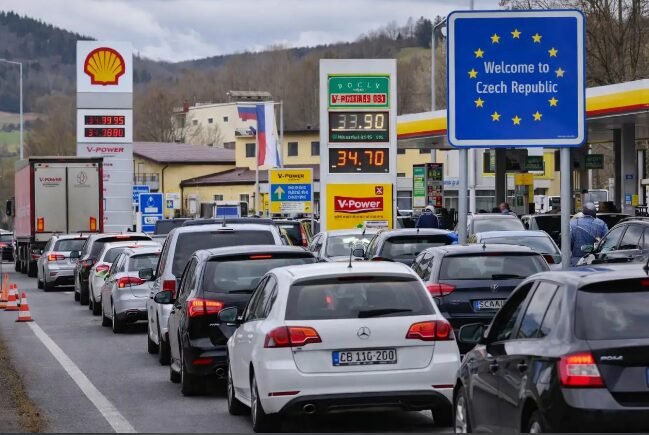
Border municipalities like Strömstad and Ed along the E6 highway in western Sweden are reporting unprecedented demand spikes at retail pumps.
- Station Congestion: Local stations are managing localized, short-term fuel shortages as tanker deliveries work around the clock to restock pumps.
- Cross-Retail Boom: Drivers crossing for cheap petrol are simultaneously spending on grocery, tobacco, and dining retail in nearby Swedish shopping plazas.
- Hauler Shifts: Freight operators are re-routing regional transport vehicles to top up tanks inside Swedish borders whenever feasible.
Could this fuel boom spread to other Scandinavian border regions? As word spreads online, station operators further south near Danish ferry ports are bracing for similar influxes.
What This Means for Europe
Sweden’s bold tax experiment highlights the delicate balance between environmental goals and consumer cost-of-living relief. While cheap fuel eases household inflation, economic analysts warn that lowering fossil fuel taxes can slow consumer EV adoption and raise total carbon emissions.
Official Policy Statements & Economic Analyses: • Swedish Government Official Portal • M Sverige Fuel Price Tracker • Stockholm Institute of Transition Economics (SITE) • Drivkraft Sverige Industry Association
Is this a smart tax outcome or a policy accident? As neighboring governments evaluate their own tax structures, Sweden’s border boom proves that when fuel prices drop, drivers will travel far to follow the savings.