
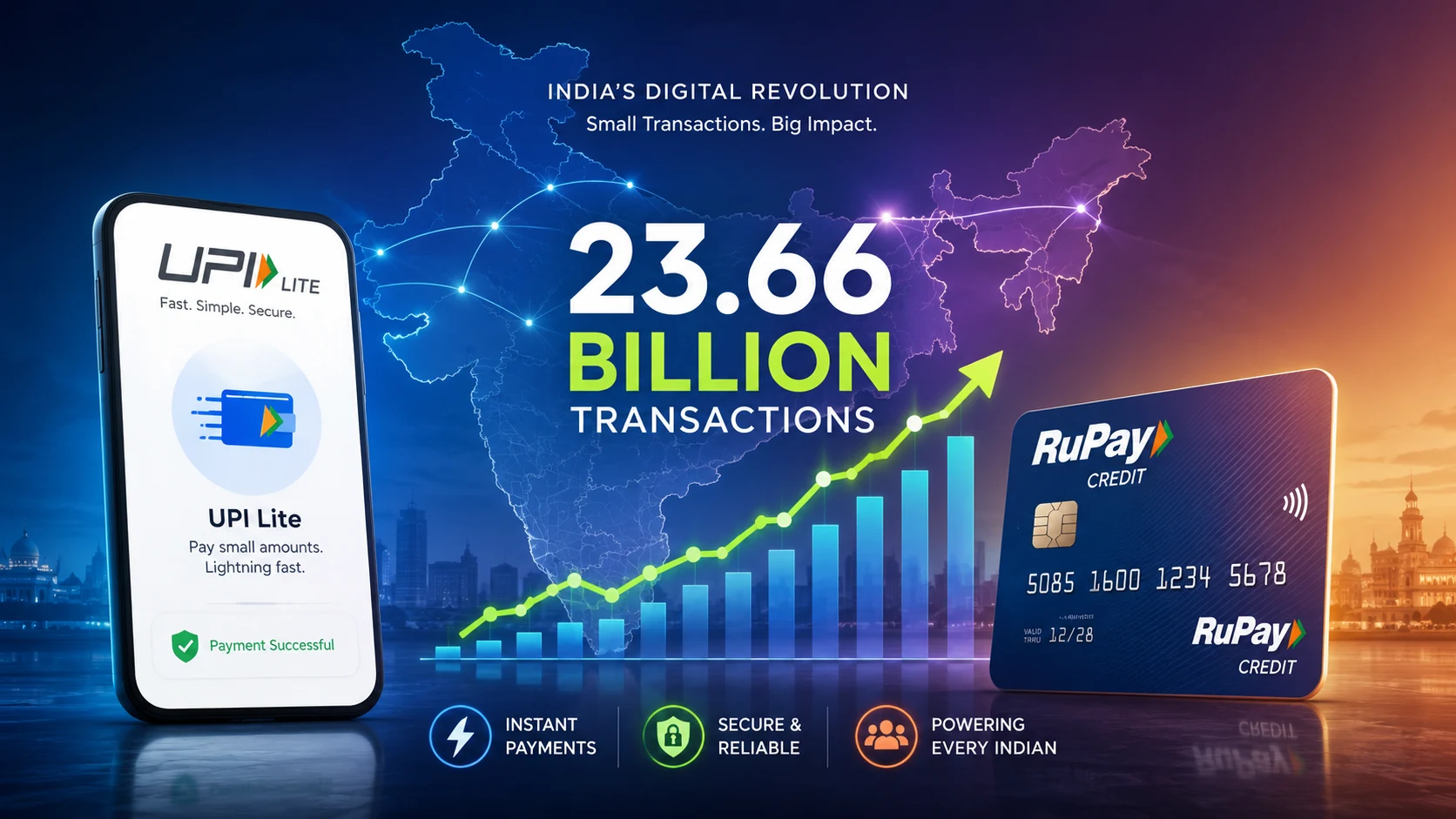
India’s digital payments machine is surging again, and the biggest shift is happening in the smallest transactions. The nation processed 23.66 billion UPI transactions in a single two-month window, powered by rapid merchant adoption.
With UPI Lite engineered to accelerate small-value payments and RuPay Credit designed to unlock credit access, how far can this growth go? Eliminating pin friction and server downtime now pressures traditional banking rails to adapt or fall behind.
What the Numbers Show
The scale of India’s payment ecosystem is reaching unprecedented heights. While overall volume continues to rise, the composition of these transactions reveals a massive drift toward daily micro-payments at neighborhood kirana stores, transit hubs, and roadside vendors.
- 23.66 Billion Transactions: Total volume recorded in recent bi-monthly NPCI performance reports.
- Under ₹500 Dominance: Over 50% of all retail UPI transactions belong to the low-value category.
- Server Load Reduction: Offloading micro-payments to local on-device wallets protects core banking servers from crashing.
Could pinless payments become the default for India’s smallest purchases? Removing bank server dependencies for small amounts keeps everyday commerce moving even during peak banking outage hours.

Why UPI Lite Matters
UPI Lite acts as an on-device wallet, allowing users to make payments up to ₹500 without entering a PIN. Because transactions occur directly from the wallet balance rather than calling the issuing bank’s core banking system (CBS), failure rates drop to near zero.
- Zero PIN Friction: Tap and pay instantly without entering a 4-digit or 6-digit security code.
- Instant Settlement: Payments process in milliseconds, cutting queues at high-footfall merchant counters.
- Higher Transaction Limits: Wallets can hold up to ₹2,000 at a time, replenished easily via auto-top-up.
Why RuPay Credit Matters
Connecting RuPay credit cards to UPI addresses a historic gap in short-term consumer credit. Instead of carrying physical plastic or searching for dedicated Point of Sale (PoS) card machines, buyers can now scan standard QR codes to spend on credit lines.
- Broader Credit Reach: Small merchants accept credit payments using their existing, low-cost UPI QR stickers.
- Interest-Free Cycles: Users enjoy standard 45-to-50-day credit windows on routine UPI spends.
- Rewards Integration: Cardholders earn reward points on micro-spends previously settled only in physical cash.
Will credit on UPI change how younger users spend day to day? Combining revolving credit with the convenience of QR scanning fundamentally changes personal cash flow management.
What Changes for Users and Merchants
| Impact Area | What Changes | Why It Matters |
|---|---|---|
| Consumer Speed | Instant checkout without entering PINs | Saves time at tea stalls and metro gates |
| Transaction Success | Near-zero failure rate on low-value payments | Eliminates money stuck in bank processing |
| Merchant Adoption | Accepts credit spending via standard QR stickers | No expensive PoS terminal hardware required |
| Credit Access | Links RuPay cards directly to UPI handles | Expands digital credit options across India |
🚨 UPI processed a record 23.66 billion transactions worth ₹29.88 lakh crore in July 2026, the highest ever. 🤯 💥 pic.twitter.com/wcryW2cE9E
— Indian Tech & Infra (@IndianTechGuide) August 1, 2026
The Bigger Implication
Integrating UPI Lite and RuPay credit transforms India’s payment infrastructure from a simple fund transfer tool into a multi-layered financial network. Convenience and reliability are now driving customer retention more than promotional cashback offers.
“The real breakthrough is not just scale, but reducing friction in the lowest-value transactions while giving consumers instant access to credit.” — Digital Payments & Banking Analyst
Official Sources
Key Links & Resources: • NPCI Official Product Performance Portal • RBI Digital Payments Guidelines & Bulletins • BHIM UPI Official Platform Information Desk
Is this the point where UPI becomes completely invisible and indispensable? As small payments become faster and credit integration expands, India’s digital payment ecosystem is setting a global benchmark for friction-free digital commerce.