
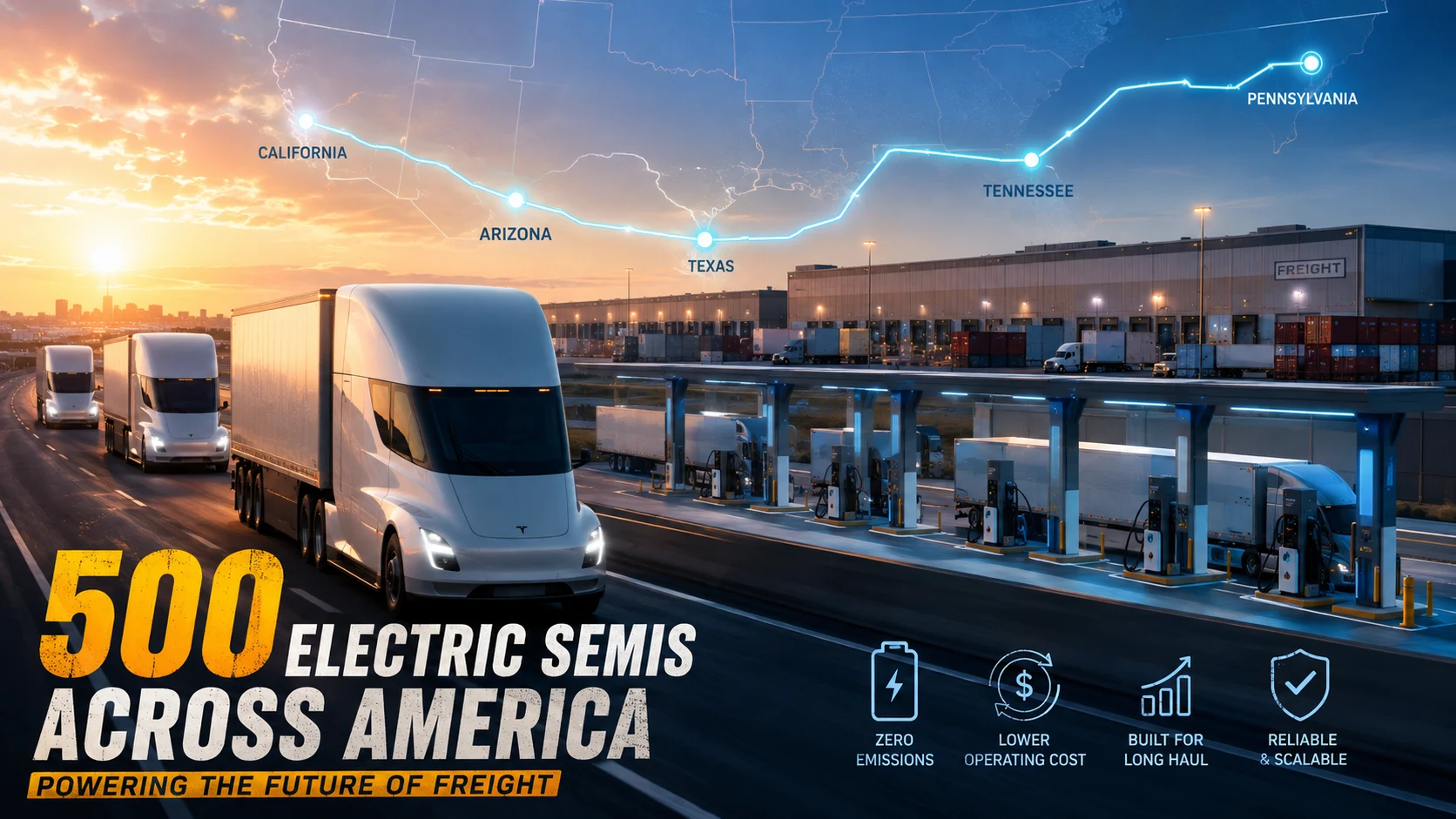
500 electric semis in America are about to test long-haul logistics, charging networks, and fleet costs as Einride deploys Tesla Semi trucks across key freight corridors.
A 500-truck electric freight experiment has just jolted America’s trucking industry. Einride plans to place 500 Tesla Semis into North American operations beginning in September 2026, tripling its deployed electric fleet. But can battery-powered Class 8 trucks handle the tight schedules, heavy loads, and unpredictable routes that keep America’s supply chain moving?
The rollout will unfold across five states, serve customers including Amazon, and continue in phases over 24 months. That creates an urgent question for carriers, shippers, and logistics managers: Is electric trucking finally moving beyond pilots and into everyday freight operations?
What Einride and Tesla Announced
The landmark agreement marks the largest public commitment to the Tesla Semi to date. Rather than a standard vehicle purchase, the initiative integrates heavy-duty hardware into a software-driven freight network.
| Detail | What it means |
|---|---|
| Fleet size | 500 Tesla Semi trucks |
| Deployment | Phased over 24 months |
| Start date | September 2026 |
| Operating regions | California, Texas, New Jersey, Illinois, and Georgia |
| Customers | Amazon and other Einride customers |
| Fleet platform | Einride’s Saga AI |
| Financing | Third-party financing solutions |
| Strategic goal | Convert contracted freight demand into active electric capacity |
Einride will manage the vehicles through Saga, its fleet intelligence platform, while third-party arrangements fund the expansion.
Why This Rollout Matters to Commercial Trucking
The biggest significance is operational scale. A small pilot can avoid difficult routes, select favorable weather, and give managers extra flexibility; a 500-truck deployment must fit into real customer schedules and commercial contracts.
The deal also signals a shift from selling electric trucks as technology demonstrations to treating them as freight-producing assets. Einride notes the deployment is intended to convert approximately $800 million in potential long-term annual recurring revenue into active freight capacity.
From Pilot Projects to Freight Capacity
- More trucks operating on regular routes.
- Greater pressure to meet strict delivery windows.
- Better empirical data on energy use and maintenance.
- Hard evidence for future fleet-replacement decisions.
- Increased visibility for enterprise customers and investors.
How Electric Semis Could Change Long-Haul Logistics
Electric trucks change logistics planning because dispatchers must coordinate routes, payloads, battery state, charging availability, traffic, weather, and delivery windows simultaneously.
Diesel fleets typically treat refueling as a quick, unstructured stop. Electric fleets must treat charging as a scheduled part of the trip plan, especially when multiple heavy trucks arrive at a facility simultaneously.
Route Planning Becomes Energy Planning
Fleet operators are shifting toward:
- Shorter and repeatable regional paths.
- Return-to-base operations.
- Distribution-center links.
- Middle-mile freight networks.
- Routes featuring predictable elevation changes and mild weather.
Charging Could Influence Warehouse Design
Warehouses hosting these heavy-duty routes require:
- High-voltage electrical connections and transformer updates.
- Dedicated truck parking and high-capacity charging bays.
- On-site energy management systems.
- Smart charging schedules that avoid expensive grid peaks.
- Space for vehicle queuing and overnight turnaround.
The Charging Infrastructure Challenge
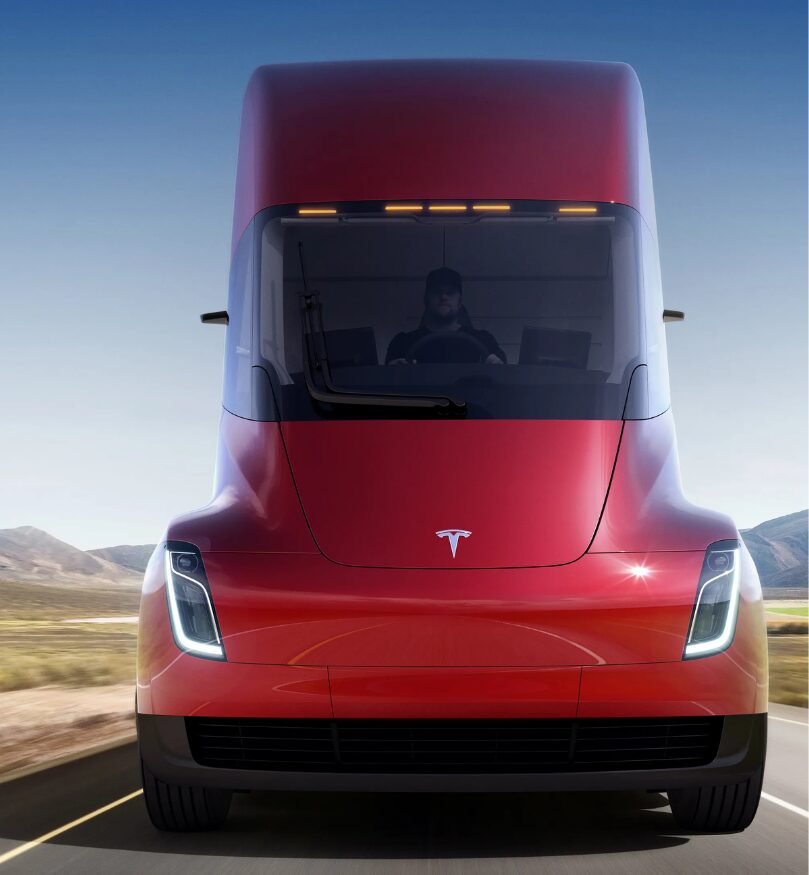
Charging remains the primary operational constraint on large-scale electric trucking. While Tesla continues expanding its dedicated megacharger network for heavy commercial users, a national footprint must guarantee heavy vehicle support, high electrical uptime, safe physical maneuvering, and predictable access during peak freight windows.
Depot Charging Versus Highway Charging
| Charging model | Best use | Main advantage | Main challenge |
|---|---|---|---|
| Depot charging | Predictable local and middle-mile routes | Vehicles can charge overnight | Requires major electrical upgrades |
| Highway charging | Longer regional and interstate corridors | Extends route flexibility | Sites can experience congestion and high demand fees |
| Destination charging | Warehouses and customer facilities | Charging happens during loading | Requires tight shipper coordination |
Fleet Operating Costs: Where Savings Materialize
Electric semis feature a radically different cost structure than diesel alternatives. While upfront capital requirements and charging site infrastructure are substantial, operators anticipate lower energy costs per mile, fewer moving parts, and reduced routine maintenance.
Tesla’s commercial team highlights potential benefits from fuel efficiency and uptime, though net savings depend heavily on local electricity rates, payload weight, financing terms, and charger utilization.
Cost Categories to Analyze
| Cost category | Electric semi impact |
|---|---|
| Energy | Potentially lower cost per mile when utility rates are managed well |
| Maintenance | Savings from fewer powertrain components (no oil changes, fewer brakes) |
| Purchase or lease | Higher initial capital requirement |
| Charging infrastructure | Significant site and grid-connection expenses |
| Downtime | Minimized through optimized scheduling and software routing |
| Payload | Battery weight and vehicle specs can influence payload limits |
Five States, Five Different Operating Conditions
The geographic scope of the 500-truck rollout is strategic, targeting five distinct freight environments:
- California: High-density freight, strict zero-emission mandates, and heavy port-to-warehouse traffic.
- Texas: Long-distance interstate corridors, extreme summer heat impacting thermal management, and expansive logistics networks.
- Illinois: Midwest distribution hubs centered around Chicago, mixing heavy intermodal freight with winter weather challenges.
- New Jersey: Dense East Coast corridors, urban congestion, and high-frequency regional delivery windows.
- Georgia: Vital Southeast logistics hubs anchored around Atlanta, balancing regional connectivity with variable seasonal temperatures.
What Could Go Wrong?
A realistic assessment of the transition must account for execution hurdles:
- Charging depots or utility grid upgrades may face construction delays.
- Extreme hot or cold weather conditions can degrade effective battery range.
- High payloads and steep grades accelerate energy consumption.
- Unplanned charger outages can disrupt tightly timed delivery schedules.
- Driver and technician training curves require time to mature.
How to Measure Success
Industry analysts will track operational metrics rather than marketing milestones to evaluate the success of the deployment:
- On-time delivery rate compared to diesel baselines.
- Miles per truck per day utilization metrics.
- Real-world energy cost per mile.
- Charger uptime and reliability percentages.
- Payload performance and cargo weight efficiency.
- Unplanned maintenance events per 10,000 miles.
Einride has announced that they are purchasing 500 @Tesla Semi trucks (worth ~$125 million), the world’s largest Tesla Semi deployment. They will be deployed on Einrides fleet intelligence platform, Saga AI, for Amazon and other customers across North America. The deployment is… pic.twitter.com/JuGP088GIY
— Sawyer Merritt (@SawyerMerritt) August 18, 2026
Frequently Asked Questions
Is an electric semi ready for every long-haul route?
Not yet. The most effective early routes are predictable, hub-to-hub regional paths supported by robust depot or corridor charging. Highly unpredictable cross-country routes remain challenging until public megacharger networks mature.
Do electric trucks completely eliminate the need for diesel backups?
During early phase-in periods, many fleets retain conventional equipment to manage extreme weather disruptions, unexpected grid outages, or transitional network gaps.
Will electric trucks immediately lower shipping prices?
Not automatically. While energy and maintenance expenses can drop, initial vehicle financing, infrastructure deployment, and demand-charge structures offset some operational savings.
How does software like Saga AI manage 500 trucks?
Platform intelligence coordinates charging windows around volatile utility pricing, maps driver break schedules, and routes vehicles dynamically to maximize fleet uptime.