
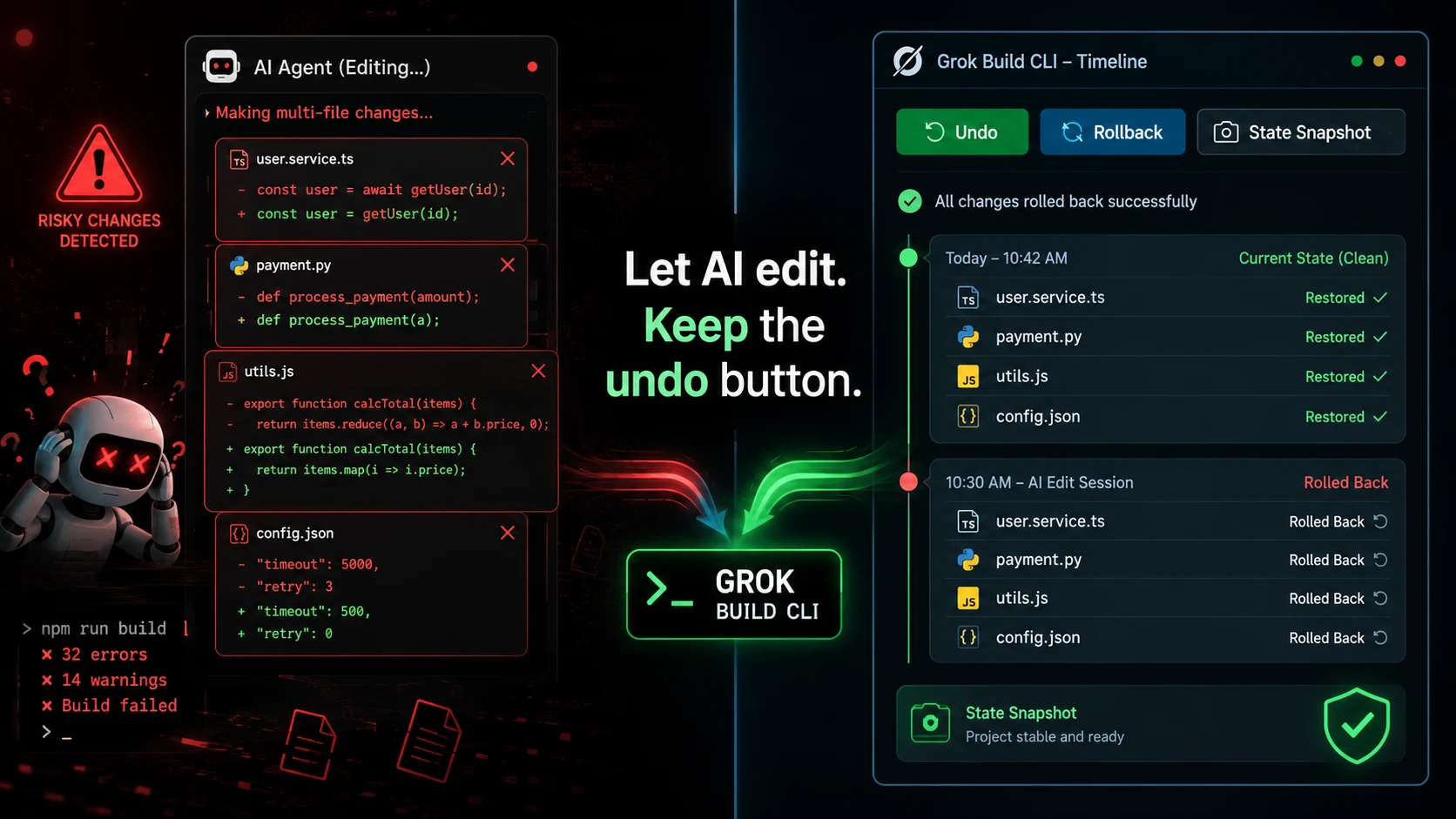
One wrong AI edit can wreck an entire codebase. That is the fear Grok Build CLI is trying to crush. As agentic coding tools edit 20+ files simultaneously across complex repositories, developers need more than execution speed—they need an instant escape hatch.
Can a native timeline, checkpoint rewind, and double-tap undo finally make autonomous terminal edits safe enough to trust? With developer trust hanging in the balance, why risk manual cleanup when you can hit rollback?
1. Why Terminal AI Feels Dangerous
When an AI agent runs directly in your command line, every prompt carries high stakes. One bad hallucination or incorrect assumption can delete crucial setup files or introduce silent bugs across multiple modules.
Instead of spending hours manually untangling bad git diffs, developers need structural protection baked directly into the agent harness.
| Risk | Traditional AI Coding | Grok Build CLI Approach |
|---|---|---|
| Multi-File Edits | Hard to track and inspect | Plan Mode & state timeline tracking |
| Hallucination Cleanup | Manual git checkout or stash |
Double-Esc rewind & checkpoint undo |
| Developer Trust | Low (requires constant micromanagement) | High (isolated subagents & sandbox safety) |
How do you let an agent move fast without giving up total control? The secret lies in treating execution safety as a core product requirement.
2. How Undo Changes Developer Trust
Grok Build CLI tackles developer anxiety by embedding checkpoint rewinds and isolated plan modes directly into the terminal TUI.
- Double-Esc Rewind: Hit escape twice while inspecting scrollback to instantly rewind the agent’s recent turn.
- Plan Mode Protection: Force the model to draft a structured
plan.mdbefore it touches a single file. - Isolated Subagents: Delegate complex tasks to subagents running in separate git worktrees to keep your primary branch clean.
Why are safety nets becoming more valuable than raw token speed? Because debugging an AI’s mistake takes twice as long as writing the code yourself.
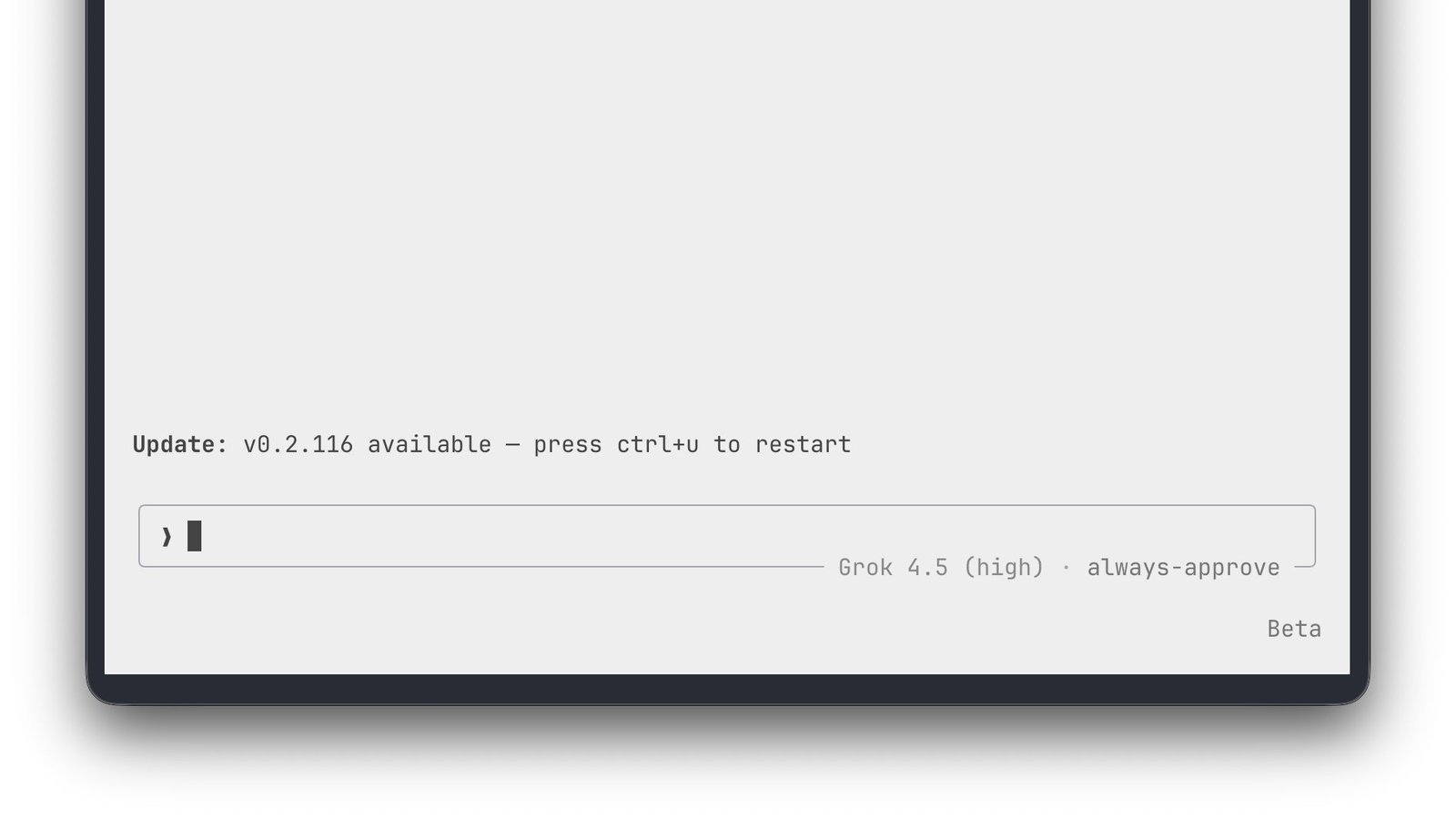
Grok Build CLI just got an update with v0.2.116! 🚀
— Grok News (@GrokInsider) July 30, 2026
Changelog v0.2.116
Features:
• Headless streaming output now includes tool calls, results, and usage when using `–output-format streaming-json`.
• New `/undo` slash command restores files and chat to an earlier turn, same… https://t.co/Tlt7B4KaYF pic.twitter.com/vt8TXwXyvQ
3. What This Means for Agentic Workflows
By removing the fear of destructive edits, development teams can shift from paranoid supervisors to strategic directors.
- Prompt the Agent: Describe high-level features or refactoring goals.
- Review the Plan: Inspect proposed edits before any disk writes occur.
- Execute or Rollback: Let subagents work, and use instant undo if the output strays.
- Ship with Confidence: Stage verified diffs directly from the terminal interface.
“The hardest problem in agentic software engineering is turning autonomous execution into reliable, reproducible results.” — AI Harness Engineering Review
If agents can edit entire projects, shouldn’t rollback be built in from the start?
Full technical documentation and setup guides are available on the xAI Grok CLI Overview, Grok Build TUI & Agent Documentation, and xAI Grok Build Repository.