
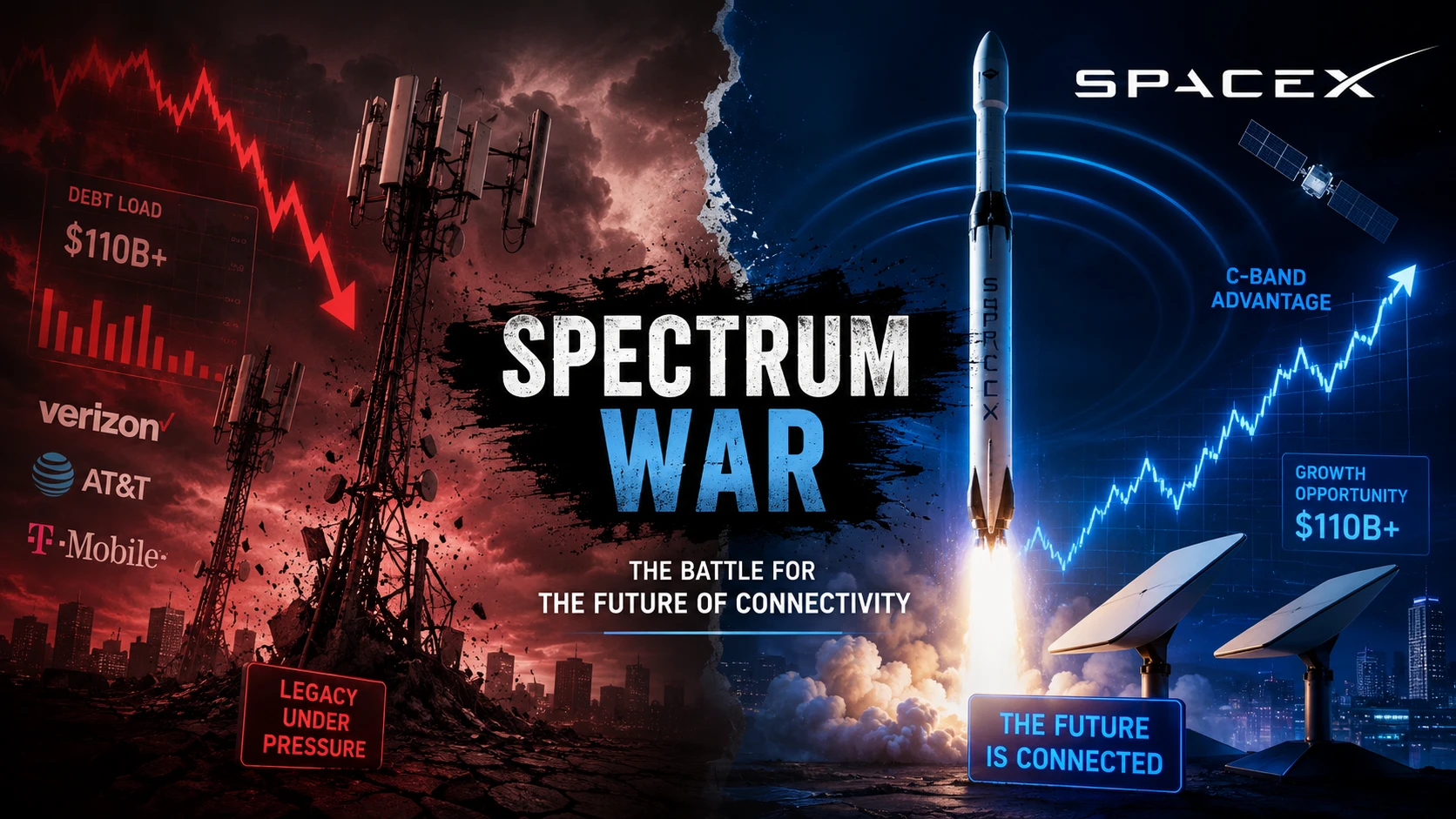
Wall Street is rattled by SpaceX’s latest C-band spectrum maneuver, and telecom investors have every reason to panic. Legacy carriers have spent more than $110 billion building spectrum defenses over the last decade, but can that valuation hold as a satellite competitor targets 160 MHz of upper C-band spectrum?
Why pay for a $60 billion infrastructure auction war that SpaceX might circumvent altogether? With debt-heavy balance sheets, slowing carrier growth, and a projected $740 billion mobile satellite market, stock sell-offs continue to intensify fast.
The $110 Billion Threat
For decades, mobile giants like AT&T, Verizon, and T-Mobile relied on exclusive spectrum licenses as an unbreakable moat. That dominance required burying cables and erecting expensive cell towers across every city.
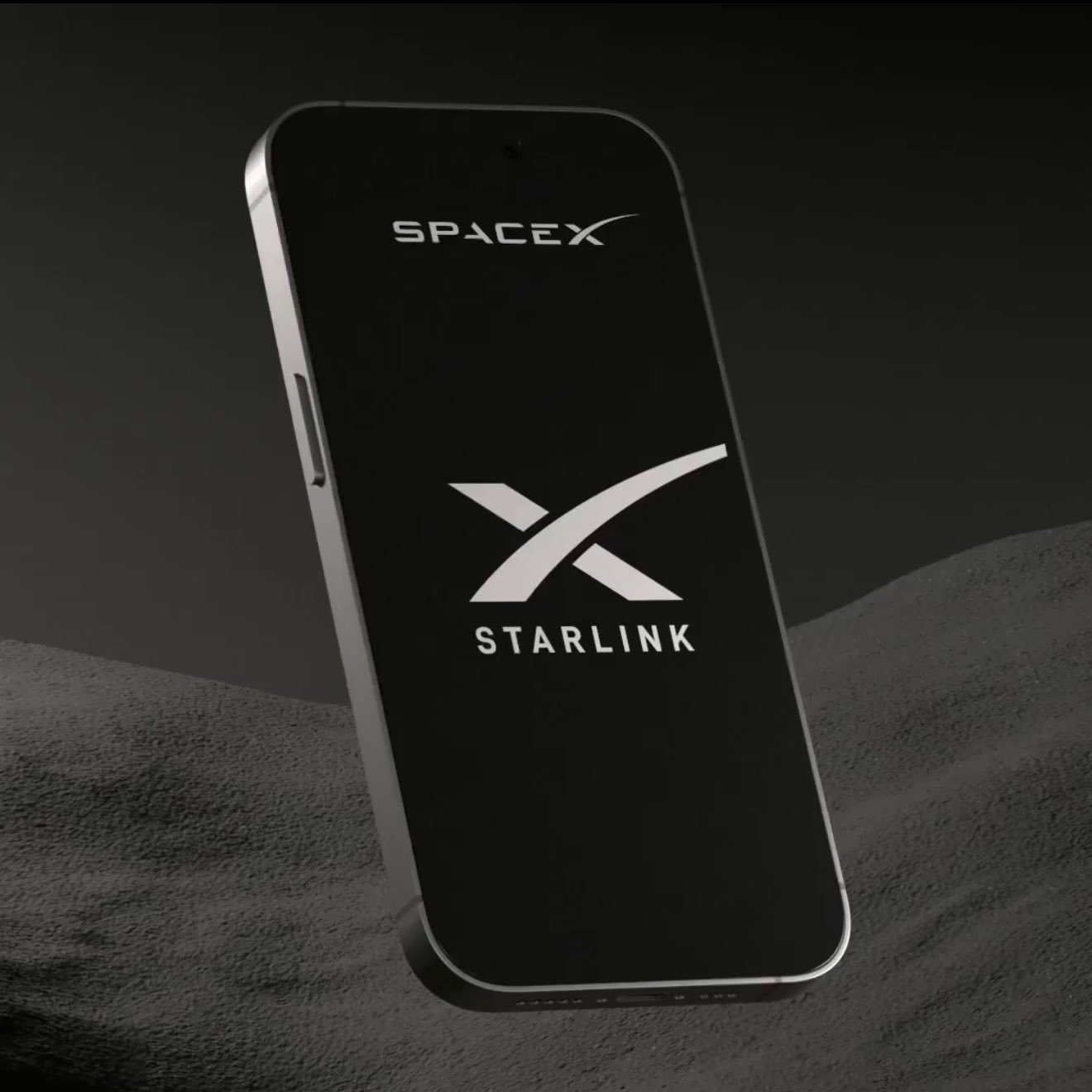
But here’s the twist… SpaceX is pushing the FCC to let orbital satellite networks satisfy buildout requirements for upper C-band licenses. If satellite connectivity replaces ground towers in hard-to-reach areas, the multi-billion-dollar valuation of terrestrial networks could crumble overnight.
Why This Matters
| Angle | What It Means |
|---|---|
| Spectrum Moat | Carriers spent over $110B in spectrum licenses to block competitors. |
| Infrastructure Burden | Traditional networks carry heavy capex costs for physical tower expansion. |
| SpaceX Strategy | Direct-to-cell satellites can bypass ground-level bottlenecks. |
| Market Impact | Analysts warn of a lingering stock overhang on major carrier equities. |
That raises a bigger question. If wireless spectrum stops being scarce, can legacy telecom operators justify their high subscription prices?
What Legacy Carriers Fear
Wall Street analysts at TD Cowen warn that a full Starlink mobile rollout creates severe downside risk for carrier stocks.
- Margin Compression: Subsidized or cheaper satellite coverage forces price cuts across wireless plans.
- Asset Devaluation: Billions spent on ground infrastructure lose value if orbital routes bypass towers.
- Debt Pressure: Legacy carriers carry massive debt loads that become harder to service without premium pricing.
- Regulatory Reset: FCC rules supporting supplemental coverage from space widen competitive access.
And that’s where the real risk begins.
🚨 SPACEX IS ENTERING THE PHASE THAT CREATED NVIDIA MILLIONAIRES SpaceX is down nearly 50% from its highs. Most people see a failed IPO. I see the exact setup that created one of the biggest opportunities in history. Back in 2022: Nvidia crashed more than 65%. Everyone… https://t.co/F1DwgmW385 pic.twitter.com/GzPAFcnagp
— Alex Mason 👁△ (@AlexMasonCrypto) July 29, 2026
The SpaceX Disruption Model
SpaceX isn’t just offering backup coverage in dead zones—it is building an alternative connectivity layer.
- Direct-to-Device Ambitions: Beam 5G connectivity directly to existing smartphone hardware without special accessories.
- Auction Bidding Power: Leverage massive private equity capital to compete directly in high-stakes FCC auctions.
- Infrastructure Efficiency: Eliminate land leases, tower maintenance, and local permitting delays.
- Subscriber Lock-in: Combine home Starlink broadband with mobile phone plans into an unshakeable ecosystem.
“If SpaceX can scale spectrum access without matching carrier capex, the market will start valuing telecom moats very differently.” — Telecom Equity Analyst
Is this a telecom story, or a Wall Street repricing story?
Official market filings and regulatory updates can be tracked on Fierce Network: SpaceX Upper C-Band Auction Analysis and Broadband Breakfast: FCC Upper C-Band Approvals.