
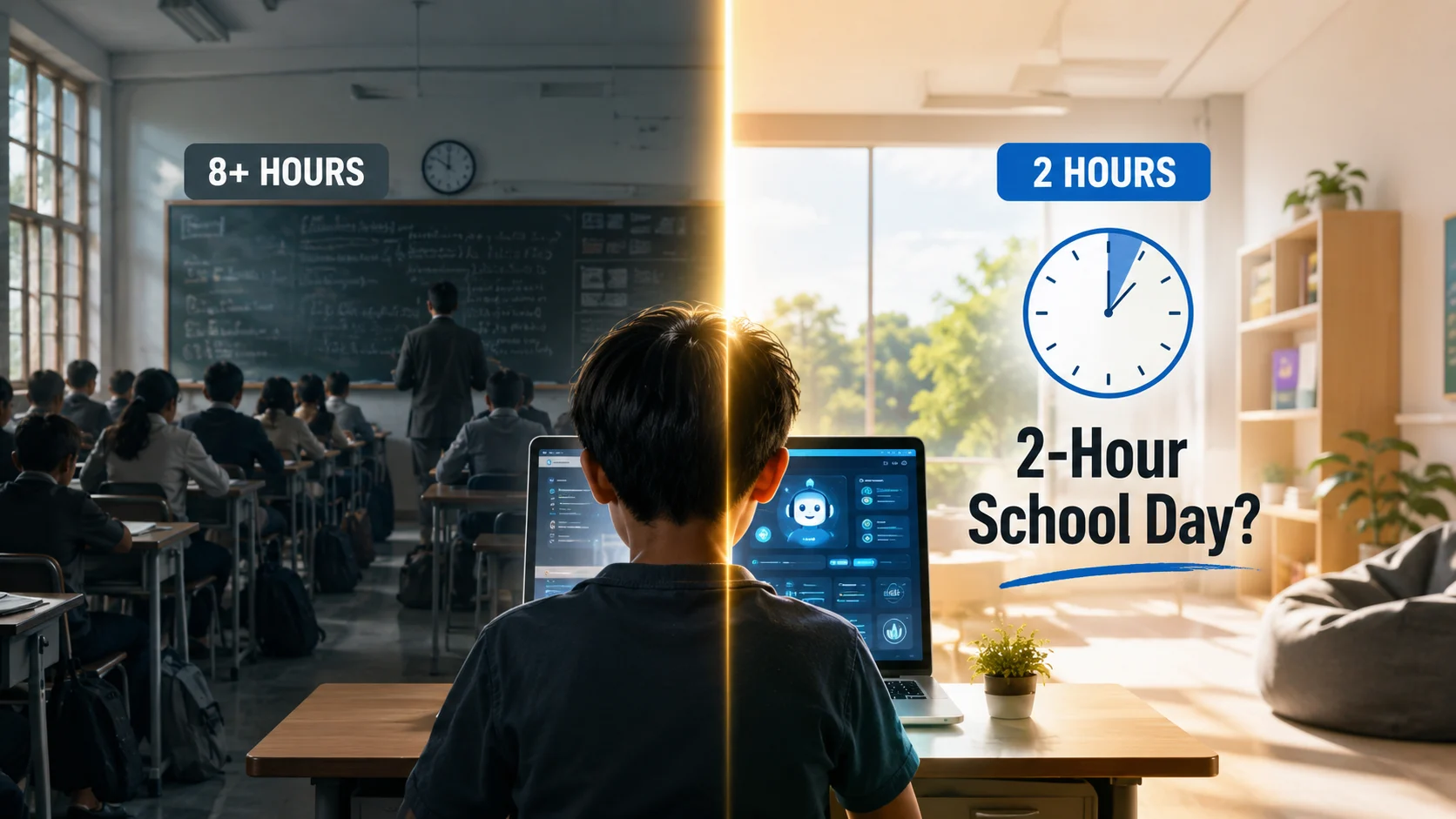
Alpha School is detonating one of education’s oldest assumptions: that students need six to eight hours to learn what AI now claims to compress into two. Founded in Austin, Texas, the private K–12 network relies on a proprietary “2 Hour Learning” model that claims students achieve 2.3x to 2.6x faster academic growth than national averages.
Can software truly replace traditional classroom lectures without hurting student outcomes? This radical shift shocks traditional educators while accelerating a national debate on the future of schooling.
Why This Matters
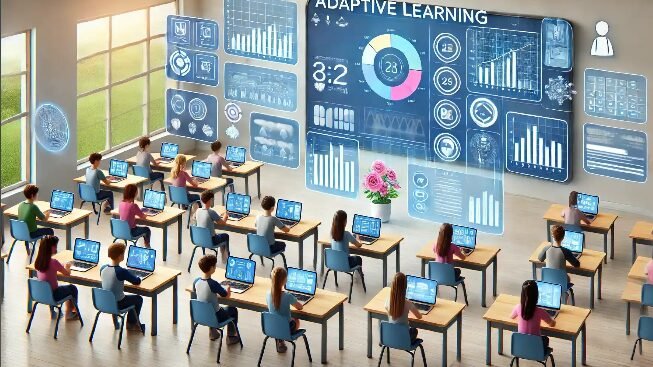
The rise of adaptive AI tutoring is turning education into a personalized technology story rather than a rigid scheduling challenge. Instead of pacing an entire classroom to the average student, adaptive engines route lessons directly to an individual’s exact skill level.
| Traditional Model | Alpha School Model |
|---|---|
| Fixed Schedule (6–8 hours daily) | 2-Hour Core Academics |
| Teacher-Led Instruction | AI-Assisted Adaptive Platforms |
| Uniform Pacing | Personalized Mastery Pacing |
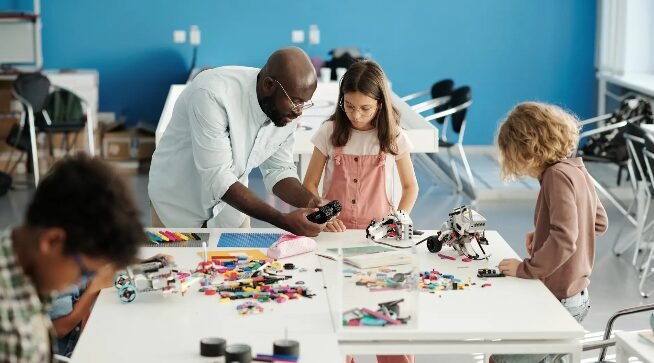
| Lectures & Homework | Hands-On Afternoon Workshops |
What changes when software becomes the pace setter? Removing passive lecture time frees up nearly 4 hours every afternoon for life skills, sports, robotics, and entrepreneurship.
How the System Works
Every morning begins with students putting on headphones and logging into adaptive learning applications like IXL and Khan Academy tools. Human “guides” supervise the room, offering emotional encouragement and accountability rather than teaching math or grammar.
- AI App Integration: Software assigns targeted exercises across math, reading, and science.
- Guide Supervision: Adult facilitators monitor real-time dashboards to keep students motivated.
- Strict Mastery Standard: Students must score 90% or higher on a topic before unlocking the next level.
Is the “teacherless” label accurate, or just a provocative shortcut? While certified subject teachers are absent from daily lectures, human guides remain in the room to maintain discipline and focus.
The Personalization Engine
The underlying algorithm eliminates repetitive drills on concepts a student has already mastered. If a learner struggles with fractions, the engine instantly adapts, slowing down and presenting alternative explanations until mastery is achieved.
- Diagnostic Testing: Pinpoints exact learning gaps down to specific skill nodes.
- Adaptive Routing: Dynamically adjusts task difficulty in real time.
- Real-Time Feedback: Corrects mistakes immediately before bad habits form.
- Mastery Tracking: Ensures students advance only when ready, preventing cumulative learning loss.
What Critics Will Ask
Skeptics raise significant concerns regarding the long-term impacts of screen-heavy instruction and high tuition costs. Independent researchers emphasize that Alpha’s academic claims rely on internal data rather than peer-reviewed external studies.
- Can AI replace human empathy? Software can explain algebra, but it cannot spot underlying emotional distress or subtle social friction.
- Does the model scale? With tuition ranging from $10,000 to $75,000 per year, critics question whether this system can work in low-resource public school districts.
- What about state approvals? Regulators in states like Pennsylvania have previously flagged cyber-charter applications based on this model as “untested”.
“The real innovation isn’t removing teachers — it’s removing wasted time.” — EdTech & Learning Science Analyst
What the Data Says & Official Resources
Alpha School reports that its students finish an entire grade level’s curriculum in about 80 days of focused study. On standardized NWEA MAP Growth assessments, internal reports indicate students average 2.3x annual growth compared to national peers.
Official Links & References: • Alpha School Official Program Overview • Wikipedia’s Alpha School Article • EU Digital Skills & Jobs Platform Report
Can this model scale without losing quality? Whether AI-driven learning becomes the universal standard or remains a luxury experiment depends on how public education adapts to digital personalization.