
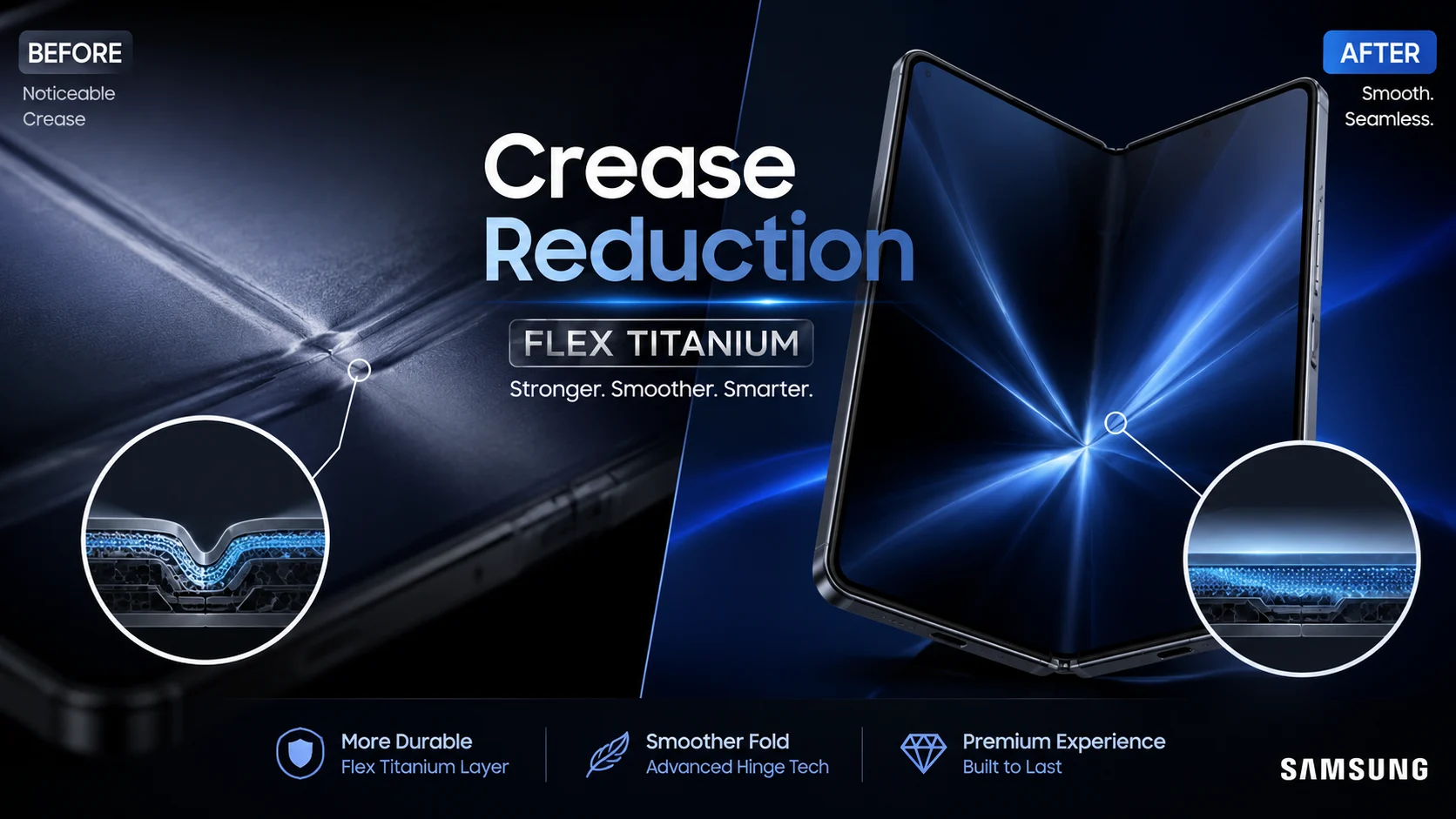
Samsung may have finally cracked the foldable crease problem. The company’s new Flex Titanium display structure cuts display module thickness by 10% while providing 20 times greater stiffness than traditional plastic layers.
Can combining titanium-alloy films with low-reflection coatings unify durability and seamless viewing across the Galaxy Z Series? This engineering shift promises to shatter longstanding skepticism surrounding foldable screens.

What Flex Titanium Is
Samsung’s Flex Titanium introduces a metal-backed architecture underneath the main OLED panel to replace legacy polymer layers. This material redesign absorbs impact while maintaining tight flexibility during repeated folds.
- Titanium-Alloy Film: Positioned directly under the OLED, measuring under one-third the thickness of a human hair while offering 20x higher mechanical stiffness.
- Micro-Patterned Titanium Plate: A flexible base plate engineered with micro-patterned holes to eliminate internal air gaps.
- Optimized Hinge Mechanics: Coordinates display tension, magnetic forces, and structural support for smoother opening mechanics.
How much does the crease actually improve? Eliminating internal air gaps gives the unfolded screen uniform underlying support, preventing deep center indentation over time.
Why the Crease Matters
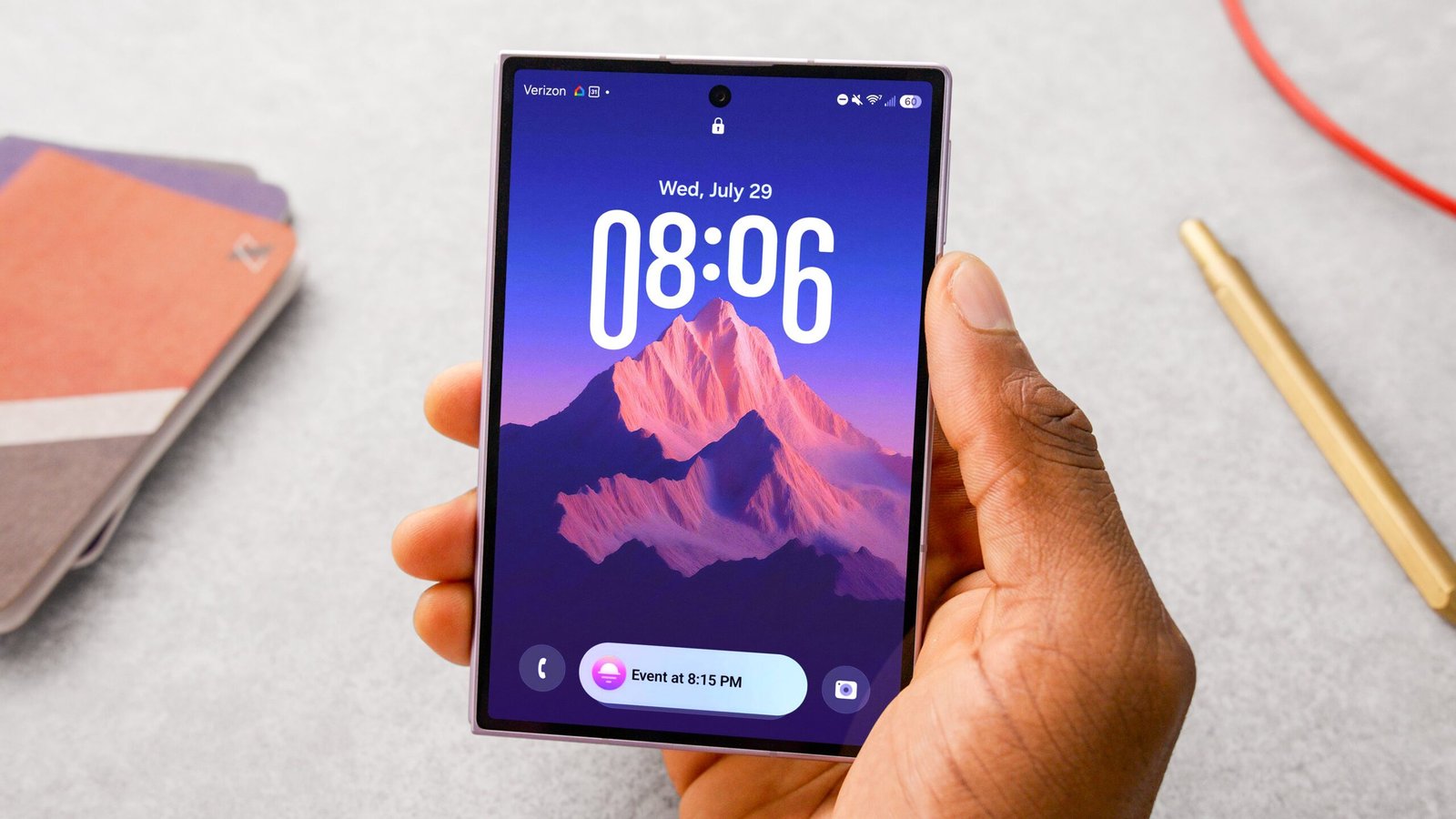
Display creases are not just visual annoyances; they directly impact touch responsiveness and structural confidence. Light hitting an uneven center groove creates harsh reflections that distract users during video playback or document reading.
- Visual Distraction: Overhead lighting catches center screen dips, making content look distorted.
- Tactile Interruption: Swiping across a deep center furrow breaks the feel of a continuous glass panel.
- Long-Term Wear: Repeated bending on soft plastic backing accelerates permanent display creasing.
If the screen still bends, how much “premium” does a foldable really feel? Removing visible center ridges transforms foldables from fragile prototypes into polished, mainstream flagship devices.
Anti-Reflective Coating and Durability
Pairing structural titanium with advanced anti-reflective surface coatings directly targets display visibility under bright outdoor sunlight.
| Feature | What It Changes | Why Readers Care |
|---|---|---|
| Flex Titanium Structure | Eliminates air gaps beneath OLED | Minimizes center groove visibility |
| Low-Reflection Finish | Suppresses harsh glare reflections | Improves outdoor screen legibility |
| 20x Stiffer Alloy Film | Reinforces display impact absorption | Protects against accidental drop damage |
What It Means for the Z Series
Samsung Galaxy Z Fold 8 vs The Original Galaxy Fold. What a difference! pic.twitter.com/BL6IZLzsY1
— Safwan AhmedMia (@SuperSaf) July 31, 2026
The integration of Flex Titanium across the Galaxy Z Fold8 Ultra, Z Fold8, and Z Flip8 marks a decisive shift in Samsung’s hardware strategy. Instead of chasing raw hinge novelty, engineering priority has pivoted toward long-term panel stability and ultra-slim profiles.
“By introducing sophisticated micro-patterned holes to the folding section of the titanium plate, we have successfully secured flexibility with robust durability.” — Kyung-Jin Yoo, EVP and Head of Mobile Display Product Development Team at Samsung Display
Could this be the thing that finally makes foldables feel mainstream? If Samsung can keep improving crease visibility without sacrificing fold lifespans, next-generation foldables will feel less experimental and far more durable.
Official Sources
Key Links & Resources: • Samsung Newsroom Flex Titanium Announcement • Samsung Galaxy Z Fold8 Series Launch Newsroom • Samsung Unpacked Engineering Deep Dive