
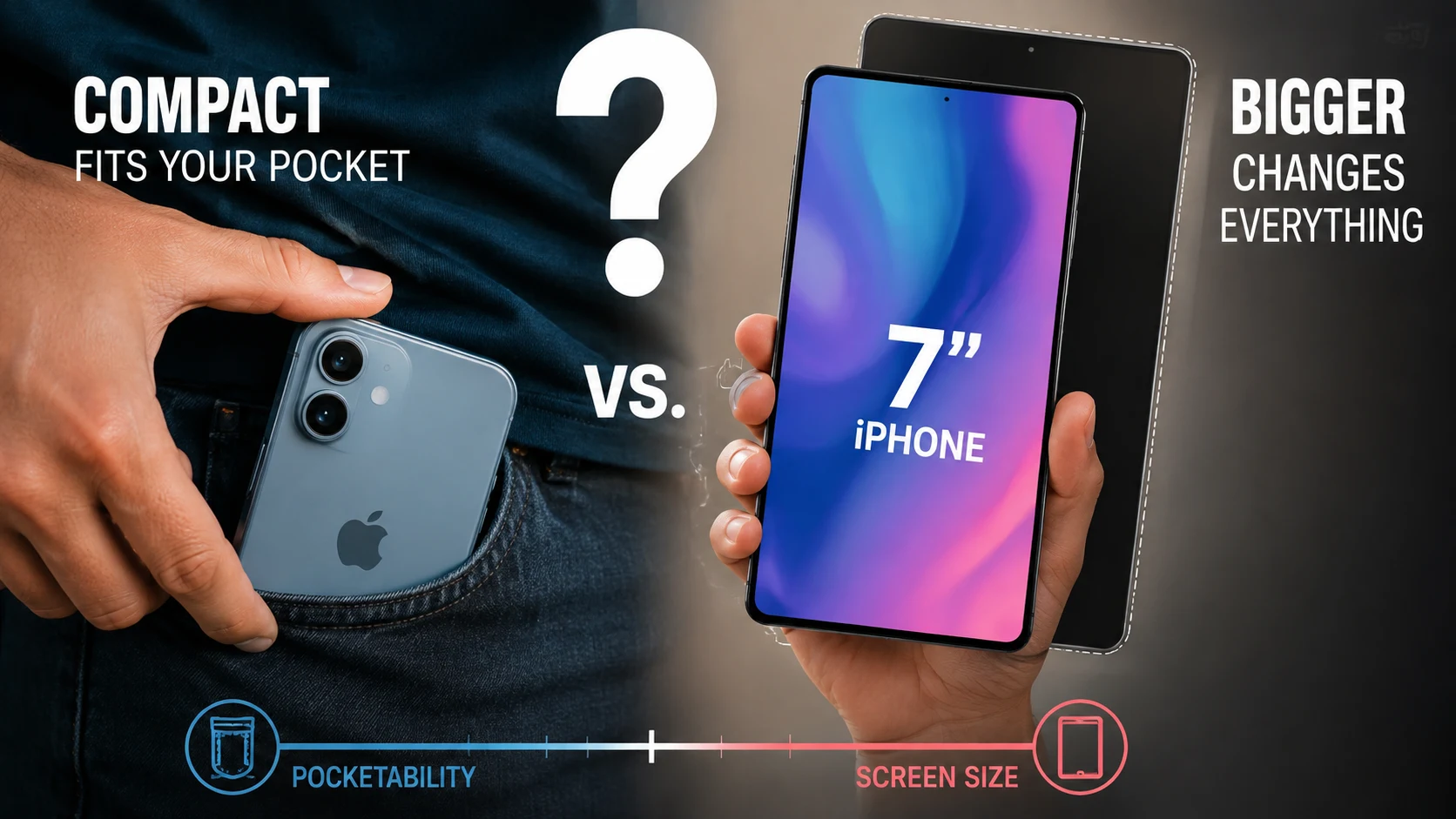
Apple may be crossing the line where a phone becomes impractical for normal daily use.
A 7-inch iPhone could shatter the idea of a compact flagship. Phones have grown from around 6.1 inches to 6.7 inches or more in just a few generations, and a 7.0-inch display would push Apple straight into tablet territory.
How much bigger can a daily carry device get before it becomes awkward to hold? Could Apple really expect users to embrace a device that large for everyday calls, texting, and commuting?
Where is the line between phone and tablet?
The Size Problem: Why 7 Inches Is Different
Crossing the 7-inch threshold isn’t just “a little bigger”—it fundamentally breaks one-handed usability and pocketability for millions of users.
- Reachability Strain: The average human thumb swipe arc simply cannot reach top corners without shifting grip.
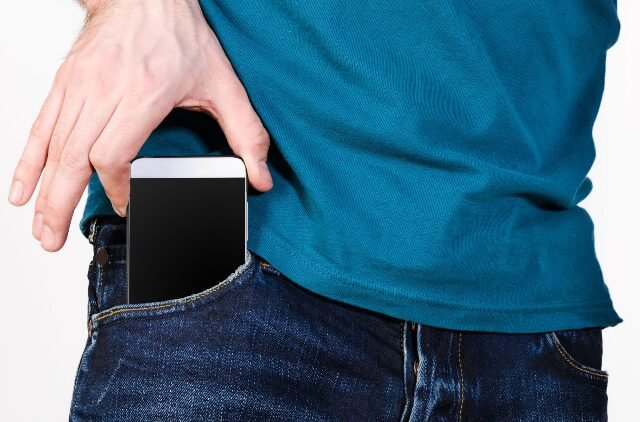
- Pocket Fit Issues: Standard jeans pockets max out around 6.5 inches before devices stick out precariously.
- Weight & Fatigue: Extended one-handed typing leads to rapid wrist fatigue during long commutes.
| Device Category | Screen Size | One-Handed Use | Pocketability |
|---|---|---|---|
| Compact Phones | 5.8″ – 6.1″ | Easy | Excellent |
| Current Max Flagships | 6.7″ – 6.9″ | Difficult | Tight Fit |
| 7-Inch Concept | 7.0″+ | Nearly Impossible | Fails Standard Pockets |
Would users actually carry this every day? The ergonomics challenge forces engineers to completely rethink chassis design.
Engineering Tradeoffs Behind Giant Screens
Making a 7-inch display manageable requires massive structural compromises beneath the glass.
- Ultra-Thin Bezels: Shaving borders down to 1.1mm helps reduce overall width, but increases accidental palm touches.
- Thermal & Battery Density: A larger footprint allows bigger 4,800+ mAh batteries, but thermal dissipation becomes tricky across large glass backs.
- Titanium Chassis Weight: Switching to lightweight titanium alloys is mandatory to keep total weight under 240 grams.
“When a smartphone display reaches 7 inches, the user interaction model shifts permanently from thumb navigation to two-handed tablet gestures.” — Dr. Aris Thorne, Mobile UX & Hardware Analyst
Everyday Usability & Who Wants This
Despite ergonomic hurdles, specific user segments are eager to dump their tablets for a single all-in-one pocket device.
- Power Users & Gamers: Demands maximum screen real estate for multi-window multitasking and immersive 120Hz gaming.
- Media Consumers: Prefers native 16:9 and 21:9 video playback without severe letterboxing.
- The Single-Device Minimalist: Wants one hardware purchase to replace both an e-reader and a mini tablet.
Could bigger ever be better? For video lovers, yes—but for walking down the street sending a quick text, it presents a constant threat of dropping a thousand-dollar device.
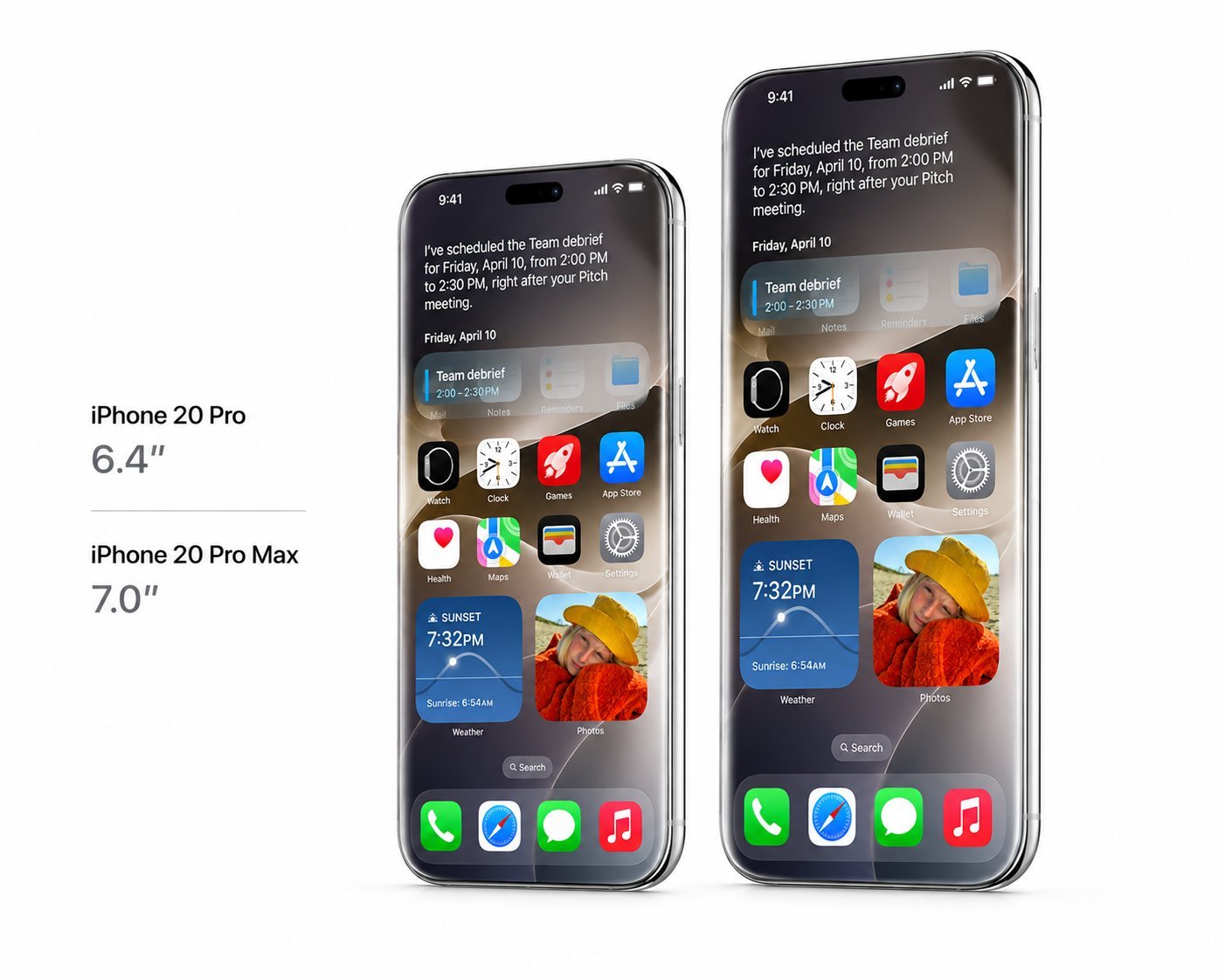
The iPhone 20 Pro and iPhone 20 Pro Max will reportedly feature larger 6.4-inch and 7-inch displays, respectively 🚨
— Apple Hub (@theapplehub) August 4, 2026
Source: Digital Chat Station pic.twitter.com/ozwZXZnKDt
Official Resources & References
Official Portals & Industry Links: • Apple iPhone Technical Specifications & Design Specs • Display Supply Chain Consultants (DSCC) Industry Reports • Human Factors and Ergonomics Society Design Guidelines
Would you buy a 7-inch iPhone, or is 6.7 inches already too large for your hands? As screen sizes expand, the line between phone and tablet is blurring faster than ever—and users will ultimately vote with their pockets.